

“Highland Cathedral” – we can learn from the composer of the most commercially successful tune ever made for the pipes
When higher-level pipers and drummers consider “the most popular” tunes, they might naturally think of pieces most-performed at Highland games and competitions, like “Scotland the Brave,” “The Green Hills of Tyrol,” “Orange and Blue,” “Bonnie Dundee,” or other traditional staples of every piper or drummer’s repertoire.
In truth, the unusual, soaring air, “Highland Cathedral,” might well be the most beloved mainstream piece ever created specifically for the pipes. While the composition, for whatever reason, is rarely, if ever, heard in competitions, it’s a go-to at weddings, funerals, military tattoos, and performances that cater to the piping-unsavvy-but-bagpipes-loving audiences.
While many reading this might dismiss the piece as pure shmalzt, its success in bringing the sound of the pipes to billions of ears is undeniable.

The piece was co-written in 1982 by the unlikely German composers Michael Korb from Düsseldorf and Uli Roever from Berlin. Korb was the piper of the two, having taken up the instrument in 1974 with King’s Own Scottish Borderers Pipe-Major Dennis Rodden in Berlin, and later in Edinburgh with 80-year-old former British Army Pipe-Major Paddy Atkinson.
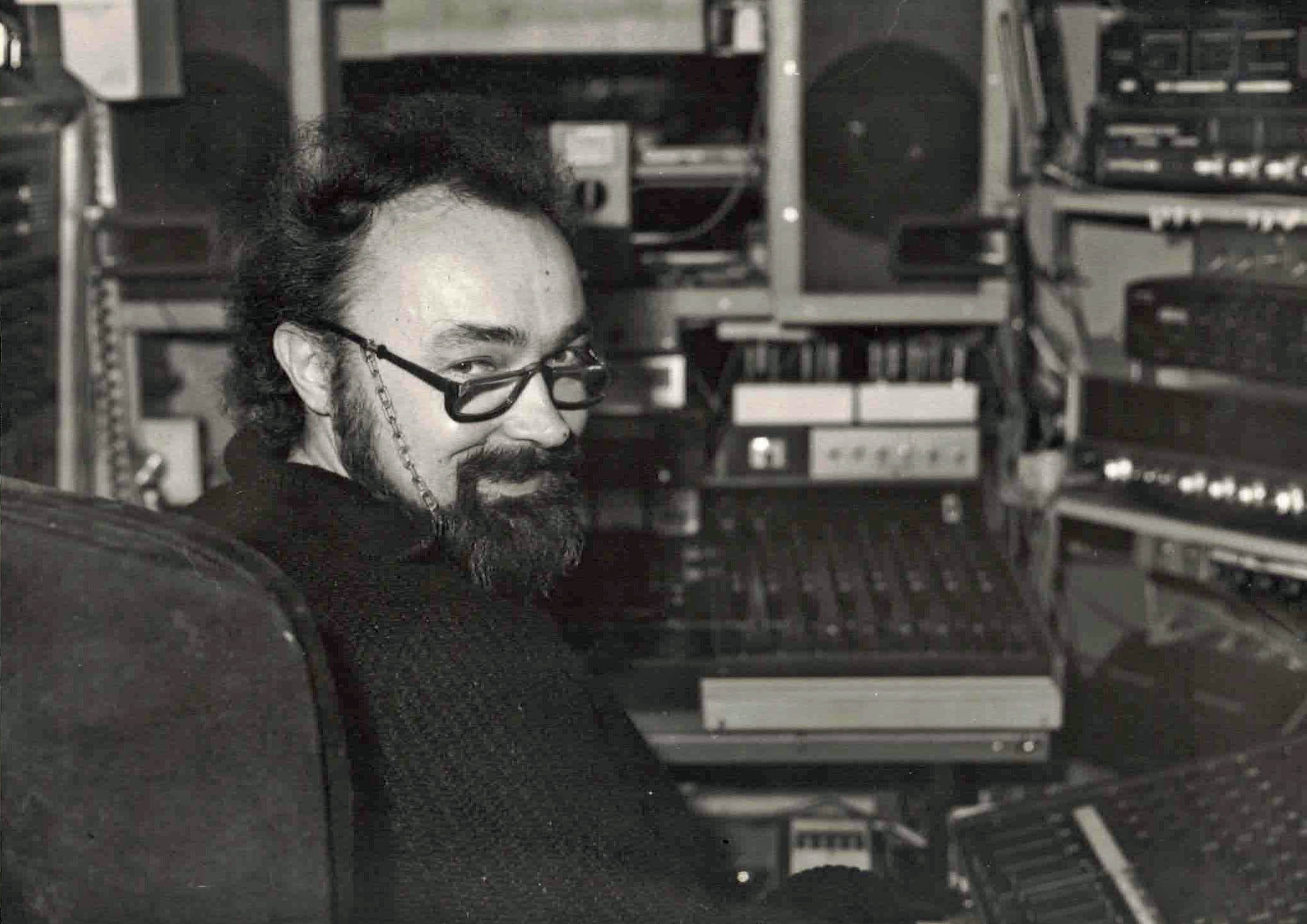
After only four years on the pipes, Korb was featured on the German TV series “Talentschuppen,” and shortly after, he met Roever, a successful music arranger, producer and composer. They collaborated on several singles: “Highland Games,” “Lonely Piper,” and “Dreamy Island,” which reached number five on the New Zealand pop music charts in 1981.
The next year, they made and orchestrated “Highland Cathedral,” releasing the piece not just as another single, but as an anthem and a tribute to Scotland and the Scots. Crucially, they didn’t target publishing and marketing only to Germans but also to UK and Commonwealth audiences, who were more familiar with the sound of the pipes.
Almost every Highland pipe music composer is content with creating tunes in the hope that competing bands and pipers will like one or two of them enough to gain some popularity around the games. That’s considered success.
Korb’s main musical instrument is the pipes, and he also plays guitar. While he’s certainly a gifted composer, he has never been very engaged with the business side of the music industry.
Ironically, unencumbered by the parochial approach of more “serious” pipe music composers, it was Roever’s music-industry acumen that helped “Highland Cathedral” gain real-world popularity and earn the financial rewards the piece has enjoyed for the last 43 years.
Sadly, Uli Roever passed away in 1997, at the age of only 63. Thankfully, 69-year-old Michael Korb lives in Germany and continues to compose. We found him online in the small town of Teltow, near Berlin, pleased to discuss the history of “Highland Cathedral” and what aspiring composers might learn from his experience.
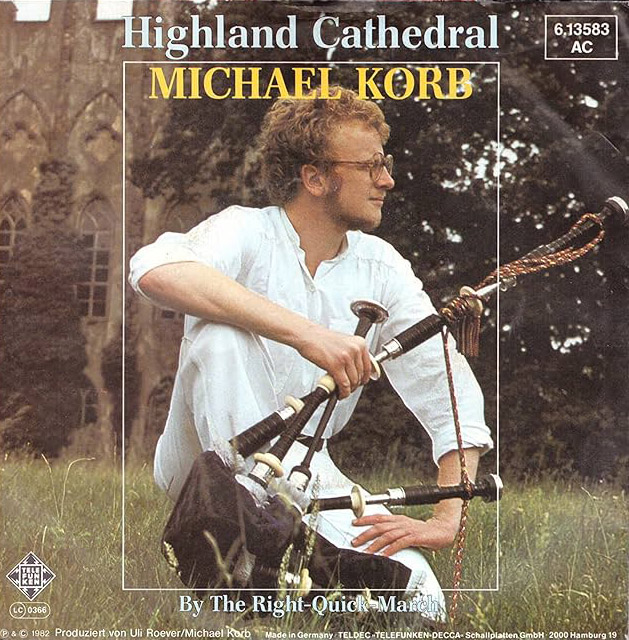
“Since 1982, I offered and promoted ‘Highland Cathedral,'” Korb said. “At first, nobody wanted to publish our ‘Highland Cathedral’ and ‘By the Right, Quick, March.’ But step by step, the tune made its way, and we published it as a single.”
Importantly, the piece was registered with GEMA, Germany’s performing rights organization, which tracks and pays royalties for copyrighted music. Korb confirmed that he’s still a full member of GEMA, which works worldwide with other societies such as PRS for Music in the UK, ASCAP in the USA, SOCAN in Canada, and APRA-AMCOS in Australia and New Zealand on commercial use.
Today, the publishing rights are held by Edition Roma, Universal Music Group, MCA Music Publishing, and GmbH, each working to promote the piece worldwide. One of the most lucrative bagpipe compositions ever, the piece has almost certainly earned several million dollars in performance royalties since 1982.
“No composer has a perfect recipe for other musicians to make a mainstream hit. Every composer has to develop their own musical ideas and let the audience decide whether they are successful.” – Michael Korb
Korb’s aspirations for “Highland Cathedral” are not unlike the humble goals of almost every pipe-music composer today.
“When we finished the production of our composition in 1982, I was dreaming that one day a big pipe band would like to perform it,” he remarked. “Every composer wants to be successful with their music. But ultimately, the audience decides on the popularity of a composition.”
Whether it’s a great pipe band like Inveraray & District or Field Marshal Montgomery playing an original piece for the relatively tiny piping and drumming world, or a professionally orchestrated composition going viral on TikTok, every composer needs their definition of a big break.
Big breaks rarely occur by happenstance. They almost always happen when smart people make canny decisions to increase the chances of succeeding.
“ Good connections help,” Korb said, acknowledging how important Roever was in turning the well-worn clichés “the harder I work, the more I have of it” and “luck is preparation meeting opportunity” into reality.
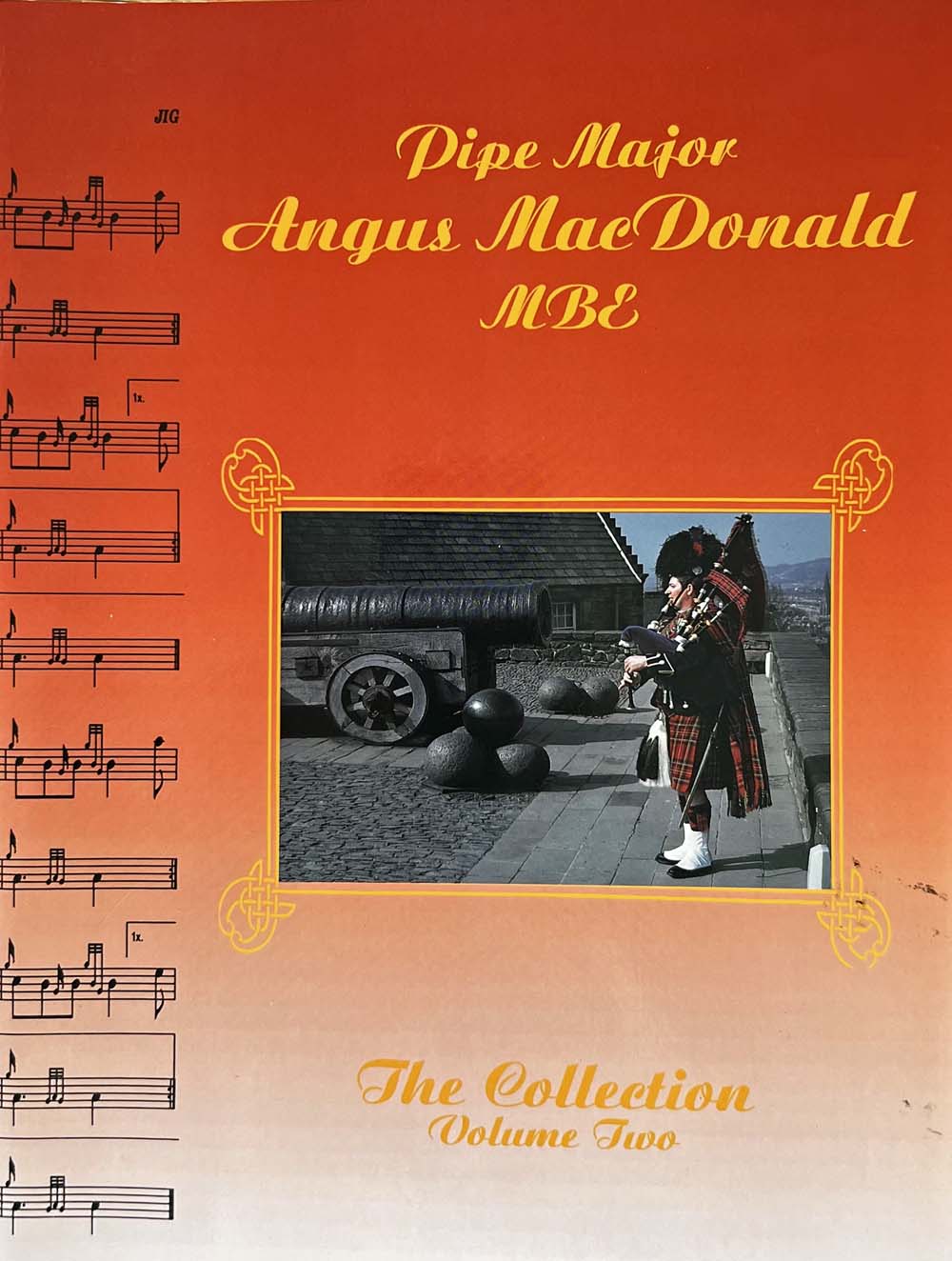
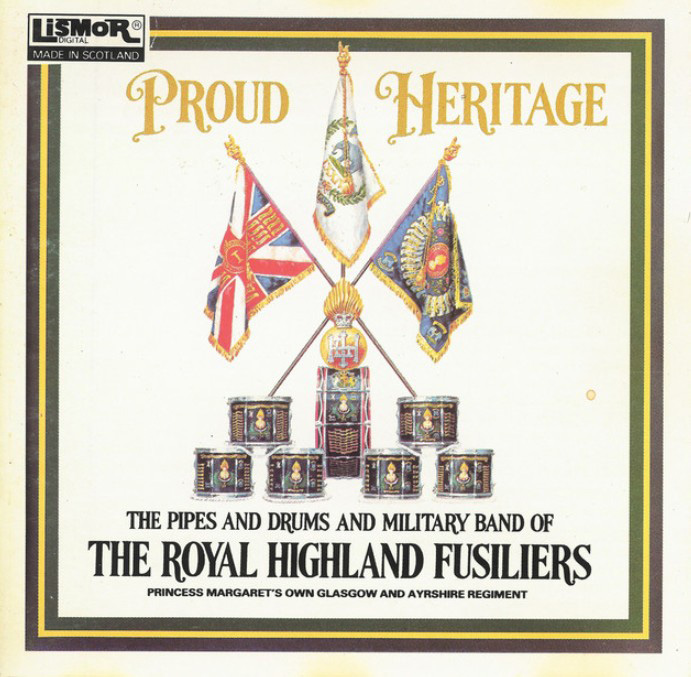
“Highland Cathedral” has by no means been ignored by the competition piping and pipe band world. Pipe-Major Angus MacDonald included the piece in the second volume of his excellent music publication, The Collection, and Pipe-Major Gavin Stoddart’s Royal Highland Fusiliers was the first high-calibre band to include it on an album, Proud Heritage.
Korb acknowledged that, while the composition had already taken off on popular charts, it actually took those stamps of approval for other pipe bands to learn and perform the piece.
The 1998 World Champion Victoria Police featured the tune on their albums Live in Concert in Ireland (1993), Live in the Rockies (1996), and on their more recent The Way Old Friends Do.
Today, Michael Korb co-writes with Ian MacPherson. They completed “Highland Nocturne” and “Highland Salute,” the final pieces in their “Highland Trilogy,” which began more than four decades ago with “Highland Cathedral.” “Cantilena” is their most recent composition.

Forty-four years after “Highland Cathedral” broke into the pop charts, it’s remarkable that no established piper has been astute enough to work with a music industry insider to have an original composition become a certifiable hit.

The piece is so adaptable for almost any occasion that it’s often used as an inspirational anthem for the legendary Tartan Army and is frequently heard whenever the Scottish national football team plays at major events, including the 2026 World Cup.
So, what is Michael Korb’s advice to pipe music composers who’d love to have their music embraced beyond the relatively small community of pipers and drummers?
“No composer has a perfect recipe for other musicians to make a mainstream hit,” Korb said when asked what his advice might be to pipers who’d like to have his kind of success. “Every composer has to develop their own musical ideas and let the audience decide whether they are successful.”
Nonetheless, he remains appreciative of how popular “Highland Cathedral” has become.
“I am astonished by the worldwide success.”
A correction was made on May 20, 2026: An earlier version of this article included an image incorrectly captioned as Uli Roever. Roever’s age at death was also incorrect. In both instances, the article was corrected.

The first time I heard Highland Cathedral was on Amy Grant’s 1999 album “A Christmas to Remember.” Would be interesting to know how that came about, and how it impacted the tune’s success.
Greetings, at that time Amy G. was a big fan of Highland Pipes and friends with the pipe major for The Nashville Pipes and Drums, Jay Dawson. Not only did she hire the band to play on the CD but over the years at several events including her wedding to Vince Gill. As a lowly piper in the band it was a view into a world we rarely saw. She is an inspiring individual and I will always remember the full band walking up a rise into view at her outdoor wedding. “Highland Cathedral” seems to have that effect on almost everyone.
As you said, some pipers might regard it as schmalz. There are certain tunes which, for whatever reason, someone dislikes. This is one of them. Not discounting the success of the tune. Just something about it.