

Part 2 of Ian McLellan: the August 1993 pipes|drums Interview from the Archives
We continue our discussion with the late Ian McLellan, one of the greatest pipe band leaders in history.
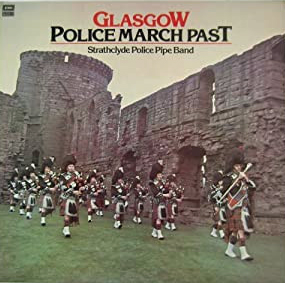
In Part 1, McLellan discussed his formative years as a piper and pipe-major, learning the pipes in the Boys Brigade, his miltary service and tuition from Andrew Pitkeathly, inspiration and guidance from Ronald Lawrie and Tom Anderson, and his path to a glorious competitive career with the Glasgow/Strathclyde Police.
In Part 2, he gets into the nitty-gritty of why and how The Polis had been so successful under his leadership. his thoughts about judging and how the UK band scene could be more successful and fair.
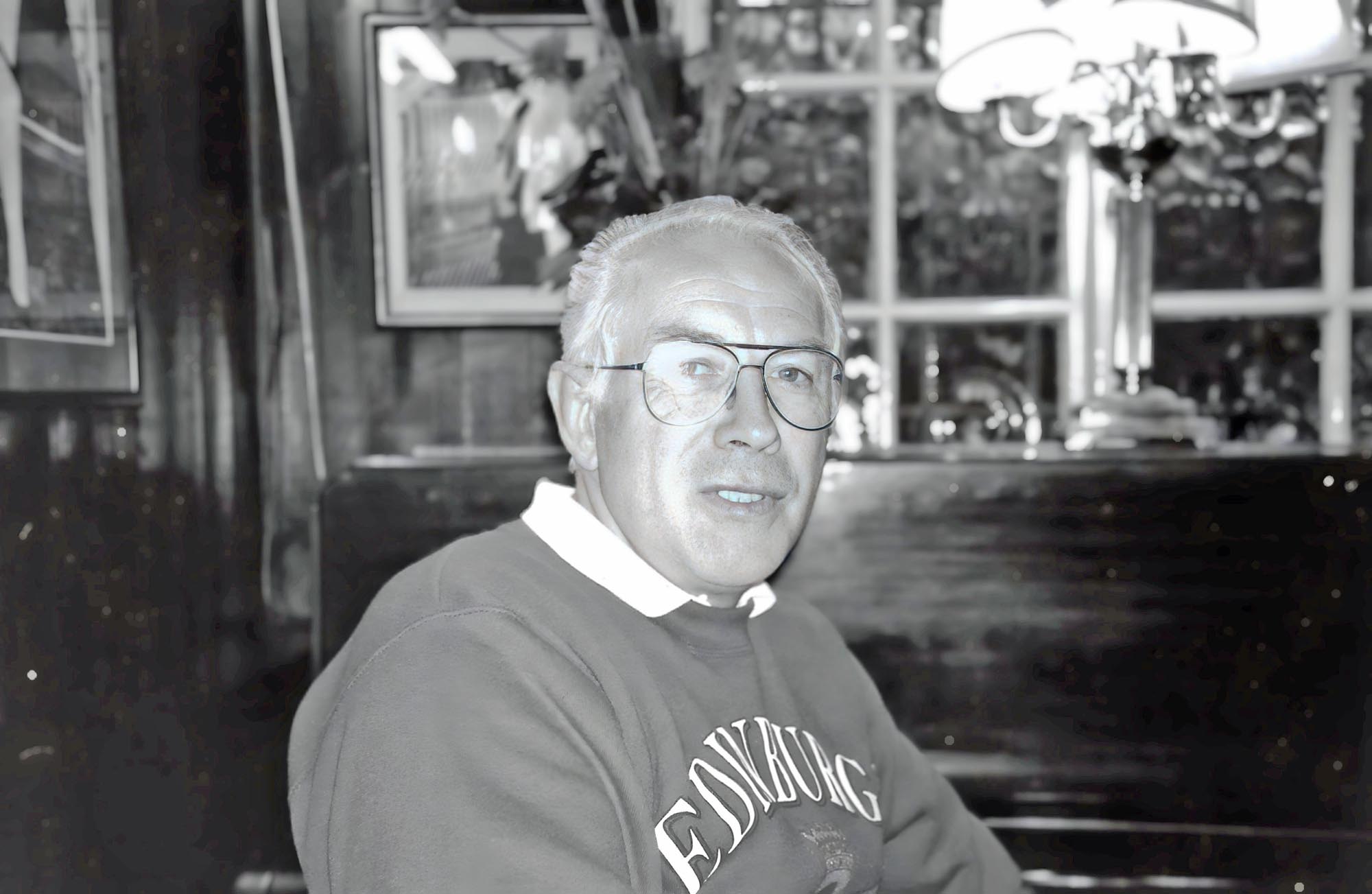
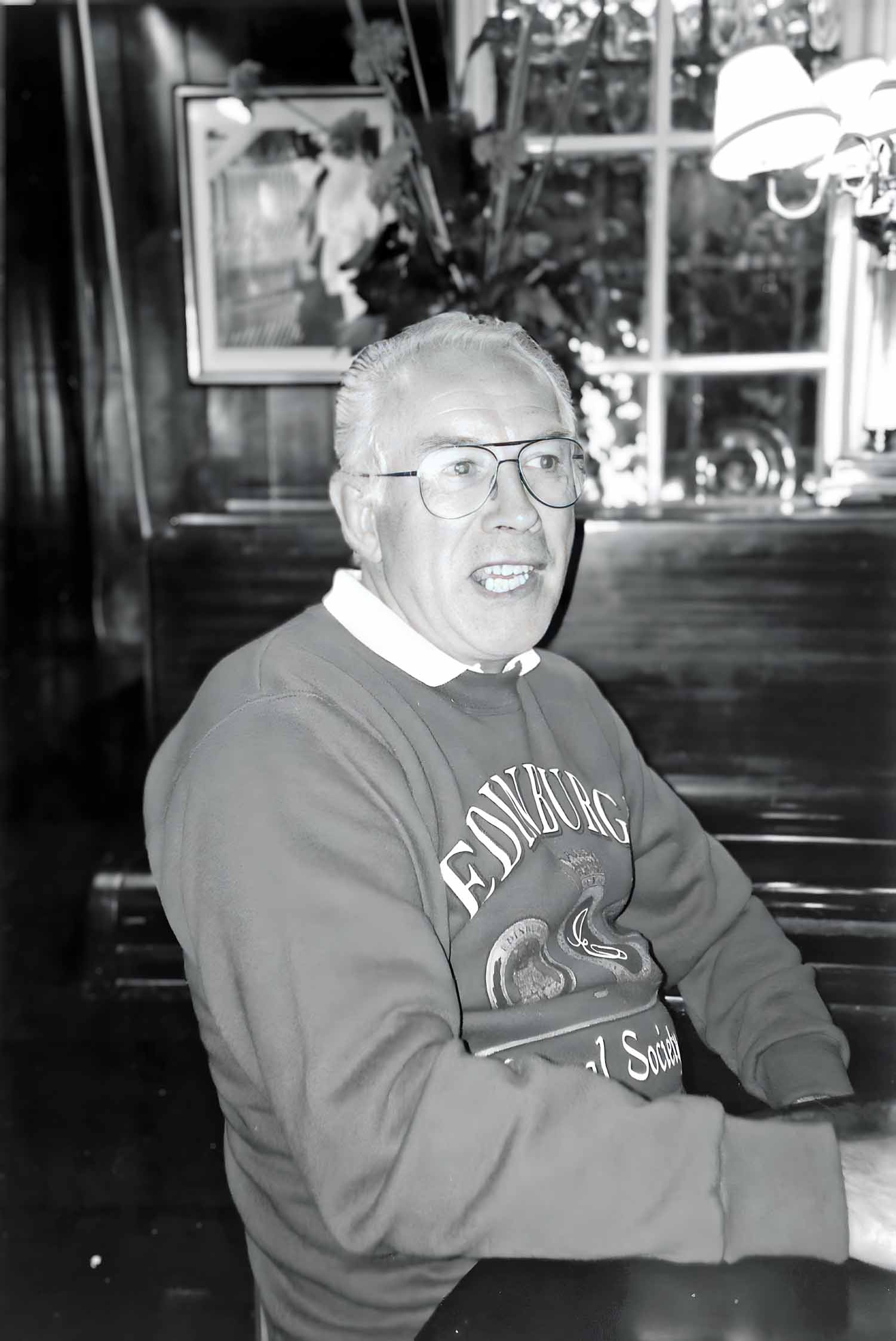
We remember realizing in 1993 that nothing came to Ian McLellan arbitrarily. He took the conversation seriously and with great respect, arriving with enthusiasm and his trademark congeniality. All was carefully considered, right down to this proud Glaswegian wearing a sweatshirt with “Edinburgh” emblazoned across the front.
McLellan was a leader who set an example. Much could be learned then from simply watching him work and listening carefully to his words, and much can still be learned today and in years to come from our interview.
Part 2
pipes|drums: You’ve won many competitions as a pipe-major. What do all those victories mean to you looking back?
Ian McLellan: I have a great sense of satisfaction that the band has had such success over the years. People used to ask me if it is the same every time you win the World Championship, or if I had one favourite one of all. Your favourite is the first one you win. I suppose that’s the greatest feeling of all, when you win it for the first time. But it doesn’t matter how many times you win it, you still get a similar kick out of it. I suppose when you’ve won your first one, that’s the one that has the most lasting impression on you.
pipes|drums: When was that? 1976?
Ian McLellan: 1976, yes. Funnily enough, in ’76 we had a police tattoo in Glasgow, and we went down to Hawick for the World Championship that day. We couldn’t wait for the massed bands, and we came away before the prizes were announced.
So we marched on to start the tattoo in the evening, still not knowing where we had placed in the championships. And it was as we were marching off at the end of our spot, one of the guest bands was the Danish Police Orchestra, and they wore hats with white tops on them, and they were all jumping about, waving these white hats. And we were thinking, What’s up with them? What are they jumping about for? But they knew by this time that we had won the World Pipe Band Championship, and that’s how we found out.
pipes|drums: If the Strathclyde Police during your tenure were to be remembered for one thing and one thing only, what would you want that to be?
Ian McLellan: I suppose the quality of the music that we played, especially in the march, strathspey & reel section. I felt that that was what we did best. Okay, we played some good medleys over the years, but I always did feel that the MSR was our strongest point. Also, the standard of tone that we set over the years was another strong point.
“Some people don’t agree with your decision, and instead of taking it on the chin, they go in the huff about it. But most of the people I know in the pipe band scene are mature enough to handle it.”
pipes|drums: You’re quickly moving into judging these days. Do you ever worry that you’ll make more enemies than friends, wielding the clipboard?
Ian McLellan: Funny that you should say that, that has always been my main fear, that I will lose all my friends! There will be only one pipe band that will be talking to me, and that’s the one that wins! But I think that’s one of the things that does unfortunately happen, some people don’t agree with your decision, and instead of taking it on the chin, they go in the huff about it. But most of the people I know in the pipe band scene are mature enough to handle it. I suppose that there will always be one or two who take exception to some of the decisions you make.
pipes|drums: What was your most memorable experience as pipe-major of the Police?

Ian McLellan: Being awarded the BEM in 1982. It came right out of the blue. I never expected anything like that. It’s one of the things that I really got quite a kick out of because up until that time the band had been quite successful, but not nearly as successful as what it had become by the time the end of the ’80s came.
pipes|drums: What performance – your own or another band’s – stands out in your mind as the best you ever experienced?
Ian McLellan: I’ve heard so many good performances over the years that I have really enjoyed listening to. One of the first and most impressive ones that I remember, and it wasn’t even a championship, was the Muirheads under Bob Hardie playing, and I can always remember the march: “Jeannie Caruthers.” It was held at Rothesay, the Bute Highland games, and it would have been back in the middle ’60s, when the Muirheads were right on their run.
Another one was the Simon Fraser in 1985 in the MSR section, and the 78th Fraser Highlanders in 1987, which was something I’d never heard in my life before, and might never hear again. But performances over the years stick in your mind. Tom McAllister had the Shotts, I heard them playing, and possibly the thing that stuck in my mind was the sound that they got, and that was playing Sinclair chanters that came really from the same batch of chanters that the Strathclyde Police had during our own success.
pipes|drums: What was the best performance of your own with the Strathclyde Police?
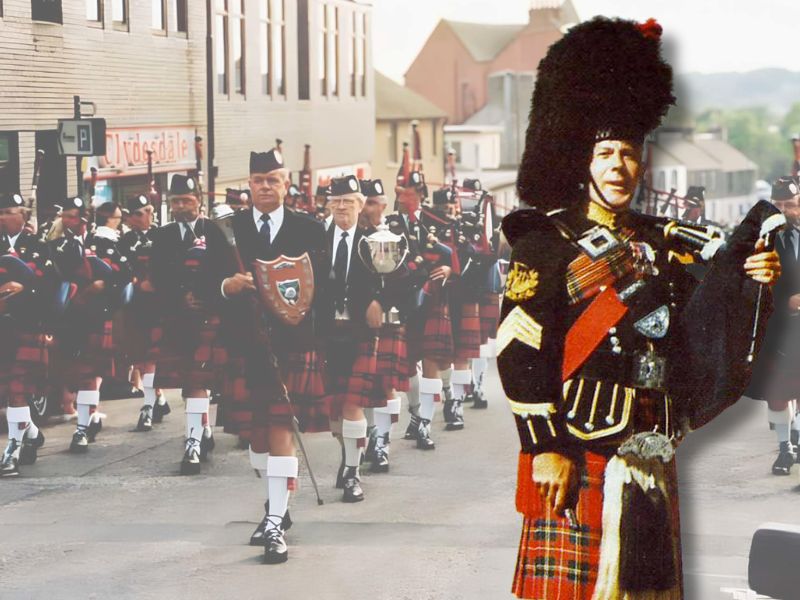
Ian McLellan: Well, sometimes you look at your own performance with rose-tinted glasses, but one that really struck me was in 1977 when we played the CNE competition in Toronto. It really had the hairs going up on the back of my neck; it was so exciting. And others, like in ’86 in the medley when we played “The Detroit Highlanders.” March, strathspey & reel wise, I felt maybe ’89 when we had the “Hugh Kennedy,” “Ewe Wi’ the Crooked Horn” and “Mrs. MacPherson of Inveran,” and we were fourth on that year, and we thought we’re really going to have to set the heather on fire for the judges to remember it. But everything just worked the way we wanted it to, tone-wise, playing-wise, the whole shooting match.
pipes|drums: The Lothian & Borders Police Pipe Band’s support from the department is far less than what it was twenty years ago. Do you worry about the backing of the band by the Strathclyde Police in the future?
Ian McLellan: At the moment, there’s actually a government enquiry into the police service and the conditions of the police service, called the Scheehey Report. What the outcome of this report will be, I don’t really know. It may or may not have an adverse effect on all police pipe bands, not just the Strathclyde Police Pipe Band. Hopefully, it will never actually come to pass that whatever conditions they do impose upon the police service in the future will have any adverse effect on the bands. As you probably know, the Strathclyde Police is the only police band in which every member is a serving police officer.
pipes|drums: Do you think the band will ever be opened up to guest players?
Ian McLellan: I don’t think that will ever come to pass. It has always been a condition of service in the band that all members must be serving police officers.
pipes|drums: We were in a taxi in Glasgow, a few days before the Worlds, a couple of years ago. In conversation, the driver said that the Strathclyde Police band members had “a cushy wee number.” How cushy a job is it playing in the band?
Ian McLellan: That guy was probably an ex-police officer who was retired and driving a taxi, and was just green cheese.
“All the members of the band are on a steady day shift; they don’t work shifts, and that creates a slight resentment because most police officers are working shifts. It does make it easier, obviously, on the family as well. But the way we looked at it was that we gave up so much of our time playing at engagements and pipe band competitions and some weeks you would never get a day off.”
pipes|drums: But is there a certain amount of resentment from other police officers?
Ian McLellan: The thing is, all the members of the band are on a steady day shift; they don’t work shifts, and obviously, that creates a slight resentment because most police officers are working shifts. It does make it easier, obviously, on the family as well. But the way we looked at it was that we gave up so much of our time playing at engagements and pipe band competitions and some weeks you would never get a day off, so your family life suffered as well. So we looked at it as balancing the scales as well, because of the amount of time that we gave up during the summer months. But, I suppose that argument never went down too well with the guys, although most of them were okay. There were really only one or two and it was mostly green cheese more than anything else.
pipes|drums: What about the relationship with the chief constable or the top brass of the police, was there ever any pressure to win?
Ian McLellan: I wouldn’t say there was any pressure. The only time we ever actually felt any pressure, and possibly we put it on ourselves more than anything, was the year after the 78th won the World Championship in 1987. The following year, we held a police tattoo in Glasgow and the final night of the tattoo was the same night as the World Pipe Band Championship. The chief did make the point of saying, “I expect you to be marching into the arena holding that World Championship trophy!” But although he did say it, if we hadn’t won it wouldn’t have been a great disaster.
People would sometimes rib you about it saying you belier win it or you’re not getting back in the door, sort of thing, but because it had become – well, you don’t like to say the word – sort of repetitive, from 1981 through ’86. Everybody, I think, expected you to win, and when we got beat in 1987, they were all saying, “What the bloody hell happened?” But you’re not always supposed to win it, and there are a lot of people who haven’t won it.
pipes|drums: Your drum corps were never world-beaters, though they did do well on many occasions, as they were known more for providing an ensemble complement rather than percussion fireworks. First, how do you respond to that statement, and, second, was it indeed an ensemble approach you demanded of leading-drummers like John Kirkwood and Alex Connell?
Ian McLellan: “Demand” might not be the right word, but we did put our heads together and look at how well the drum score would complement the melodic line. Funnily enough, Alex Connell and myself were both brought up in the same Juvenile band, and the education that he had as a drummer in that band was towards an ensemble effect.
When Alex became the leading-drummer, he looked on it that way also, and it was very seldom that Alex and I would disagree on beatings of any kind, because it was natural for him to play like that.
“Alex Connell’s view at all times was the band first, and if he could do everything in his power to make sure that his drum scores were actually enhancing what the pipers were doing. John Kirkwood’s views were exactly the same; he didn’t care if he ever won the drumming prize, as long as the band won.”
When John Kirkwood became the leading-drummer, John had already worked with Alex Connell for about three years and the same type of effect was coming out of his scores. We actually put our heads together and worked at it together and looked at the different aspects of the drumming score so that it would actually enhance the melodic line. Alex Connell really had quite a lot of success, maybe not so concentrated as Alex Duthart or Jim Kilpatrick, but over the years, he won all the major championships with the drum corps. Alex’s view at all times was the band first, and if he could do everything in his power to make sure that his drum scores were actually enhancing what the pipers were doing, then that was the way that he looked at it.
John Kirkwood’s views were exactly the same; his view was that he didn’t care if he ever won the drumming prize, as long as the band won.
Ian McLellan: I certainly thought they were hard! Possibly nearer the end of my career, I found them even harder! But, as Tom McAllister would probably tell you, we did pick the hardest reeds of any band that chose McAllister reeds. I picked them like that so that they would be stable throughout the competition season and to make sure that they would last through the summer when the band did about on average about fifty engagements, over and above competitions, from April until October.
pipes|drums: What would your routine be?
Ian McLellan: In January, everybody would get a new chanter reed, and we would blow that in until the month of March, when normally you had the indoor contests. Then, when
The indoor contests were finished, we’d put in another new reed, and blow that I, and possibly that would be the reed you’d start the season with, but occasionally you’d play the other one at engagements to keep it going and make sure it wasn’t drying out.
“When we initially started blowing in McAllisters, we used to play for about three weeks without drones, just to break the backs of these reeds.”
If at all possible, though, you played the same reed throughout the contest season. Every now and then, you’d get reeds that would play up, and you’d have to put in the other one. I have, on two occasions, had the same reed for two seasons for the contests, and that was through initially blowing in a really good reed.
When we initially started blowing in McAllisters, we used to play for about three weeks without drones, just to break the backs of these reeds. People thought I was mad, but at the end of the day I felt that if you got a reed with that stability in it, you could go out and play in an absolute downpour, and you knew that at the end of the performance . . . okay, your drones might start to get affected, but your chanter sound would be rock solid.
pipes|drums: So, it was for stability rather than tone?
Ian McLellan: Well, you’re going to get the sound if you’ve got chanter stability. But by the time the contest season came, we could handle these reeds; it wasn’t as if we were going out there during the contest season and struggling to play through a medley. We had built up the stamina to handle that kind of reed, and you could blow it. Possibly, if you were to give the pipes to some other bands to blow they would say, “God, I can’t blow them,” but you had built up the strength to blow that kind of a reed. January was a hell of a month every year because you felt it sore, but I felt it paid off at the end of the day.
pipes|drums: In pipes|drums we’ve discussed seeding, ranking, extended musical requirements, splitting Grade 1 at the World’s. What would be your remedy for the numbers problem? Or is there a problem with numbers?
Ian McLellan: To a certain degree, there is a problem because over the last two years we’ve had twenty-seven or twenty-eight Grade 1 bands playing at the Worlds. It’s over four hours, and four hours to adjudicate a competition is well nigh humanly impossible if you’ve got good bands on at the beginning, good bands on in the middle and good bands on at the end. The competition should be seeded, but how should they go about doing the seeding? It’s going to be a hard decision to make, but possibly during the first half of the season, bands should be playing for a position in the World Championships, and I think that at the end of the day, there should be no more than fifteen bands playing in Grade 1 to make it a fair contest.

Ian McLellan: The standard that the foreign bands have had in previous years should qualify them to get in. There are bands like City of Wellington from New Zealand, and they’re the champions of that country, and they should have an automatic qualification. Same as the top band from Australia. From Canada, you’ve got the Simon Fraser from the west coast, and the 78th from the Toronto area, and these bands have qualified themselves from the standard that they’re playing at.
There would have to be something hell of a drastic to happen for a band to have been, the previous season, one of the top bands in Grade 1 and all of a sudden to be one of the bands that is holding up the rest. And if they thought that their standard had become that low, they probably wouldn’t come anyway, when you think about the cost factor. I don’t think there would be any problem, really, with the foreign bands.
pipes|drums: How realistic do you think getting a seeding program would be?
Ian McLellan: I know that this has already been spoken about within the RSPBA. For some reason, it was knocked back. They said there were too many arguments against it, but my own way of thinking is that, the way the situation is at the moment, it’s unfair to the bands and it’s unfair to the adjudicator, because at the end of the day the adjudicator is only human. He can only retain a certain amount about how a certain band played.
Say a band comes on first and plays really excellent, and a band comes on last and plays really excellent. How do you balance them? You’ve got at least four hours between the two, and between those bands, you might have had twelve, thirteen, fourteen bands that shouldn’t even have been there in the first place because the standard is so much below that of the top bands.
pipes|drums: Any thoughts of taking your retirement to Canada?
Ian McLellan: No, I’ve never even considered going anywhere. I’m pretty fortunate that I get so many invitations to go abroad to adjudicate and teach that they keep me going. I enjoy travelling, there’s no doubt about that. I enjoy meeting other people, teaching, and adjudicating as well.
pipes|drums: So, we’ll be seeing a lot of Ian McLellan BEM in years to come?
Ian McLellan: Aye, hopefully, anyway.
Our sympathies are with Ian McLellan’s family and friends at this sad time.
If you enjoy pipes and drums and are not yet a subscriber, please consider supporting us with a low-cost paid subscription. We are a nonprofit and the only truly independent piping and drumming publication. The only things we sell are subscriptions and advertising space. Thank you for your support.



NO COMMENTS YET