

Part 2 of our conversation with “Journey to Skye” composer, Don Thompson
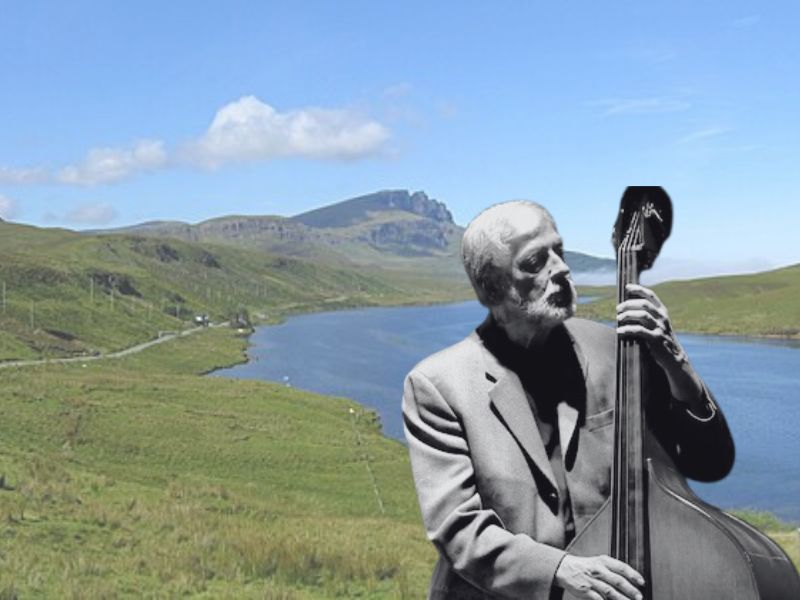
We continue with the second part of our exclusive interview with Donald Thompson, a world-renowned jazz composer and performer and the creator of “Journey to Skye.”
In Part 1, Thompson revealed the piece’s origins and confessed that he was largely unaware of his composition’s impact on the piping and drumming world. Before “Journey to Skye,” the idea of a pipe band “suite” was unknown.
Thompson credited his close friend and fellow jazz musician, Jimmy Blackley, a renowned percussionist and former top-tier pipe band snare drummer, with introducing the idea of creating the piece.
Thompson provides a revealing and enlightening look into one of the most important compositions in pipe band history, which evolved from humble beginnings nearly 40 years ago in his basement recording studio in Toronto.
Stay tuned to pipes|drums for a special extra from the magical mind of Donald Thompson.
Here’s a transcript of Part 2 of our conversation with Don Thompson, with minor edits for written clarity.
Part 2
pipes|drums: And so the piece took off. The band incorporated it into their concert. It became the centerpiece. The band wins well. Just before they won the first world championship in 1987, the first Canadian band to do that. They performed a concert that is now very famous in Ballymena, Northern Ireland.
Don Thompson: I couldn’t believe it. That’s the one with the record.
pipes|drums: That’s exactly right. “Journey to Skye” was unveiled then, maybe not with a ta-da! moment, but it became probably the most significant response from the crowd and then became the centerpiece of the album too. Were you aware of that when it was going on?
Don Thompson: I was shocked, I had no idea. But the other thing is I didn’t know. It still seems strange that nobody else had written anything like that.
I’m not sure, I still don’t understand why somebody hadn’t written something like that already. Because it just seemed like a perfectly natural thing to do. I have a lot of classical music friends. And I’m always asking them, Why don’t you write music? You guys are great cellists. And he wants to play the Bach Cello Suites for you, so they all do.
I said, Man, why don’t you write your own cello suites? There are about 150 recordings of Bach’s Cello Suites. Write your own cello suites! He just laughs at me as though I’m joking. But I’m serious. maybe, Norma [Thompson] never wrote any music. And I don’t know why, because she was incredibly gifted. She was a perfectly natural musician. Really good singer. She was a great dancer. She danced on the chorus line and did all that stuff. Really good Broadway-type singer, played good jazz drums, she studied with Jim [Blackley] and she was a perfect natural musician, but she never wrote one note of music. It just never occurred to her.
If my piece is different it’s probably because I don’t know that much about bagpipe music. If I did, I probably might have tried to write something more traditional.
But, then, if my piece is different it’s probably because I don’t know that much about bagpipe music. If I did, I probably might have tried to write something more traditional.
But I don’t know much about that stuff. I wouldn’t have been able to do that. But I don’t know, it seems funny to me that nobody had ever written anything like that before because it just seemed like the kind of stuff I do all the time.
pipes|drums: It’s pipe music. Highland bagpipe music is still very regimented. There are categories of pieces of music, as you know. There’s great creativity, but it’s all along the same lines, the same structures. They’re new pieces, but they’re all familiar in that sense.
Don Thompson: That’s right, exactly. But I don’t know why, because those guys are fantastic musicians, these pipers, and why they don’t actually write their own music.
pipes|drums: At that level of performance and skill, pipe bands are almost always going into competition. And in competition there’s a set list of music you have to perform. And stepping out of bounds is always a risk for the judges.
Don Thompson: Exactly. You’d think that when they get home at night, wouldn’t you think then they’d sit down: “I’m going to write something.” That’s what I do, anyhow. And most of my friends, most of the jazz musicians I know, all write their own music. I can only think of one really well-known jazz musician who never wrote any music of his own. But all the rest of them do. Everybody does.
So it surprises me that classical musicians don’t. You’d think pipers, when they get home after the competition they won, would have something in their heads that they want to write down before they forget. That’s what it’s like with me, anyhow. And most of the guys I know, they joke about it. They joke about waking up in the middle of the night dreaming about a melody, and they wake up and write it down so they don’t forget it. And then they look at it in the morning, it turns out to be “Moon River” or something. But at least they write it down because they don’t want to forget it.
pipes|drums: It’s strange to many other musicians. The piping and drumming world is very odd that way.
Don Thompson: Yeah, but it’s exactly like classical music in that way, though. Exactly, exactly. Sounds like it. I mean, even Glenn Gould wrote one string quartet.
pipes|drums: It’s ironic – or, I’m not sure what the word is – but having a famous or an accomplished jazz musician and composer create something for piping that still is regarded as avant-garde. It’s an amazing thing that a piper didn’t actually come up with something as forward-thinking.
Don Thompson: I think it is, too. As a matter of fact. It surprises me that. That’s the biggest surprise of all is that nobody had done it before.
pipes|drums: They have tried since, but to varying degrees of success and seem to have kind of drifted away as far as creating suites go. It’s very interesting. But on that note, you came to compose for piping and pipe bands in 1986, when you started writing “Journey to the Skye.” Will you ever compose for piping again?
Don Thompson: If Norma were still here, I might. Norma’s been gone for six years now. But if she were still here, I might be tempted because I’d have a reason to do it. But right now, I’m busy as anything writing for other people. And it keeps me going enough that my mind is pretty full. And so I’d have to have quite a bit of time on my hands and a reason to do it. Somebody would have to want to play it. It’s hard to say right now.
“It would really be nice to do something. Bill is gone now, and that’s sad. But there are bands out there. It’s something to think about, and I will think about it, as a matter of fact.” — Don Thompson composing another suite for a pipe band
pipes|drums: We’d be hazarding a guess, a good guess, and can almost guarantee you that there’s a pipe band out there who will embrace your music and “Journey to Skye II” or “Return to Skye” or whatever it might be.
Don Thompson: Well, that’s actually a really nice thought because it would really be nice to do something like that. Bill [Livingstone] is gone now, I know, and that’s sad. But there are bands out there. It’s something to think about, and I will think about it, as a matter of fact.
pipes|drums: I hope you give it serious thought. We’d really love to see that happen. Don Thompson, you changed the piping and drumming world forever. But to think it was 40 years ago and it’s an amazing piece of music that’s still cherished today. So, we thank you for that.
Don Thompson: Boy, I’m just so amazed it’s gone that way. And I appreciate what you’re doing. What you’re doing is great, and I’m really honoured to be here. So, thank you.
pipes|drums: Like we said, the honour is ours, so thanks very much.

NO COMMENTS YET