
New grading system, website, judging reform, band-hopping, all part of 2025 EUSPBA pre-AGM report
 The Eastern United States Pipe Band Association will hold its all-online 2025 annual general meeting on December 6th, featuring a session where members can hear about accomplishments and plans for the future, in addition to the usual voting on new rules and elected officials.
The EUSPBA is by far the world’s largest single association by geography, covering more than a third of the United States.
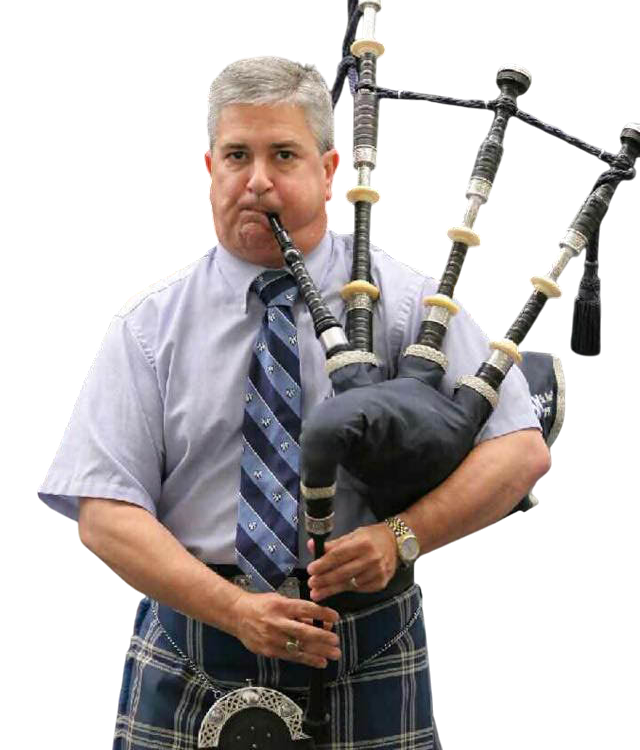
This year, President Bill Caudill will conclude the first year of his second two-year term (which must be his last term under EUSPBA rules), and has highlighted several accomplishments in 2025 in a message to members, while previewing a few objectives for 2026.
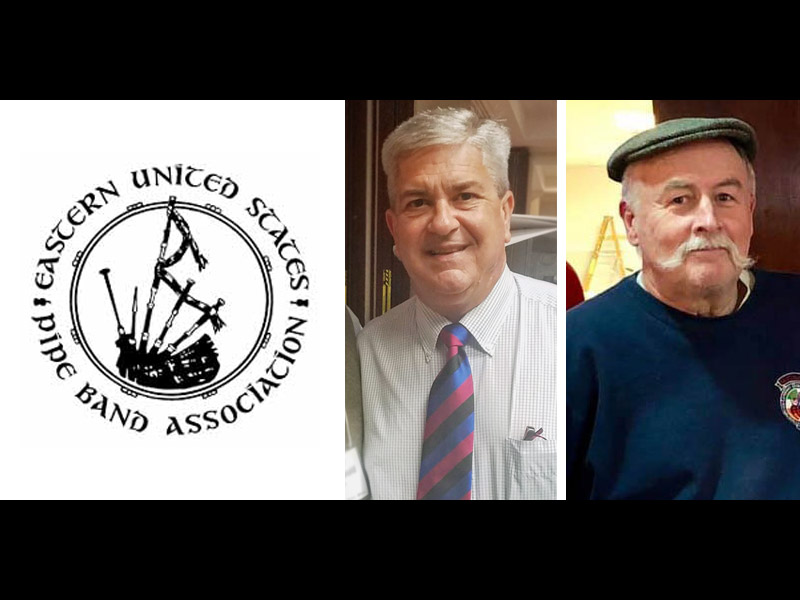
Chief among them is an extensive remodelling of its website, a project managed by EUSPBA member Andrew Douglas. Caudill said, “If there were a most valuable player award for a member of our Executive Committee, it would be Andrew Douglas, who not only took on the website issue and saved us a substantive five-figure sum.”
Douglas and EUSPBA Music Board Chair Nick Hudson spearheaded the EUSPBA’s new “merit-based system” for season standings and gradings using a “greatest hits” method. The new approach replaces the previous method, in which “those who competed the most and got the most placings often rose to the top, whether they were actually the best or not.”
Caudill said the new system “will potentially eliminate that Grade 4 or 3 piper who plays and places third or fourth at 29 events and thus becomes the season champion.” He added that fears that the new system might discourage members from competing more weren’t realized in 2025, with most contests seeing entries equal to or surpassing those of 2024.
“It is felt that this will provide a fairer method of advancement based on equivocal data,” Caudill wrote in a message to members. “I look forward to seeing how this new system may help us make methodical and unbiased decisions regarding upgrades, which will ensure high standards within all grades.”
In his message to members, Caudill acknowledged the “grading issues that occurred with one of our bands in their overseas competitive venture this past summer,” in reference to the lengthy matter of the Grade 3 Commonwealth Pipes & Drums from Massachusetts being put in Grade 2 by the RSPBA upon receipt of the band’s entry and roster details for the World Championships.
“I hope that in the future our grading decisions will be respected worldwide and that there will not be a reason to question bands or rosters in any way.”
“It is my feeling that our Music Board and associated parties are well aware of and keeping our band gradings at a world standard, however, I hope that in the future that our grading decisions will be respected worldwide and that there will not be reason to question bands or rosters in any way because we all play the game fairly and by the rules.”
Caudill said that his organization’s plans to tackle a longstanding “band-hopping” issue, in which pipers and drummers find loopholes in the rules to switch between bands.
“It is an issue we felt needed to be addressed based on some occurrences and observations made this year,” Caudill said. “The Executive Committee, in general, want to see our bands play fair and observe the rules of other associations, as well as our own, when they travel to them.”
The organization’s redevelopment of its judging panel, categorizing adjudicators as A or B, depending on their competitive history, Caudill said, has been fully implemented, bringing the association in line with others in North America.
He added that the number of EUSPBA members and entries to sanctioned competitions has returned to pre-COVID levels and that the association is in “very good shape financially.”
Caudill heaped praise and credit on the members of the Executive Committee, “who provide so much time and effort toward the good of the association. In many ways, I serve as the forward-facing representative of the association. Nonetheless, the true face of the organization is [our] executive committee. We have a great team, and it has been a pleasure to work with all of them on issues that affect and have benefits to us all.”
A correction was made on Dec. 1, 2025: An earlier version of this article incorrectly stated that Bill Caudill was completing the second year of his second two-year term. He completes his first year this year.




NO COMMENTS YET