
Ian McLellan, 1937–2025
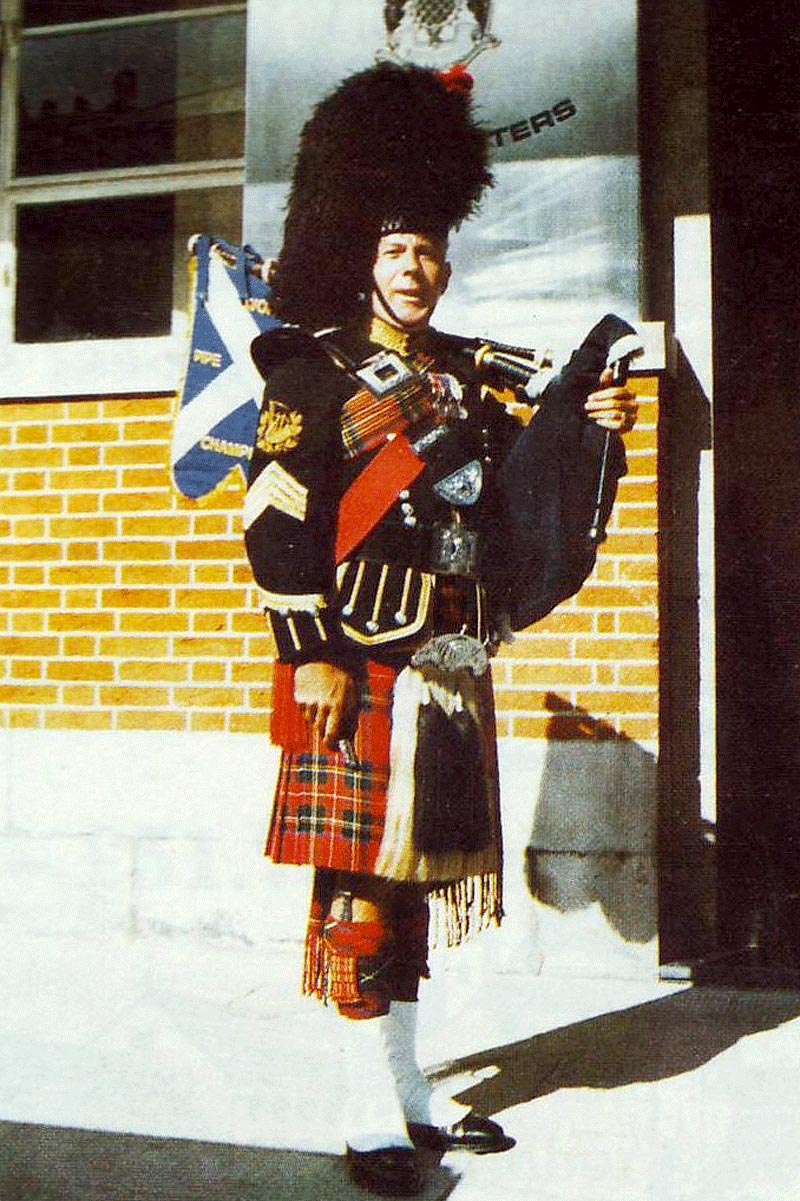 The truly great Ian McLellan died on December 3, 2025, at the age of 88.
A towering figure in pipe band history, a world-class soloist, and one of Scotland’s most influential adjudicators, he was one of the most accomplished leaders in pipe band history. For more than six decades, he shaped almost every aspect of the Highland piping world: pipe bands, solo competition and judging, leaving an unparalleled legacy.
He was born on January 31, 1937. When we last corresponded with him on November 8, 2025, this time asking him to categorically and definitively settle how his name is spelled, McLellan wrote:
“I was born in Clydebank. My father was Neil McLellan, and my mother was Mary. I was christened John Andrew McLellan after both my grandfathers. After awhile, as there were so many Johns in the family that they decided to call me Ian. It was after I joined the Glasgow Police and came under the tutelage of Ronald Lawrie, who decided it was time for me to enter the solo piping, so I entered as John McLellan – my official name. It was then brought to my attention that two John McLellans were playing in competitions. Guess who the other one was? John Maclellan RSM, Seaforth Highlanders. So it was decided from there on I would enter as Ian McLellan, and there would be no doubt. So that’s how I became Ian McLellan of the piping world.”
He started his piping journey in 1949 with the 214th Boys Brigade Company. In 1955, he joined the Grade 1 Renfrew Pipe Band under Pipe-Major James Healey until 1958, when he was called up for two years of National Service with the Argyll & Sutherland Highlanders, during which he studied piobaireachd under Pipe-Major Andrew Pitkeathly.
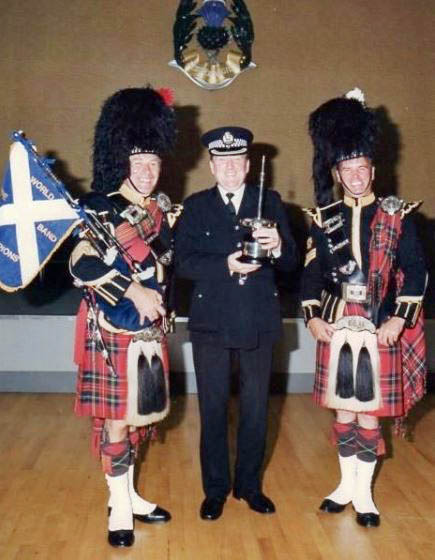
Upon completion of his military duties, McLellan re-joined Renfrew, now under Pipe-Major Tom Anderson, whom he cited as having a profound influence on his own pipe band leadership style. The band would place second twice at the World Pipe Band Championships.
In 1962, he joined the Glasgow Police force, and played in the band under Pipe-Major Angus MacDonald of South Uist, until Ronnie Lawrie took the role at the end of the decade. McLellan succeeded Lawrie in 1972, thus commencing what would become perhaps the most dominating run of pipe band competitive success in history.
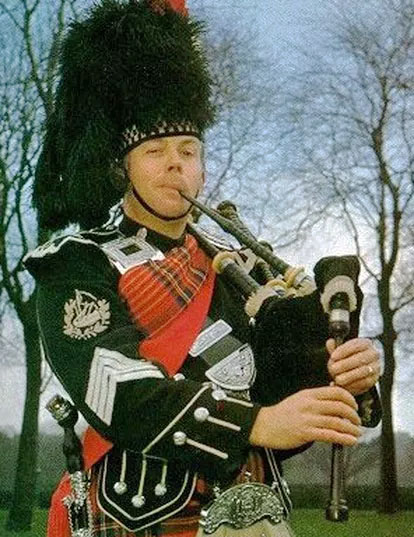
Under McLellan, the Glasgow/Strathclyde Police won the 1976 World Championship, breaking a 25-year spell without the top prize. The band would go on to win 11 more (1979, ’81, ’82, ’83, ’84, ’85, ’86, ’88, ’89, ’90, ’91), and its run of six consecutive titles (1981-’86) remains a record unlikely to be broken. Had it not been for the 78th Fraser Highlanders’ one-off 1987 victory, when the Strathclyde Police were third, McLellan might have owned a streak of 10 straight Worlds wins.
A model of consistency, McLellan’s band set a new benchmark for sound and precision playing. Though never known for creativity, the band’s renowned musicality and powerful “Polis sound” influenced the generations of bands that followed.
Beyond the World Championships, McLellan led the Glasgow/Strathclyde Police to dozens of major championship titles, all several times over. His ensemble focus and carefully crafted settings of classic tunes set a new benchmark for Grade 1 pipe band excellence.
“A pipe-major is a special breed of person. I think you’ve got to be a psychologist. You have to be able the know the pipers who can take the stick, and the others who go away in the corner and cry if you give them a row.” – Ian McLellan
As a light music competitor, McLellan was one of the best ever. Though his police duties limited his availability for the extended solo circuit, among his solo accolades were two Silver Star Former Winners’ MSRs at the Northern Meeting.
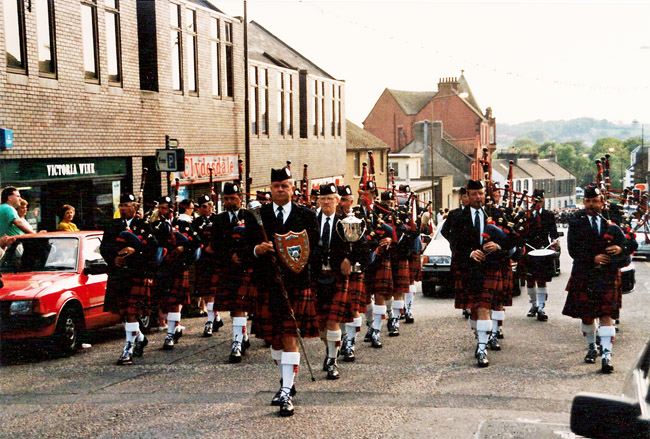
For all his piping and pipe band achievements, he regarded the British Empire Medal he was awarded in 1982 as the high point of his career.
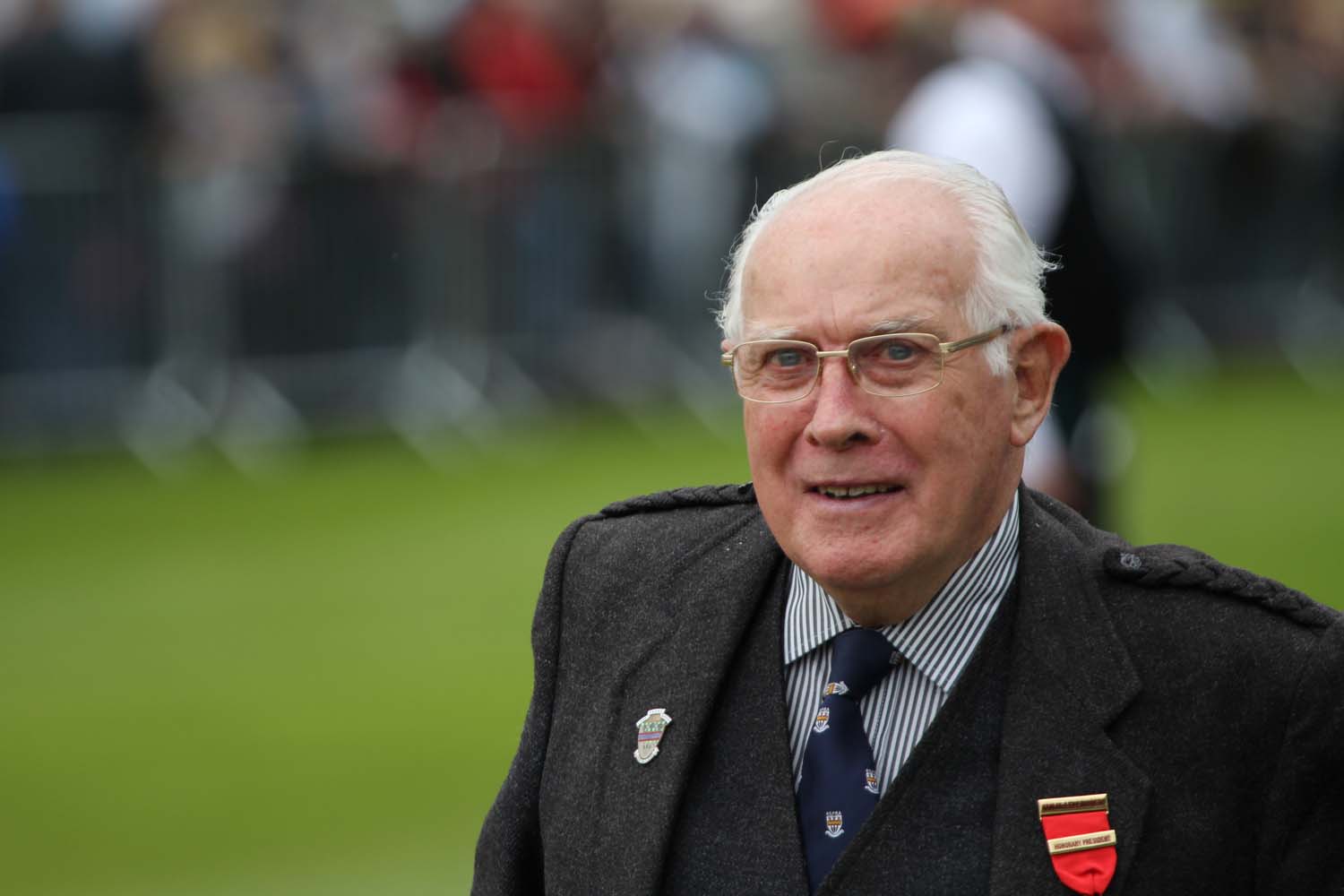
Following his retirement from competitive performance, McLellan became one of the most influential adjudicators in Scotland. As an RSPBA piping judge, he brought clarity, discipline, and musical insight to the bench, adjudicating at the highest levels for decades. His decisions were noted for their consistency, fairness, and understanding of both tradition and modern performance practice. He was equally respected in the solo world, serving as a judge for the Scottish Piping Society of London, the Northern Meeting, the Argyllshire Gathering, and numerous Highland games and indoor competitions across Britain and abroad.
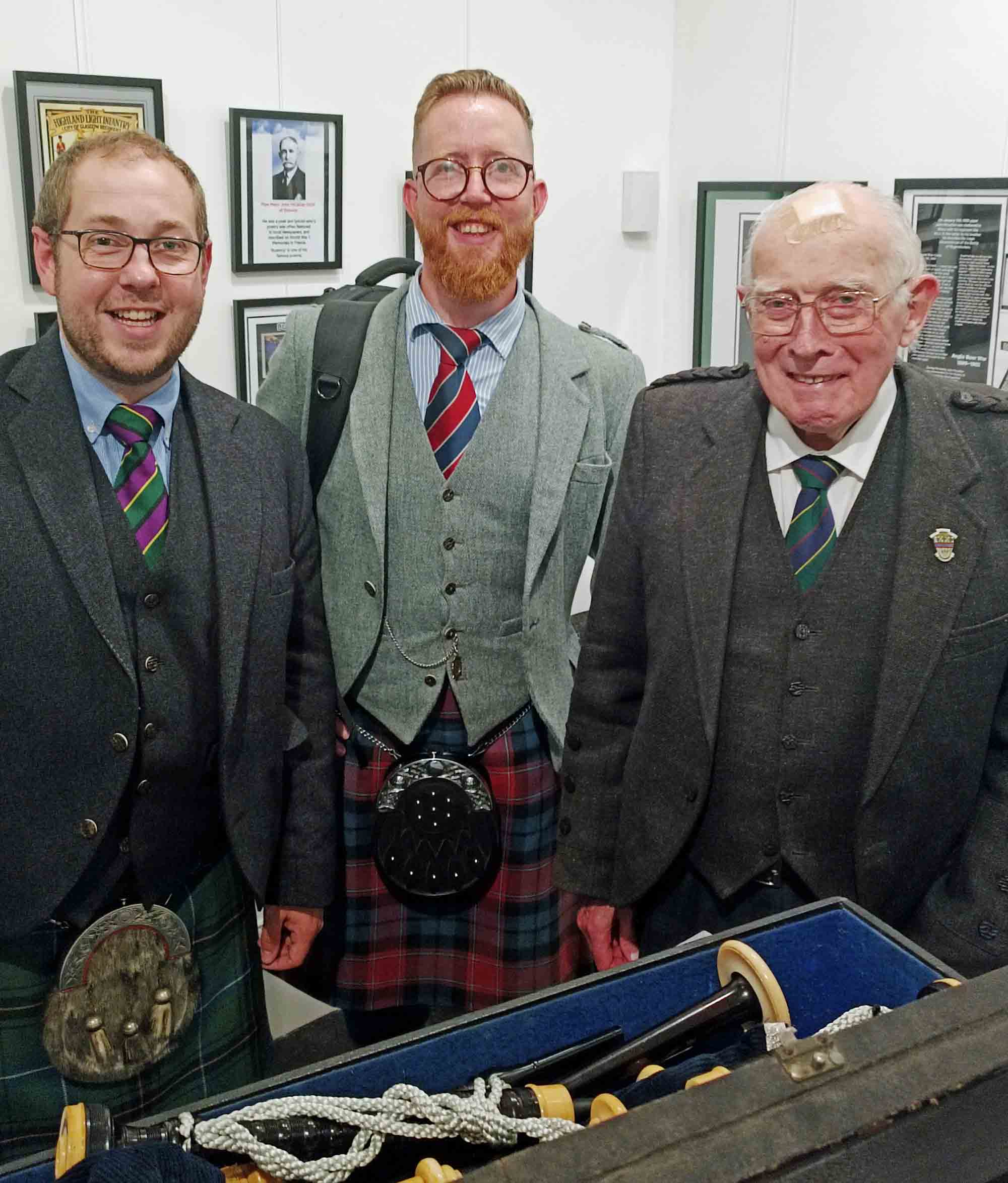
Ian McLellan shaped the character of modern pipe band performance. Many of today’s leading pipers and pipe majors trace their musical lineage to the example he set.
But for all of his competitive and musical accomplishments, Ian McLellan will be remembered by those who knew him foremost for his kind and generous nature. He was an absolute gentleman.
At this sad time, we extend our sympathies to Ian McLellan’s family, former bandmates, and all who knew him. He will be universally remembered as one of the true giants of the art.
We will publish our extensive 1993 pipe|drums Interview with Ian McLellan in due course.
To ensure they will be retained forever for historical purposes, readers are encouraged to contribute their thoughts using our Comments feature below.

The piping world has lost a true legend. My heartfelt condolences go out to Ian’s family and friends. Ian was a hero of mine in my early days as P/M, and much of what I achieved came from studying his approach. I will never forget standing close to Strathclyde Police Pipe Band, with the hairs on the back of my neck standing up.
A picture of Matt Wilson, Ian, and myself with the Worlds trophy has hung proudly in our house since 2022, and I will always treasure it.
Rest easy, P/M.
Richard Parkes
So very sad to hear this. A true gentleman and a dear friend to me and my family. Ian, the world was a better place because of you. Your legacy will live on. To his family, my deepest sympathy.
This is a loss to all who love pipe bands. Ian was a lovely person, a fierce competitor and could be really direct as a leader. When I lived in Paisley, I used to go for a piob lesson in Glasgow, then stop at RSPBA HQ in Washington St to play my pipes in one of their practice booths. Then, on the days when they were there, I’d sneak up to the hall to listen to the Strathclyde Police practice, and I got to watch Ian put the band through their music and work on the sound. Ian was always kind about me being there, pointing out that he was a Renfrew player too. I have a solid memory of competing at the Aberdeen World’s in 1981 with Babcock-Renfrew, playing MSRs in the morning and making it into the final in the afternoon. When Strathclyde Police came on to play, the heavens opened and dumped hard, cold rain on them throughout the medley. There seemed to little effect on the sound, and people watched and listened with amazement as the band played a blinder, and carried off the first of many championships in a row. In later years, playing with SFU, Ian and the Strathclyde Police were the gold standard we aimed for, and trying to match their sound was always the challenge. Condolences to Ian’s family, close friends and long-time band colleagues.