

Inveraray’s “Dream Valley” medley: Liddell, McWhirter, and Henderson analyze the music that sealed the 2025 World Championship – Part 1
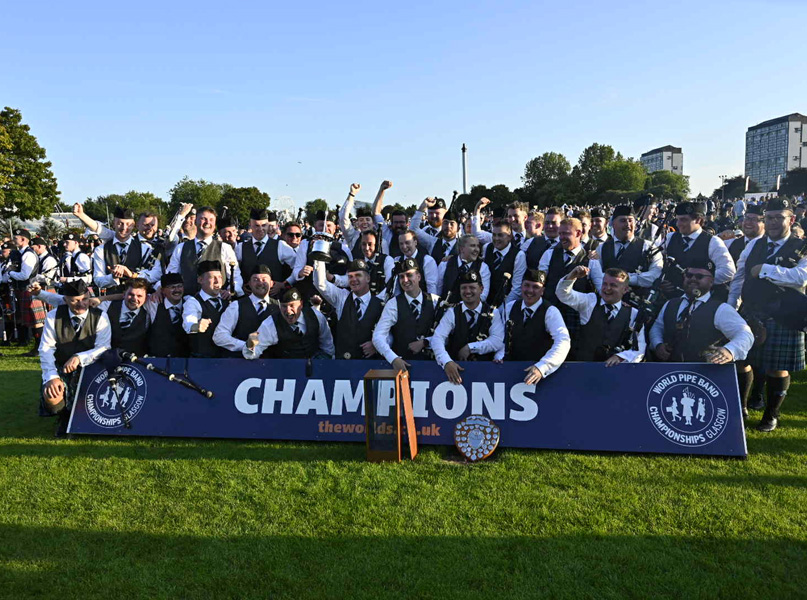
Within minutes of Inveraray & District finishing their “Dream Valley” performance at the 2025 World Pipe Band Championships, many in the piping and drumming world described it as the best medley in pipe band history.
The cameras caught Pipe-Major Stuart Liddell’s emotional response in the final minute of the performance. If he could be so moved, so too could all fans of pipe band music.
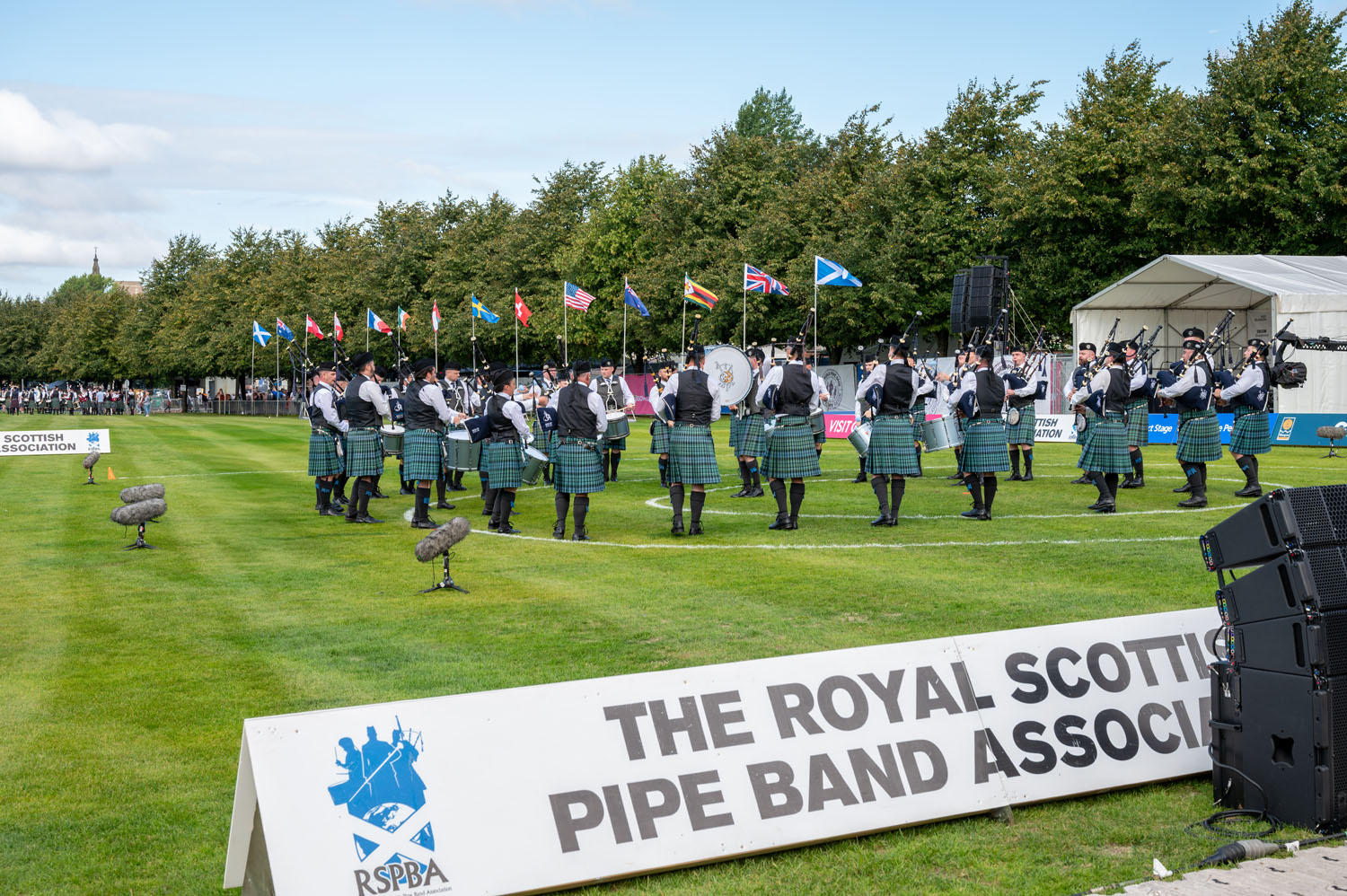
We asked Liddell, Leading-Drummer Steven McWhirter and Pipe-Sergeant Alasdair “Ali” Henderson if they might be willing to discuss the medley while listening to an audio recording of the performance. How was it created? What was going on in certain places? What was the band trying to achieve musically?
They agreed, and we’re pleased to bring pipes|drums readers/listeners/viewers this exclusive analysis and annotation of Inveraray & District’s “Dream Valley” medley by the leaders who assembled it.
Here are the compositions that make up the medley:
- “My Dream Valley on the Road to Glendaruel” – 3/4 march, composed by John McLellan, Dunoon
- “The Famous Baravan” – jig, composed by Gordon Duncan
- “Donald McKillop” – jig, composed by Sandy Hain
- “Neil Sutherland of Lairg” – jig, composed by Archie MacNeill
- “Gavin Ferguson” – strathspey, composed by Chris Armstrong
- “The Ale is Dear” – reel, traditional
- “My Dream Valley on the Road to Glendaruel” (reprise)
- “Lochanside” – 3/4 march, composed by John McLellan, Dunoon
We hope you enjoy this exclusive and quite historic discussion, which we will publish in two parts.
Here’s the discussion transcript, with minor editing for written clarity.
Part 1
pipes|drums: It is September 2025, and we have a great discussion group with the leaders of Inveraray & District, 2025 World Pipe Band Champions, only about a month since they won their fourth world championship, clinching the deal, really, playing the medley on Saturday, which has been much talked about, much discussed around the world as being one of the greatest medleys, if not the greatest medley ever played.
We thought we’d get together Pipe-Major Stuart Liddell, Leading-Drummer Steven McWhirter and Pipe-Sergeant Ali Henderson. They’re all coming to us from their places in Scotland and it’s terrific to have them on board. Thanks for taking the time.
Set the scene for what was going through your heads when you were going into that final medley on the Saturday of the 2025 World Championships.
Stuart Liddell: That was our fourth run of the championship. We’re feeling pretty good up to this point and looking very much forward to the performance of this medley. We knew it would be risky and different; we’d already played it at the European Championship, so it’s been exposed, but we’re very much looking forward to showcasing it in the World’s.
I suppose a bit of excitement and, yeah, really looking forward to producing the music. I don’t think I felt too nervous or anything like that. I was fairly relaxed. I don’t know about you guys?
Steven McWhirter: No, pretty calm as well, I think, strangely. I’m usually quite nervous at the World’s, so I think the whole band was excited to play this medley. I think everybody got behind the idea of the John McLellan anniversary year, and the fact that we had only played it once was a big thing. To play it for only the second time at the World’s on the big stage was quite exciting. I definitely think that was the overriding feeling amongst the drummers anyway.
pipes|drums: Ali, same kind of thoughts?
Alasdair Henderson: Yeah, very much the same. There’s always something special, I think, for maybe all the bands when they go into that final Saturday medley. I was very content with the way the band had performed over the previous three runs. I think that really helped to calm the nerves. I do get nervous like Steven, and I’m sure Stuart as well. But I think my nerves appear maybe a week or two before the World’s when we’re just trying to get the last things all lined up, whether it be musically or usually totally, you you’re just trying to make sure everybody’s going to be ready for the big day. by the time the World’s comes, it’s usually always fine. And I think it was because we had had three pretty positive runs before this medley. was good. It was good. Good feeling.
pipes|drums: Why don’t we do something different, and play the audio from the performance and you guys can chime in with some commentary along the way? We’ll stop it at any moment and just talk about the whole process of what you guys were going through and it should be really interesting. Let’s go from the beginning.
[recording plays]
By this point, you’re into the circle with “My Dream Valley,” a steady performance starting. Why did you come up with “My Dream Valley of the Road to Glendaruel” as your opening?
Stuart Liddell: Hahaha. Well . . .
Steven McWhirter: We wanted to try to catch Stuart off guard, not knowing when to turn into the circle on a 3/4 march!
Stuart Liddell: Yeah. That was a tricky one. Yeah, we didn’t address this until, I don’t know, when did we address it? I don’t know, the week of the World’s or something?
Steven McWhirter: I don’t think we did.
Stuart Liddell: Yeah.
Alasdair Henderson: Well, we did address it in the morning chanter session. Turn as soon as we can. I go up, I turn straight away, nobody else has turned. I return back out and then turn back in again. I don’t know, there’s a video somewhere. I look like a plonker.
Stuart Liddell: Yeah, my fault. I just forgot, that’s all.
pipes|drums: That’s funny. Musically, what was the intention?
Stuart Liddell: We have quite a gruelling process when we put the medley together. The ending piece had already been established. I believe it had actually been a couple of years, I think Andrew Douglas came up with it. Is it two years, Ali? I’m not sure. That had already been presented, and after some liaising between Ali and Andrew Douglas, they came up with a sort of finished article based on the “Dream Valley,” so it seemed only appropriate that the “Dream Valley” 3/4 would be the opening piece. In fact, if memory serves me right, we tried to put a whole medley together of Jock McLellan tunes initially and found that it was kind of, well, didn’t quite sort of work out that way. That was the reason for the opener. Great that it tied in to Jock’s 150th anniversary of his birth.
So that’s how that came about. There was another tune that we were going to come out of “Dream Valley” into a Fred Morrison tune, which lasted for a wee while, but again we go through this process where we try things and we live with it for a while, and then, No, that’s not going to work, so we try something else. We decided to play the whole tune, the full “Dream Valley” fairly recently, right up to the end and the harmonies, of course, amazingly written by Ali. Fantastic harmonies all throughout. Yeah, so that’s how that came about.
pipes|drums: Okay, why don’t we get the recording going and feel free to chime in during while the audio is going on if you want. We can keep it going.
[recording plays]
Alasdair Henderson: Here’s a little fact. You see right at the end there: we have that little bridge that goes from “The Dream Valley” into the jigs. We got to final tuning in the morning, and I was just about to walk on, but I don’t know; something had been bugging me about that little break. It was fairly well complete, but there was a little harmony or something that just needed to be added.
I just thought I’d try this little thing in the final tuning, just before we went into the actual tune, and I was like, Okay, that sounds great. I think I’m going to go with that. I was over on the other side of the band or something, tuning somebody else up. I ran over to where I usually stand in the band and I got the couple of guys right next to me. I’m like, “Right, okay, listen up. I’m going to do this extra little thing. It’s going to do this tiny little harmony. It’s not going to be a mistake. I’m going to mean to do it.” I just wanted to let them know in case they freaked out. They were like, “Oh, man, what’s happening here?” “When you hear this bit,” and I sang it to them, and they’re “Uh, okay. Um . . .” and it was kind of cool. It builds and builds and builds. I mean, it literally built right to the final tuning. It was just the tiniest harmony.
Stuart Liddell: I love it, it’s absolutely great. I heard it for the first time after the event, on the recording. “What?!” It was great. Aye. And then you told me the story. Ah jeez. “What?!”
And the drumming’s great in there as well. I love the bass section; they really are shining there. Nailed it, actually.
Steven McWhirter: Yeah, I figured that was a pretty good highlight — the bass section there. Kind of somewhat inspired by the 78th Frasers of old. Quite in your face with the bass and tenors and the snares just kind of underlying the whole thing until we get to jig. Yeah, that break was a bit of a process as well. We tried a lot of different scenarios. But we got it right in the end, think. Well, Ali did.
Alasdair Henderson: That wasn’t the break we changed. No, that’s coming up. It was quite a long process, that break. Originally, we didn’t finish the tune, and we brought it in way earlier. I can’t remember what we’d done. There are so many variations of that break.
pipes|drums: And Steven, noticing when you were listening, you had your eyes closed and were listening intently. Was there something that you heard there that really caught your ear or you didn’t like or . . . ?
Steven McWhirter: No, that’s about the third time I’ve listened to the medley. I’ve not listened to it much since the day, because I want to remember what it felt like on the day. When so many people talk about how good it is, when you’re in it and you listen back to it, sometimes you – I do, anyway – pick holes all over it and then it takes the shine off it a little bit. But so far so good. That’s quite good.
pipes|drums: Let’s pick this up again.
[Recording plays]
pipes|drums: The band is tightly in the pocket, as they say. Those jigs are just rolling perfectly along. Thoughts about intricate harmonies coming in as well?
Alasdair Henderson: Yes. See that third part when the drummer’s cut out? It’s great. There’s a little bit of space there. A difficult thing to do, sometimes as a pipe corps, is to maintain the tempo. The melody of the tune right there is just bouncing around between low A, C and E. It’s just kind of a [sings] – the perfect notes for those out there that are familiar with music theory. That’s just a perfect A-major chord: A, C and E. You can hear that we’re bouncing around between the same note, but almost like in an alternate pattern. The melody’s down on the low-A, and we start on the E, and they keep doing this the whole way through. It probably doesn’t take away from the real gritty – lots of GDEs and grace notes there. It’s really kind of pumping along.
We’ve got space to do it. It’s maybe a little space to show off a little bit technically, and the harmony, hopefully, isn’t taken away from that. It’s just kind of remaining in the same kind of like little zone because we’re just using the same notes the whole way through. Yeah, I like that bit actually. It’s quite cool.
Stuart Liddell: Yeah, we had originally had “The Herring Wife” in there, a Gordon Duncan arrangement of that, plus an IDPB version. I made sure we had both. We lived through it. Around February, I think we decided . . . well, Steven thought it would be stronger if we stuck with “Duncan McKillop,” which was the right choice it turned out in the end. We also had a wee gimmick in there in the third part where we play what the Irish pipers call a “crann” when the drummers drop out and they come back in again you’ll hear a sort of triplet movement coming in. G, D and C gracenotes and an E gracenote. I don’t know if this comes over. I can’t even play it. [Stuart demonstrates.] There you go. That’s in there. There’s also another gimmick that we had in the first jig, which one of our pipers came up with, the Gordon Duncan jig. We later removed it because we felt it was not adding too much. It was quite early on in the medley as well. We removed that one. Side note.
pipes|drums: That triad Ali was talking about, the A-C-E chord, seems tailor-made for the tenor drummers. Steven, really complementary there.
Steven McWhirter: Yeah, to be honest, we had the tenors in initially almost all the way through that part. And then I decided to take them out, like leave them out until almost the last minute. I just felt the piping was so good there on its own, and it was one of the few moments where it was just going to be piping on its own. And I always think that’s quite an impressive moment at the World’s or whenever. It’s all clicking into place. I just kind of left them out until the last line, so the build was rapid into the last part once the tenors were in.
pipes|drums: All right, let’s pick this up again.
[recording plays]
Stuart Liddell: Yeah, well that’s the other break that Ali was talking about. We did muck about with that quite a lot and it’s only recently that we came up with the finished article. I think it was Greg McAllister’s idea prior to that. Brodie [Watson-Massey] came up with the idea as well. Ali, can you remember the timeline of that? I can’t remember what we did there.
Steven McWhirter: I can. You were going out the door heading off to Lorient and you were like, “I think the break to this strathspey needs to change,” and kept going. That was it. And then there was a whole bunch of messages back and forth and recordings.
Stuart Liddell: Hahaha! Cool. Yeah.
pipes|drums: Ali, does that match your memory?
Alasdair Henderson: That was the weekend practice that was quite intense. I used to have a full head of hair until that weekend, thinking about this damn break! Yeah, remember that, Steven? I think we decided that, no matter what Stuart said when he came back from Lorient that was just the way it was going to be. Just like, This is IT.
Steven McWhirter: Yep.
pipes|drums: Well, you hit the mark with it!
Alasdair Henderson: It’s hard. See that, when you’re trying to go from jigs that, well, they were pretty flying at the best of times in our band, because we don’t like to play too slowly. But especially at the World’s, when they’re clinking along, I don’t even know what the BPM [beats per minute] was, probably 125 or something? Try to get that into strathspey timing. You want to keep some of the traditional lift that you should be getting in a strathspey.
I don’t know if you’ve ever tried playing a strathspey at 125 beats a minute, but it’s way too hard to think about with your own pipe, never mind 20-odd pipers. And I think that’s where the problem was when we were trying to marry up this really driving tempo full of harmony and then try to keep the lift.
Originally, we finished with the birl at the end of the jigs, and then we were just going to smash straight into that triplet run, tuka-dum-tum. It’s really difficult to catch the strathspey, especially coming off a tripling like that. I think that’s why.
Yeah, it was Greg, wasn’t it? Greg came up with a little dee-ka-da-be-dee-da-da-da-dum-dum, just a little snippet of strathspey to help the guys adjust to this new idiom that was about to come up. It worked. It really helped out a lot.
Steven McWhirter: Yeah, and I think the way the drumming is written there, there’s a big decrescendo roll. I play the transition with the pipers, but then the rest of the drummers coming in the decrescendo roll, which normally makes drummers slow down, so it kind of pulled the energy out of it a little bit back to where It was probably a wee bit more comfortable for the pipers as well.
pipes|drums: Well, it’s brilliant how it came together and you pulled it off. I bet we’re going to hear a lot of that style of transition in the future. All right, let’s keep this going.
[recording plays]
pipes|drums: So that part, when you change suddenly and move to a different key– really inventive. Ali, I’m suspecting you might’ve had a lot to do with that?
Alasdair Henderson: The idea came on the M8 Motorway to Edinburgh. I can’t remember exactly what had happened at the practice. I think it was another one of those moments where we kind of all walked out the door like, Aye, that first tune. Because we had another tune in there, obviously. We could probably give you a set list of what the medley chould have been. Well, we really got it. When did we get it going?
Steven McWhirter: Perth [the 2025 European Championships six days before the World’s] originally. Or just before Frankfurt in March. [The band had played a concert in Germany.]
Alasdair Henderson: We didn’t have a first half at Frankfurt when we played it. Anyway, seeing the Frankfurt concert has still got the other tune in, “Willie Murray’s” or whatever it is, “Willie Cumming’s.”
Stuart Liddell: Yeah, “Willie Cummings,” yeah.
Alasdair Henderson: Aye, we walked out the door and said, That tune isn’t right. And then, I don’t know, I was just on the road back, and “The Ale is Dear” popped into my head. I love that little tune. It’s really, really driving. We wanted that kind of punchy tune. You love that kind of break, do you not, Steven, where just, everyone stops . . . two beats . . . boom! and then it punches right in with the next tune. That’s a perfect tune to do that with.
Steven McWhirter: Yeah. That was a voice note to the group chat that night. He sang the tune and I think all of us right away were like, That’s the tune. I actually wrote the drum score to you singing on the voice note.
Alasdair Henderson: Hey, braw braw! I got home, I don’t know, half past 11, went on to the music score and typed out the whole thing with the harmonies and everything and sent it. Either later that night or just the very first thing in the morning. I don’t know. That’s probably the power of that wee tune. It’s so easy to get. Very, you know, easy to listen to.
The harmonies almost go themselves and there’s a little variation the second time through where it kind of goes [sings] and it just kind of feels like it keeps going down and not stabbed into the low-G’s. That’s what we did.
“It was at that point it felt very good. The F’s, the tuning of the F’s in particular, were very, very stable. The whole pipe sound was very stable. You could just relax and play the music and enjoy it for what it is.” – Stuart Liddell
pipes|drums: What about the performance right there, Stuart? Are you feeling good about it at that point? Did you feel like you just needed to carry it through and it might be something special?
Stuart Liddell: Yeah. It was at that point it felt very good. The F’s, the tuning of the F’s in particular, were very, very stable. The whole pipe sound was very stable. You could just relax and play the music and enjoy it for what it is. A lot of highlights in that tune, really, especially the third part when, if you listen to Steven’s score, the third part, it’s a real groove in there that’s one of the highlights for me in the medley.
Steven McWhirter: Yeah, Ian Lawson came up with that on a drummer’s practice. He thought it should be less pipe bandy and a bit more of a riff to highlight that third part. Yeah, that turned out quite good.
pipes|drums: All right, let’s pick it up again.
[recording plays]
pipes|drums: At this point, we’re hearing the reprise of “The Dream Valley” coming through for the first time. And the rest of it kind of takes shape off of “The Dream Valley” again. Would that be accurate? Is that intentional, or did it just kind of carry forth somehow?
Alasdair Henderson: Yeah, for sure. I think Stuart mentioned it at the very start. That’s an original arrangement by Andrew Douglas. That hornpipe is a composition of his written very loosely around the same melody notes “The Dream Valley.” I think he composed that hornpipe with the intention of reprising “The Dream Valley” over it, which was very cool. And he’d done it a couple of years beforehand. I thought it would be great for the band. I work in a school here in Edinburgh, Fettes College, and I gave it to the kids at school so they could play it in one of their concerts, because I wanted to see how it comes across.
Sometimes we’ve got really technical arrangements. It can be a hit or miss. There’s a very busy underlying line that it has to come over. It requires a lot of thought from the drum corps to get their part right. And for us as a pipe corps, you’ve got to be absolutely bang on with the playing because there’s a whole section of pipers in there playing a hornpipe.
They can’t really adjust when you’re playing. You can maybe stretch that D because you feel like emphasizing it a bit, but the guys playing the hornpipe line can’t hold back in bits, or they can’t speed up in bits. It’s very, very hard to get it right. I wanted to let the kids try it first and see if they played it well.
And now it’s stuck out right away. It’s such a great arrangement.
pipes|drums: Good stuff. Let’s continue.
[recording plays]
Stuart Liddell: So was it just a collaboration between you and Andrew Douglas then, Ali? The harmonies – did he have them written as well?
Alasdair Henderson: He had a stepping line written down, almost like Pacobel’s “Canon” where it steps down. And then the harmonies you hear in that fast line are a very slight modification of the hornpipe that you hear beforehand. I took a couple of bits out, just so it didn’t get too busy at times. But yeah, if you listen very carefully, you’ll hear it’s the same, it’s the same, man. It’s the same hornpipe.
pipes|drums: Let’s pick it up.
[Recording plays]
pipes|drums: Talk about the snare scoring there, Steven. It’s really martial sounding, very military and regimented. You could have gone along with the hornpipe line, but you chose to go with the march line.
Steven McWhirter: Yeah, I think that stems back to the opener. Originally, when we decided to play the opener, I heard pads on the drum – a low tension sound. A bit like the Toronto Police maybe 10 years ago. It started like that, and then the opener evolved into pipe band, but a bit busier, like a hornpipe to where the closer was going to go, to give a bit of a taste in the opener of what was to come. The pads thing didn’t work out. We couldn’t get the right pads to work for us.
“I wanted young kids to be able to listen to the medley and be like, “I can play that.” Often, when young people listen to Grade 1 bands, they think it’s great but they don’t totally understand what’s being played. If they hear a big band playing something they can already play, then I feel like that in a way inspires them to keep going.” – Steven McWhirter
And then when I was writing the closer, I’d kind of got stuck with that theme: the very open, regimental theme. But actually, Andrew Douglas recorded himself playing drums over the top of it, because there were a couple of very key harmony lines in it. There’s a big run of triplets in it that he wanted, that he wanted to hear.
There are actually two runs of triplets that I wasn’t hearing in the recording he had made. But obviously when he wrote the harmony that’s what he heard coming out strong. It followed his blueprint, if you want, and made it a little bit more user-friendly for real drummers.
But when we get to the “Lochanside” part, when the wee bit of “Lochanside” comes in, I had decided that that was going to be a mass band score that everyone knows. It’s in 4/4 as well. It actually fits better there than it does when bands play that score as a 3/4.
I wanted young kids to be able to listen to the medley and be like, “I can play that.” Often, when young people listen to Grade 1 bands, they think it’s great but they don’t totally understand what’s being played. If they hear a big band playing something they can already play, then I feel like that in a way inspires them to keep going, if you know what mean.
Stay tuned to pipes|drums for Part 2 of our exclusive discussion on Inveraray’s Dream Valley Medley with Stuart Liddell, Steven McWhirter, and Alasdair Henderson coming soon.

NO COMMENTS YET