

A Bridge Too Far? Three leaders discuss why the upgrade from Grade 2 to Grade 1 can be so hard . . . or even fatal – Part 1
History shows that among all transitions, moving from Grade 2 to Grade 1 is the most difficult to sustain.
As with any grade, the best Grade 2 bands are accustomed to winning. It’s unusual for a band to continue to make the prize lists consistently in their new grade in their first year or even two or three. So that period of transition can be hard, particularly on players’ morale.
Unlike the other grades, though, bands new to Grade 1 are now competing at the world’s elite groups, more often than not against considerably larger groups, and intra-band sections that are comparably excellent. Newly ordained Grade 1 bands are often desperate to gain not just more personnel, but experienced pipers and drummers who can play at an outstanding level.
It’s a tough row to hoe, and very often they find themselves back in Grade 2 within a few years, and some, like Closkelt of Northern Ireland and Scotland’s Johnstone this year, choose to disband rather than keep flogging away at the bottom of Grade 1.
But what are the real reasons for the problem? How might the situation be improved? Are there any methods to keep morale high, retain players tempted to join the winners, or even keep the band afloat?
It’s time to talk about this relatively taboo topic with those who have lived it.

John Cairns of London, Ontario, was pipe-major of the Peel Regional Police Pipe Band for 16 years, the first eight of which were in Grade 1, until 2017 when the band was relegated to Grade 2 by the RSPBA. When Cairns retired after the 2025 season, the band was still in Grade 2 despite consistently winning on the Ontario competition circuit. But rather than despair at no longer being in the top grade, Cairns treated the downgrade as an opportunity.

The Los Angeles Scots under Pipe-Major Scott MacDonald won Grade 2 at the 1997 World Championships and were elevated to Grade 1. There, they eventually achieved decent success in Scotland, until being downgraded by the RSPBA in 2018, where they have remained ever since. Being based in Southern California presents the distinct challenge of fielding sufficient players with the ability and commitment needed to get back to and stay in Grade 1.
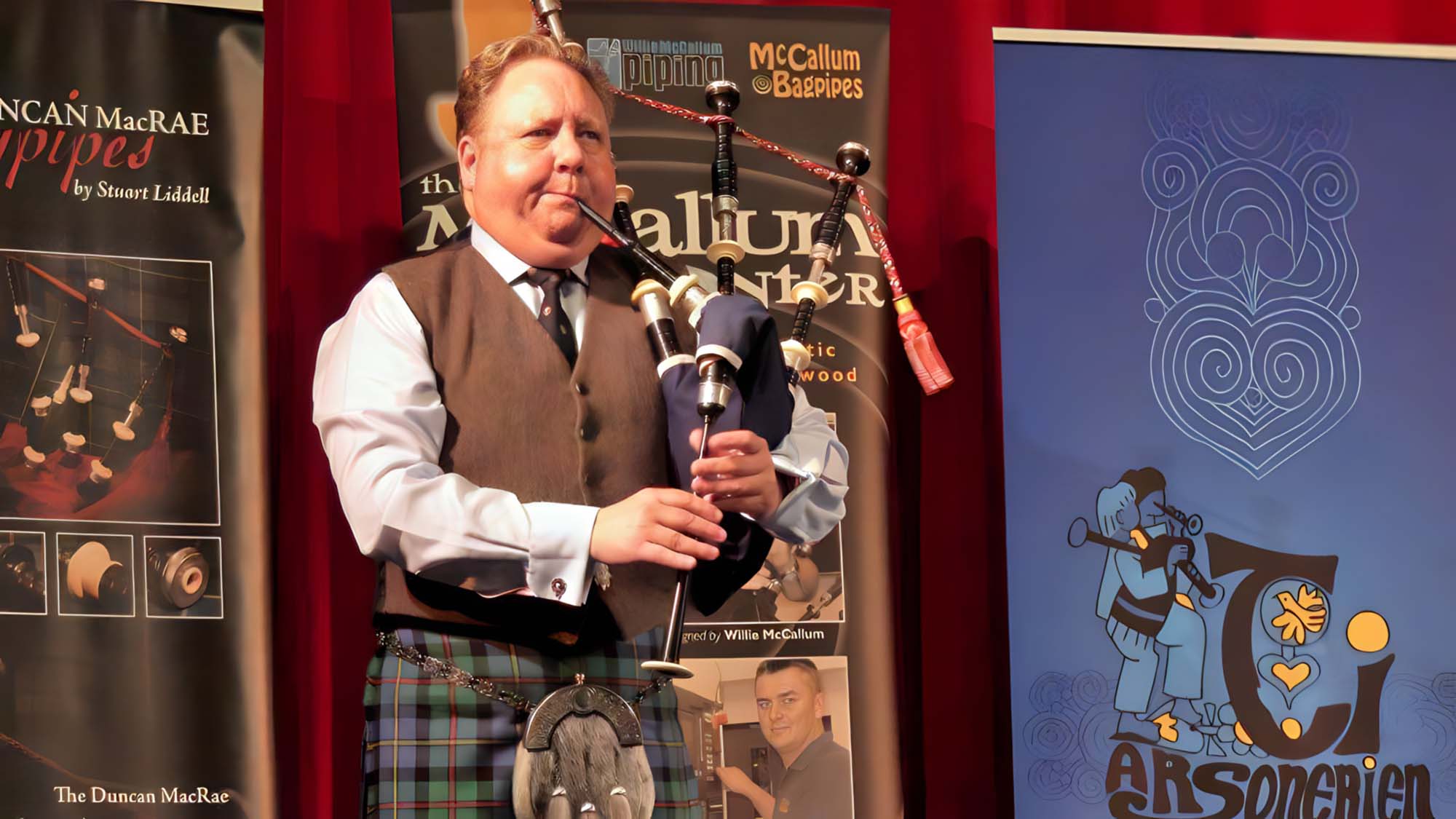
There’s perhaps no band on earth that has seen as many moves to Grade 1 to Grade 2 to Grade 1 and back as Scotland’s Glasgow Skye Association. While Kenny MacLeod was not pipe-major of the band when they were regraded, he was extremely close to it since first playing with them in the 1970s. MacLeod knows very well the challenges of rebuilding a band, recreating and sustaining interest, bolstering morale, and ensuring continuity from season to season. Now retired from competing, he remains on the pulse of the world pipe band scene and brings extraordinary insight to the issue, especially from a geographically small, player-rich Scottish scene.
Discussing important and even heretofore taboo topics, asking questions to gather information, and developing potential solutions to problems are essential tenets of pipes|drums.
Our conversation with these three world-class pipe band leaders was illuminating, insightful and educational. Here’s Part 1 of our panel discussion, which we will publish in three installments.
Here’s the transcript of Part 1, with minor edits for written clarity.
Part 1
pipes|drums: John Cairns, Scott MacDonald and Kenny MacLeod, thanks for joining us. Why don’t we start with the Grade 2 issue? Why is the transition from Grade 2 to Grade 1 so difficult for the majority of bands to make successfully? And by “successfully,” we mean permanently, with staying power.
John Cairns: Well, it’s quite obvious that the top end of Grade 2 and the top end of Grade 1, there’s a significant difference in sound, unison, ensemble, all of those aspects. And I get a sense that when you get moved up to Grade 1, that’s the benchmark that people are measuring you against. Can you reach that level? If bands are not given the time to develop and grow, then they’re going to fail. It becomes very difficult for a band to make that transition and instantly try to be competitive. They all end up trying to cut corners and do things that are not necessarily good in the long term for the band to move forward.
pipes|drums: And Kenny, you’re synonymous with Glasgow Skye (although you played with the Glasgow Police for a while), and you saw Glasgow Skye go from Grade 2 to Grade 1 to Grade 2 to Grade 1 a few times. Why is it so difficult to stick?
Kenny MacLeod: The pipe band landscape’s changed. I joined the Skye in the mid-’70s when I was just a young kid. Played for about 14 years, a few years as pipe-sergeant. Then I took over from my brother in the late ’80s. He’d already moved the band up to Grade 1 by that time. But when I knew we were going to have this discussion, I looked at what we would have done as a band in the late ’80s.
You would have a trio contest, quartets, mini-bands run by the RSPBA and the Glasgow branch. Then you have the five majors, which were baked in; they were always there. As the Skye we would play at Gourock, Bathgate, Barrhead, Bearsden, Lesmahagow, Balloch, Bridge of Allan, Rothesay, and Pitlochry. That’s 14 contests.
Now, why is that important? It’s important because, a lot of the time, it was a great opportunity to beat the big guns at a wee contest. We won in 1990, so we were first. The Strathclyde Police were second, and that was just at the end of the start of their six-in-a-row [Worlds wins] run. We were second at Bathgate that year as well. We were second in the mini-bands, and we were second in the quartets. Field Marshal won, and again, it was against all the big guns.
But it meant that young pipers looking for a band to go to didn’t just look at the bands that were getting prizes in the top six. They could look at us or other bands like us and say, Well, they’re not quite top six, mid-table, maybe in Grade 1, but I like what they’re doing, and they’re getting the odd prize here and there.
Now you don’t get that. In reality, there were three majors this year. The results were basically the same in Grade 1 and the top six, apart from the Worlds, obviously.
So, it’s hard to attract players when you’re locked into a position in the grade. And it is a real shame. I didn’t make a lot of contest rates this year, only got to Perth and the Worlds, but I heard Johnstone and Closkelt tuning up at Perth, and they were both excellent in the tuning park. We’re losing really good bands because of the way that the system’s almost skewed against these up-and-coming bands.
pipes|drums: And the Scottish geography – you talk about all those events that still go on, but bands choose not to go to them, at least at the upper grades. Kenny, you also played with the LA Scots for a little bit with Scott MacDonald in California. That’s a very different geography, of course, from Scotland. As the long-time pipe-major of the LA Scots in both Grade 2 and Grade 1, what’s your take?
Scott MacDonald: Well, I’m always interim! I need to find somebody to become pipe-major. But thanks for making me interim. But yeah, here in Los Angeles, when we started, we were a Grade 2 band, and the first time we ever travelled as the LA Scots was to the Maxville and Montreal games. We weren’t sure where we stood talent-wise.
We ended up getting a fourth, and you would have thought the band won the Worlds. And this was in ’92 or ’93. Everybody was sky high. And then we made a goal and said, Okay, now it’s time to go to Scotland. We were a local band at that point. In 1997, when we did win the Worlds, we were at the highest high, obviously, a local band.
But it didn’t take long for things to change. Our lead-drummer at the time was Duncan Millar, now an RSPBA judge. He left, went to school, and joined SFU. Immediately, we had a void and a key void. Lead-drummer is a very important piece of a pipe band. And at that point, moving up into Grade 1, we had to fill that void, and the pressure was on me.
“Instant gratification: I would say that bands have about two years, and then things start going the opposite direction. If it’s not in the upward trajectory, then it starts getting tough to retain your talent.” – Scott MacDonald
That’s when we started the process of getting out-of-town players. There are a couple of points: one is How do you define success in Grade 1? Is it top 10? Very difficult. We placed eleventh three times, but we still lacked retention. We went at it for a long time. Number two is talent. There wasn’t enough talent, unfortunately, in our geography. We had to start becoming an out-of-town kind of band.
Kenny came and played in the band for a number of years. The front rank of North Stratton today was in our band in 2013. There are many players playing in Grade 1 bands today who played with us. It’s very difficult.
So instant gratification. I would say that bands have about two years, and then things start going the opposite direction. If it’s not in the upward trajectory, then it starts getting tough to retain your talent.
pipes|drums: An “upward trajectory” meaning prize lists?
Scott MacDonald: Yeah. And then the other piece of this, where we had a difficult time, is that we were the only Grade 1 band in the States for years. Now there are a few, and you know, off and on, and there was nowhere to go to compete. Basically, they say, Well, just go to Canada, go to Vancouver to play against SFU. That’s a double-edged sword. You’re going up there for the experience, obviously.
But we weren’t as talented as them. And it’s a double-edged sword. It backfires on you because you stand there and listen to them tune up next to you, and we’re thinking, We’re not close to that. Plus, there’s a financial factor. Here in Los Angeles, we might as well go to Scotland. It costs us just as much to go to Scotland as it does to Toronto or Chicago. It really is a challenge. Those are the challenges of Grade 1.
pipes|drums: We’ve talked about going back in history. Kenny, has it become more difficult now for a Grade 2 band to move to Grade 1 than it was in the past because of the changing dynamic or culture of the pipe band scene?
Kenny MacLeod: Yeah, I think it has. Because of what I said, that there were not a lot of opportunities to play against a very top band. All you need is for them to slip up a bit, and for you to have a great run, and a judging panel to have the confidence to have you first. That doesn’t really happen anymore. It’s more difficult to make your name.
“The top six or seven in Grade 1 are superbands. They’ve got access to as many players as they want. They can afford to have quite a lot of players sitting on the sidelines just waiting for their chance to get into the band. And at the same time, I can’t say there’s nothing in particular wrong with that, but it’s just hard to beat that system.” – Kenny MacLeod
The Grade 1 bands now, the top six or seven in Grade 1 are superbands. They’ve got access to as many players as they want. They can afford to have quite a lot of players sitting on the sidelines just waiting for their chance to get into the band. And at the same time, I can’t say there’s nothing in particular wrong with that, but it’s just hard to beat that system.
That’s why I think the system is slightly skewed against the bands that do move into Grade 1. They don’t have the opportunities to really make their name against these top bands because at championships with four judges, and these guys are so good and so clean, it’s hard to get a chance to beat them.
pipes|drums: And John, assuming you identify with that or agree with it – and say if you don’t – but you were in a different situation when the Peel Regional Police when the band was downgraded, moved to Grade 2. You actually embraced it. You turned it into something different.
John Cairns: Just to touch on how more difficult it is before I answer that question. In the last few years, when we were in Grade 1, I know it’s not written down anywhere, or it’s not firm, but everybody, I think, knows that if you don’t improve enough to the point where you start to become competitive, there’s a good chance that you’ll be downgraded.
The last few years we played in Grade 1, we weren’t playing to try to win, we were simply playing, trying not to be last because we were so afraid that if we played poorly or too poorly, we’d be downgraded. When we did get downgraded, it was difficult, very difficult.
“In Toronto at that time, there were the Toronto Police, the 78th Frasers. You had Windsor Police, you had Ottawa Police – four or five bands all vying for the same talent pool. A band downgraded to Grade 2 was not a draw.” – John Cairns
As Scott was saying, in Toronto at that time, there were the Toronto Police, the 78th Frasers. You had Windsor Police, you had Ottawa Police – four or five bands all vying for the same talent pool.
A band downgraded to Grade 2 was not a draw. We decided to revamp our whole organization and start teaching. By doing so, we flipped the negativity into something positive, and luckily, we were able to retain almost all of the players because we were very concerned that we were going to lose them over frustration that they didn’t want to do this anymore.
pipes|drums: And Scott, in California, you’re even more widespread in a geography pool of players. Is it more difficult now to keep even that Grade 2 band together?
Scott MacDonald: It is. going back to when we actually asked to be moved down. In fact, probably not well known was that I wasn’t the pipe-major of the band at the time, but probably three years prior to us being downgraded, or asked to be downgraded, in 2018, I was urging the leadership of the band of the LA Scots, and having a lot of conversations that this is not good for the band to continue to play in Grade 1 and get last or qualify every umpteen years. We qualified three or four times during that whole time we were Grade 1. So that created a lot of trouble within the band emotionally.
“There was a faction within the band that said, No, we’re Grade 1 players, we’re professional players, we’re not going down. And then there was the other part of it, and me trying to be common sense about it, said, The band won’t survive this unless we do get downgraded.” – Scott MacDonald
There was a faction within the band that said, No, we’re Grade 1 players, we’re professional players, we’re not going down. And then there was the other part of it, and me trying to be common sense about it, said, The band won’t survive this unless we do get downgraded. It took about three years to do it internally.
Without getting into all the stuff about it, there were some strong personalities who were saying they threatened to leave the band and all that stuff. Bottom line, they ended up leaving anyway, but it was very difficult during that timeframe. It was basically a reset of our band.
Well, and that was in 2018, and we got our first prize in Grade 2 this last summer in Perth. It’s taken that long for us to get back to a quality level even in Grade 2. Most people know our band. We have a lot of players who are all over the place. About a little less than a third of the band is in Southern California. Yeah, it’s really difficult. Our first competition in the last two years was Perth. And our last competition of the year was the Worlds. There you go. We basically work all year long for two weeks. it is very difficult.
pipes|drums: We have to talk about the numbers situation. Kenny, you alluded to that, calling them super bands. They’ve got huge numbers, relatively speaking. And normally a band from Grade 2 is not going to have anywhere near that sort of personnel on the field. How much do you think the numbers game plays into it. Does it make it that much harder because of this numbers situation?
Kenny MacLeod: It does. You’ve got bands that are sitting on 25, 30 pipers, and they’ll maybe compete with 20, 21. To get associated even with these top bands, you’ve got to be a very good piper. If there was a way of capping the numbers, still keep it high because it’s a free society. If you want to go to a top band and not play, that’s your choice, I suppose. You could cap the numbers fairly high.
But it would put some young pipers off if they knew they weren’t going to even get onto the roster. They would maybe feed down the grades and make the other Grade 1 bands bigger. If their numbers started to become near the cap number, some of them would drift into the top Grade 2 bands. It could be a good remedy for some of the problems in the scene. It’s certainly worth a try in my opinion.
pipes|drums: And John, the revamping of the Peel Police ethic was to build up your numbers through teaching. Is that a vital component of a band’s success: having a feeder system to ensure numbers will be strong enough?
John Cairns: It was for us, and it was a way to retain people as well as they’re coming through the grades, and we’re able to develop and train people to the point where they were capable. I think when we were playing in Grade 1, we were very much like the LA Scots. We had a lot of fly-ins. When I left in September, 19 or 20 of the pipers were now all local.
It was a huge turnaround simply because we taught. But I don’t know how you can compare a band with 24 or 26 pipers with a band that has 12 or 14, which, as you’ve seen in the past, has been good enough for some bands to win in Grade 2. I don’t think you’re dealing with apples and apples.
pipes|drums: And Scott, your situation is there much more pressure to fly in players as well as have homegrown talent.
Scott MacDonald: Well, if we’re lucky, we have a games in May and we’re the guest band typically each year. I do my best to encourage everybody to come in. It’s a nice draw, Southern California. That’s not saying that it’s open, but it’s hard for them to come and fly in everybody. I do get a handful of players in the band who come in. We get a practice weekend on that.
But I would say the numbers part is hard to say. I go back and forth on this. I’m with Kenny and I don’t like telling bands how many pipers, but I know from judging, when a band comes on and they’ve got 21, 22 pipers, and then a band that comes in with 12, 13, 14 pipers, just instinctively and just the sheer size of the band, if it’s close, most judges would lean toward the bigger band. I think they would do that. I’m not saying that’s right. I mean, we got eleventh in Grade 1 with 13 pipers back in the 1990s. That’s a different era, though, but it’s rare. On the judging side of it, big bands are impressive. That’s a part of it as well. It’s hard for us to field a large band. Very difficult.
pipes|drums: This is a great discussion. We’ve got lots more to talk about. Why don’t we wrap up part one there, and then come back with part two to talk about more of the issues around Grade 2 bands moving up to Grade 1 and back to Grade 2 in many instances.
What are your thoughts? Take advantage of our Comments feature below to express your opinions and observations.
Stay tuned to pipes|drums for Part 2 of our three-part discussion on the transition from Grade 2 to Grade 1 . . . and back, coming soon.





NO COMMENTS YET