

RSPBA considering reinstating Worlds’ Mid-Section trophy; runs full-day workshop for Board of Directors
In addition to their regularly scheduled first meeting of the year on January 11th, the Royal Scottish Pipe Band Association held a full-day training session for its Board of Directors, covering duties when attending competitions and legal responsibilities as a Charity Trustee and Company Director.
RSPBA Vice Chair Stewart Orr facilitated an overview and discussion of a Director’s duties when attending RSPBA competitions, while Director Ray Hall guided a session on the legal responsibilities of every Director as a Charity Trustee and Company Director, “emphasizing the importance of legal compliance, timely reporting, good governance, and safeguarding members’ interests.”
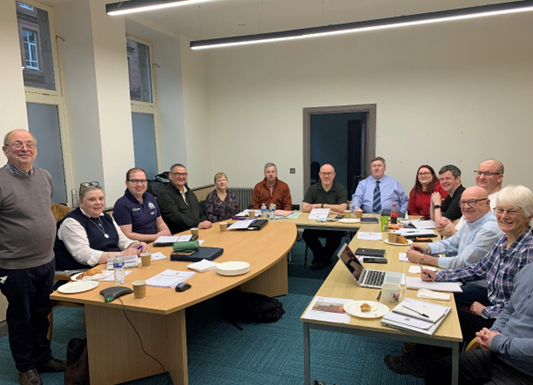
The fiduciary responsibilities of every director were also covered, including “the ongoing need for rigorous financial controls and all parties taking a cautious approach to expenditure.” The association’s successful efforts to control and reduce costs in 2025 will continue in 2026.
Additionally, Directors confirmed that new playing requirements for Grade 2 bands had been approved, but details were not immediately available. The association has posted playing requirements for their five major championships, and continues Grade 2 bands competing on both Friday and Saturday at the World Championships, which was implemented at the 2025 contest.
Of significant interest to tenor and bass drummers, especially, is the possible reinstatement of a Best Mid-Section prize, possibly only at the World Pipe Band Championships.
In an effort to save time at the lengthy awards ceremonies, the RSPBA dropped the Best Bass Section award after the 2008 competition season, resulting in significant outcry from tenor and bass drummers. An unsuccessful appeal and petition to retain the award was launched, and for a few years after, “The Hosbilt Cup” was awarded to the best Grade 1 mid-section at the Worlds based on the judgment of Hosbilt owner and three-time Best Bass winner Craig Colquhoun and a popular vote by pipers and drummers worldwide.
Since the late 1990s, no other aspect of pipe bands has changed more than the bass and tenor section. Top-grade midsections today often feature seven or more drummers, with complex orchestration and synchronization that can play a critical role in a band’s ensemble effect.

Who appointed the RSPBA directors in the photo, and what are the required qualifications for being an RSPBA director?
Regarding the headline focus, it is worth recalling that the band’s principal—and most demanding—instrument has never been recognised with a standalone “best pipe corps” trophy at contests, and likely never will be. Pipers have generally accepted this without concern for many years.
The ensemble aspect was introduced for a clear reason: to ensure that technical excellence, particularly within the drum corps, did not come at the expense of the overall musical outcome. Over time, the proliferation of drumming prizes has, at times, encouraged a more inward focus and occasional frustration when drumming results exceed overall band placings. This has sometimes been reflected in visible expressions of dissatisfaction, including coordinated departures.
This raises a legitimate question as to whether drumming prizes—particularly additional ones—are beneficial in the broader scheme of things. Notably, the most successful pipe band in history was led by drummers who consistently prioritised a “team first” approach.
In my view, further subdivision of awards within the drum corps is unlikely to improve outcomes. The removal of the B&T award, for example, does not appear to have diminished ensemble standards; if anything, ensemble performance has remained strong and continues to progress.
Ultimately, it seems reasonable that recognition of a drum corps is most meaningful when it aligns with overall ensemble success.