

IWD26: Anne Spalding looks back to 1976, when solo piping discrimination against women finally ended
 In the landscape of solo piping, 1976 stands as one of the most transformative years in the tradition’s modern history.
Until then, the Argyllshire Gathering at Oban, the Northern Meeting at Inverness, the Braemar Highland Gathering, and even the Aboyne Highland Games had never permitted a woman to compete for the top prizes. For decades, the art’s most prestigious platforms were a closed arena, their prize lists a who’s-who of male dominance.
Due to the passage of the UK’s Sex Discrimination Act, which made it unlawful to show prejudice on the grounds of sex or marital status in employment, training, education, and the provision of goods and services in Great Britain, public solo piping events were forced to accept female competitors.
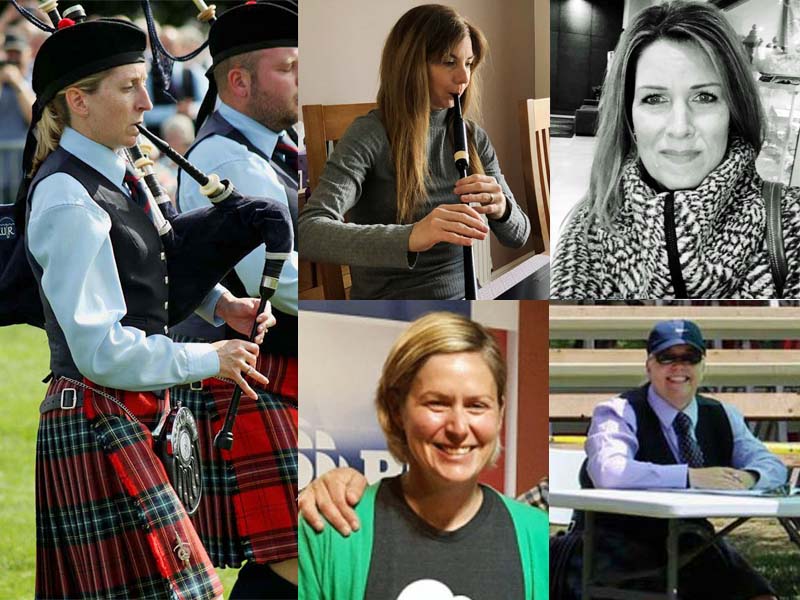
Patricia Henderson (née Innes), Anne Spalding (Stewart), Anne Johnston (Sinclair), and Rona Lightfoot (MacDonald) didn’t arrive to make a statement. They came to play. Each had earned her place through the same channels as every other top-tier piper: years of tuition, relentless practice, and the commitment required to stand in front of the toughest judges in the world.
By stepping onto those platforms, they welcomed a new and permanent era of equality.
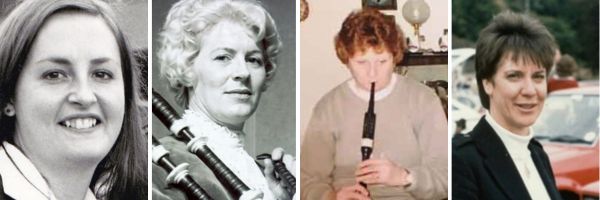
In the 1940s, Edith MacPherson was, by all accounts, the first female piper to win prizes in significant events in the UK. By the late 1960s and early ’70s, women such as Jennifer Hutcheon and Gail Brown were competing with Grade 1 bands, and Innes, MacDonald, Sinclair, and Stewart were showing in a bigger way that piping excellence never belonged to one gender.
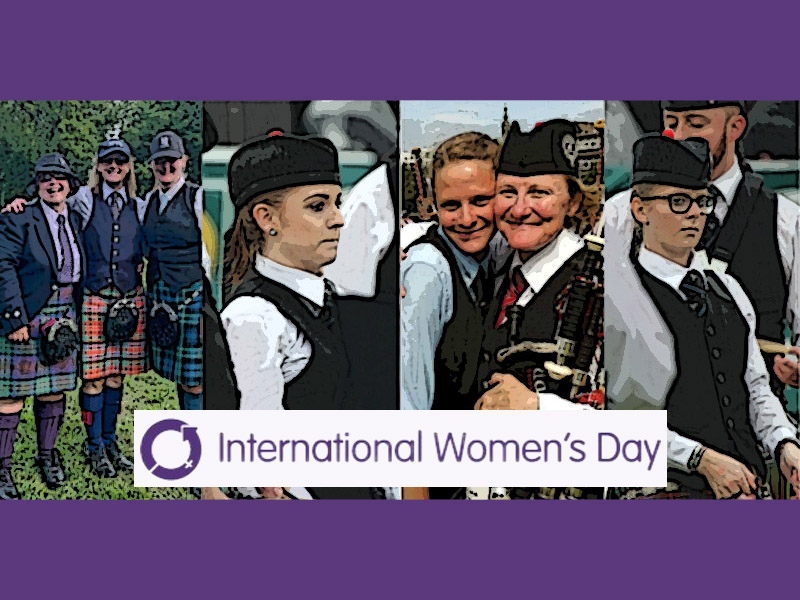
Fifty years on, their influence is everywhere: girls and women today comprise approximately a third of the membership in competing bands, and it is expected that gender equality is a given.
Despite that equality, relatively few women compete at the top levels, especially in the UK. In fact, while these four women competed at Oban and Inverness in 1976, only three competed in the Gold and Silver Medal events at the major gatherings in 2025. More women learn and compete in Junior and Amateur events, but the attrition rate is substantial.
On International Women’s Day 2026, with the help of the world-famous piper Jenny Hazzard, we revisit 1976 through the eyes of Anne Spalding, the first woman to compete at the Argyllshire Gathering, breaking down the wall of discrimination forever. (Unfortunately, Patricia Henderson, Anne Johnston and Rona Lightfoot were not available.)
But Anne Spalding found a few minutes between driving and flying all over Scotland administering piping exams in state-run schools, to look back five decades when history was made, and a new era began.
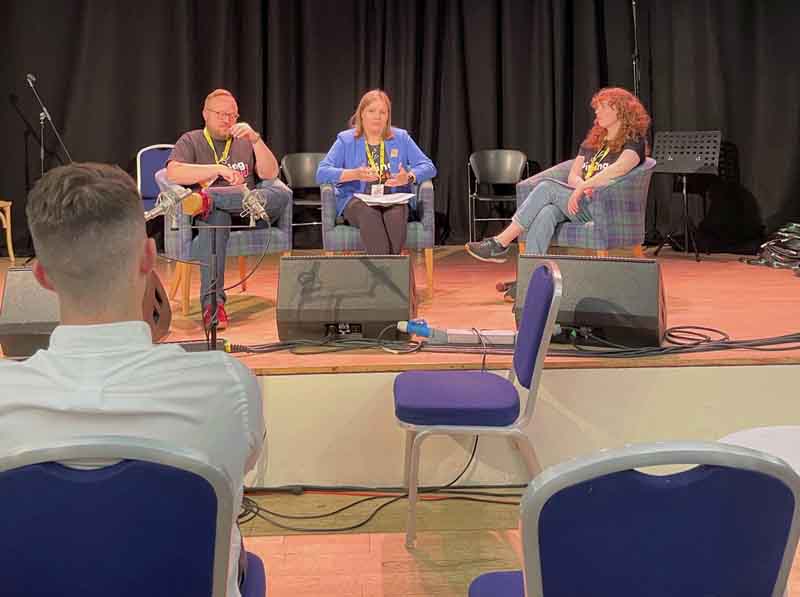
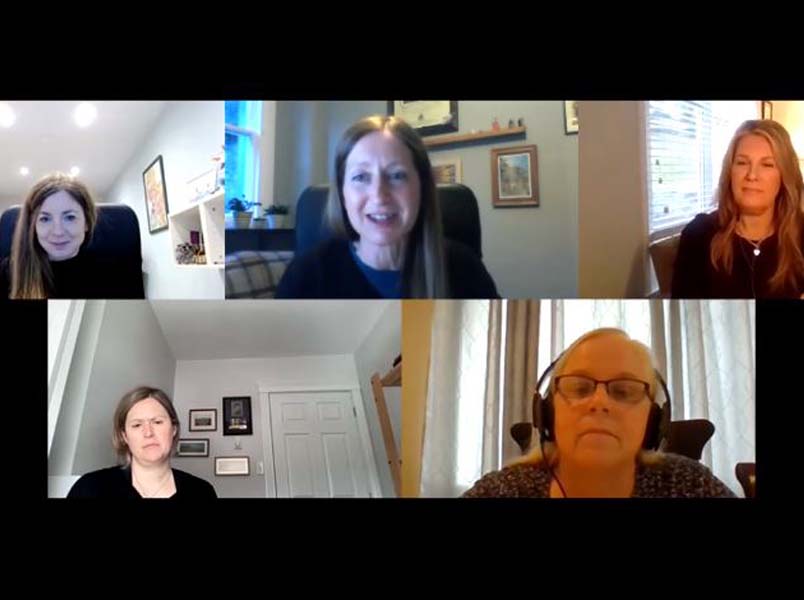
Jenny Hazzard: Anne Spalding, it’s really nice to have the opportunity to talk to you for this piece on International Women’s Day 2026. It’s a really important conversation, and I’m very pleased to be having a chat with you, particularly about it being a bit of a momentous occasion, the fiftieth anniversary since women were first allowed to play at the Northern Meeting and Argyllshire Gathering, and of course, you were one. Welcome and thank you for doing this.
Anne Spalding: Good to see you.
Jenny Hazzard: Good to see you, too. I’m really keen just to hear your thoughts on reflection and looking back at that time. Looking back to 1975, ’76, before the law was changed and women were allowed to play at the Northern Meeting and the Argyllshire Gathering, women were playing in other competitions, and there was plenty of piping going on. So what was it like for you and other women and girls who were playing the pipes at that time?
Anne Spalding: Well, we were competing around the games. We were competing with everyone else. There weren’t always women there; there were a few of us. Most competitions we were able to play in. It was like doing the circuit at the games today. It’s just the same, the same people that you see going around and competing and trying to get prizes.
“We couldn’t do Oban. We couldn’t do Inverness. We couldn’t do the Braemar Gathering or the Aboyne Games. There may have been more, but these are the ones that I would have specifically wanted to play at, because I could.”
But we couldn’t do the obvious ones. We couldn’t do Oban. We couldn’t do Inverness. We couldn’t do the Braemar Gathering or the Aboyne Games. There may have been more, but these are the ones that I would have specifically wanted to play at, because I could.
I think I once submitted an entry to the Northern meeting and got a very polite letter back saying I couldn’t do it. They were always very polite about it. It was good to be able to play because we were still, well, I was still learning the set tunes, because that’s what we were playing around the games at the time.
Jenny Hazzard: That’s interesting. Even though you weren’t able to play at the gatherings, you’d learn the set tunes and play them around the games. How did you feel about it when you couldn’t play? Did it make you incredibly angry? I can imagine it might have, but maybe it was a different lens at that time. And then, what did you feel like when finally, it changed and you were able to compete at those big events?
Anne Spalding: We knew at the beginning of the year that we could, that they couldn’t send back the entry anyway, so they knew we would have to include us. I don’t know, I just felt good about being able to do it. I don’t think I was particularly angry about not being able to do it. The press, of course, helped in a way because, if you turned up at a competition, even before 1976, they would latch on to the fact that there were females playing. It was a different world then, too. There were lots of things that women actually couldn’t do, but eventually we could. But yeah, you used to get photographed a lot just for being a female piper.
“I remember getting a headline in our local paper. I was described as a “Broughty Ferry mum” somewhere at the games. I can’t remember which one, but I’d obviously done well enough for the press to pick up on the fact that I was just a Broughty Ferry mum.”
Jenny Hazzard: It still happens to some extent.
Anne Spalding: Yes, but different attitudes then. I remember getting a headline in our local paper. I was described as a “Broughty Ferry mum” somewhere at the games. I can’t remember which one, but I’d obviously done well enough for the press to pick up on the fact that I was just a Broughty Ferry mum.
Jenny Hazzard: “Broughty Ferry mum” is not inaccurate, but you wouldn’t really see that description for any of the dads there, would you?
Anne Spalding: No, but that’s the trouble. You could be described as a “lady piper,” and I just felt like a piper, not a lady piper. We don’t say “a man piper,” do we?
Jenny Hazzard: No, and that brings on the question about how you felt stepping onto that stage for the first time. Did you feel like it was a momentous thing? Or, given that you’re playing around the games against the same guys, was it just another competition, but obviously a big one?
Anne Spalding: It was just another competition. Definitely, because you still went into the final tuning. It was the same. Into the final tuning, get your tune and go up. That’s more what I was thinking about than anything else.
Jenny Hazzard: Not more or less terrifying than always would be. Interesting.
Anne Spalding: Yeah, just the same.
Jenny Hazzard: What did you play at each?
Anne Spalding: I do remember the tunes I played: “The King’s Taxes” at Oban and Lament for the Viscount of Dundee” at Inverness. It was at the Doctor Black Halls, and I remember looking out over the river and thinking, Gosh, what a lovely view to play a piobaireachd.
Jenny Hazzard: That’s really nice that you have that kind of very specific memory of that moment. I’m glad to hear that.
Anne Spalding: All the other competitions just merge into one another. But I do remember that.
Jenny Hazzard: We were trying to surmise if you remember which of the four women who played at the Northern meeting in 1976 was actually the first woman to play in the Gold Medal. I guess it would have been at the Argyllshire Gathering.
Anne Spalding: I was definitely the first in the draw. That was just the draw that made me the first. I didn’t realize that until afterwards.
Jenny Hazzard: It’s funny because you wouldn’t maybe think about the significance of that at the time. It’s just the draw. You probably didn’t want to be first, but it’s kind of a cool thing to look back, isn’t it, to think you are the first female who ever played in those ancient famous competitions.
Anne Spalding: I certainly didn’t think about that at the time. Maybe some members of the audience thought about it. No, I was just concentrating on playing my tune.
Jenny Hazzard: Do you remember how you played? Do you remember coming off and thinking, were you happy with it or not?
Anne Spalding: I was happy with it, yeah. I play “The Viscount of Dundee,” and I still think about that. I still teach it, as well.
Jenny Hazzard: Changing subject slightly, but back to the idea that it was just the major gatherings and Braemar and Aboyne. At the time, there were women playing in top-grade pipe bands, maybe not a huge proportion, as is still the case, but there were, and there was nothing preventing entries for the World Championships or anything. Was there much discussion about that at the time? Was it something that was noted?
Anne Spalding: Not that I was aware of. There weren’t many playing in Grade 1 bands before that, actually. Gail Brown did.
“What I did like was that Shotts & Dykehead didn’t make her wear a number-one uniform, even though they wanted women to wear number ones. I remember thinking, ‘Yeah, good on them,’ because when I wear number ones for special gigs, it’s terrible.”
Jenny Hazzard: I think she would have.
Anne Spalding: I remember there being some sort of, well, it wasn’t a fuss, but it was noted that she was playing. What I did like was that [Shotts & Dykehead] didn’t make her wear a number-one uniform, even though they wanted women to wear number ones, but she didn’t have to. I remember thinking, “Yeah, good on them,” because when I wear number ones for special gigs, it’s terrible.
Jenny Hazzard: It’s really horrible for men or women either way!
Anne Spalding: It’s really awful. That’s the other thing. We’re supposed to dress up like men, too. I don’t mind that in the band. I’m not so keen playing solo, having to dress up like a man. That’s what you’re doing. It’s a man’s uniform.
Jenny Hazzard: Everybody’s got their own [preferences], what they’re comfortable with and probably what they grew up with.
Anne Spalding: Absolutely. I couldn’t get a band waistcoat that fits.
Jenny Hazzard: That is a different story! With four of you at the time, did you band together? Was there solidarity between you, or did you feel, as you said earlier, you weren’t lady pipers, you were just pipers? Did you band together with everybody?
Anne Spalding: We certainly didn’t all get together and make a fuss about it. The biggest conversation in 1976 was starting the Competing Pipers’ Association, because they thought, Well, if women can enter, loads of people will enter, and the entry will be very big. But all these women that are going to join . . . and of course there were only four of us.
“It was said at the time that if the women played, there’d be far too many entries.”
But the entries were getting huge. So, the CPA was started, and the grading system started that same year. There was a meeting in the Caledonian Hotel ballroom or a room somewhere [in Inverness]. But it was said at the time that if the women played, there’d be far too many entries.
Jenny Hazzard: Open the floodgates! That’s interesting. I never put that together; didn’t realize that one might have been associated with the other. People would think, Oh, my, there’ll be twice as many people entering. That hasn’t really quite turned out that way, has it?
Anne Spalding: There were a lot entered that year, but it wasn’t all women! It was just everybody, because literally anybody could play.
Jenny Hazzard: There was no grading kind of system until this CPA was formed.
Anne Spalding: No, and even when the grading system was formed, I’m not sure that Oban and Inverness took it on board to begin with. I can’t remember. I was just a wee kiddie. I did feel like I was just one of the young ones coming up. Just trying to get my name known and try to win some prizes, just like everybody else.
Jenny Hazzard: Of course, and probably an important question for you as a woman who was playing at a high level then, at the beginning of being allowed at the major competitions, you continued to play at a high level for years and didn’t give it up, whereas, unfortunately, many have. This is the question that we all get asked a lot, and we probably all wish we had the answer: What do you think needs to happen or should happen to keep girls and women playing – not necessarily to start them playing, but to keep them playing?
Anne Spalding: What happened with me was that I had my mum. It’s a support network you need. Because it’s still the women who have the babies. So that knocks you out of it for a while. It was my mum who kept me going. I could never have played with a band at that time because I would never have been able to commit. Although there is a support network around a pipe band. There’s going to be somebody there to help you babysit. I felt I couldn’t make the commitment. I couldn’t say I’d be at band practice every night, because I just didn’t know what was happening.
I didn’t join bands till Islay started playing the drums. A drummer has to play in a pipe band, and I couldn’t imagine putting her on a band bus without me being there. Because that was a junior band, the parents were there, too. I couldn’t imagine going to a pipe band contest and just being a mum. That’s what started me playing in bands. I had to play as well.
Jenny Hazzard: So you became her support network, and she was maybe yours? That’s an interesting point, having that support.
Anne Spalding: But my mum was always there. If I needed time to practice, she would come along, she would come to the house, and everything else would happen, and I would shut the door and get on with it. I’d practice at midnight sometimes. I used to get them up, eventually three of them, of course. I used to get them all in bed because my husband worked offshore, and that helped as well. He was away at that point, so I didn’t have to think about that too much. It was really just getting the kids sorted.
I remember getting them all to bed, putting the baby alarms on, then coming downstairs, getting the pipes out, and playing for half an hour. If babies were still crying at half an hour, then I’d do something about it. Usually, they’d do it on their own. So it’s fine. I’m not sure that would be really approved by other mums these days, but that was what I did!
Jenny Hazzard: Just doing what you have to do, isn’t it? And finding a way.
Anne Spalding: It was the thing that I was doing for me. It would have been very easy just to give up. It was almost a challenge. I will get half an hour’s practice in today. I will play at least one piobaireachd. It’s like everything else: when you get the pipes out, and they’re going well, you just keep playing. Just think about something else, rather than being the mum all the time.
Jenny Hazzard: It’s just enjoyable to play. I hope that’s a message that girls and women who may be listening to this and young players might hear that and say, Yeah, that’s what you need. You need to do something for yourself, something that’s enjoyable, something that you can fall in love with and not let go of it.
Anne Spalding: Definitely.
Jenny Hazzard: That might be a nice way to end, but you should have the last word.
Anne Spalding: It’s just all the people that are around, you get to know all these people. You’ve got almost like a family. As soon as you step onto the games field, you see everybody as soon as you walk in the door. And you’ve got that common thing. I wonder about the male point of view.
“You see the piper, the lady piper, getting married, having children, and then you don’t see them for ages. They might come back, or might not, or they end up playing in a band.”
Jenny Hazzard: It’s a community, isn’t it?
Anne Spalding: If the husband isn’t a piper, I’m not quite sure they really understand what it is you’re doing. They don’t all take part in support. So you do wonder about that. You see the piper, the lady piper, getting married, having children, and then you don’t see them for ages. They might come back, or might not, or they end up playing in a band, but keeping them going so that we’ve always got women in the Gold Medal.
We have to have our mums there as well.
Jenny Hazzard: Yeah, our moms and community and support networks and big family, like you say, and the more people who know that and feel that and support that – women, men, girls and boys and everyone just supporting us all to keep doing something that makes us happy?
Anne Spalding: Yeah, and you’ve done the same. You’ve kept going and kept competing, and you just keep doing it. You’ve got the support that makes a huge difference.
Jenny Hazzard: Yes, absolutely.
I’m thinking that’s maybe a point to round off, unless there’s anything else that you, any little pearls of wisdom that you wanted to throw in on this anniversary.
Anne Spalding: I’m just more astounded that it’s 50 years more than anything. I don’t feel that old!
Jenny Hazzard: Well, thank you. And it’s been really enjoyable talking to you about your experiences and this important anniversary and commemoration of a big event in piping and for women in general. All the best for 50 more years of piping.
Anne Spalding: Thank you. It’s been lovely to speak to you.
Thank you to Anne Spalding and Jenny Hazzard for this important conversation, and to Anne, Patricia Henderson, Anne Johnston, and Rona Lightfoot for their commitment and perseverance in making history fifty years ago this year.

NO COMMENTS YET