

A Bucket-List Journey from Vancouver to the Castle Esplanade: one piper’s path to the Royal Edinburgh Military Tattoo – Part 3
As former Grade 1 band piper Owen Reid of Vancouver wrote about in his much-read feature “A Second Time Around: one piper’s 30-year journey back to enjoying pipe bands again,” there’s life after high-pressure competition for Highland pipers.
In the first two parts of his three-part piece about his experience as a performing member of the 2025 Royal Edinburgh Military Tattoo Pipes & Drums, he took us through the application and audition process, and then the rehearsals in Edinburgh and the race to prepare for a month of big shows at Edinburgh Castle.
Now, it’s on to the performances almost every night in August, each before a crowd of about 9,000 tartan- and shortbread-hungry fans of all things Scottish.
We hope you enjoy his recount of what is an extraordinary experience for pipers and drummers of any age.
By Owen Reid
8:00 am, Friday, August 1st, and I’m moving slowly.
I climb out of bed and make it to breakfast. This morning’s fuel is a full Scottish breakfast, including a triple-shot espresso. More bodies file in, and the banter begins and lasts for an hour. Everyone is excited to be performing tonight in front of a crowd. Music has been in the works for almost six months, and tonight we get to play it for our guests. But the day is ours to get out and enjoy Edinburgh and the Fringe Festival. Plaid tying at the buses no later than 6:00, but I’m there at 5:35.
The REMT band is still getting to know each other. Who can tie a plaid becomes evident. I narrow in on Justin, who is physical in his approach. Plaids tend to loosen over time, so a tight plaid is always preferred.
“The mood is upbeat as we climb up. Veterans of the Tattoo are chatty, and we rookies are quiet.”
The Leadership Group (Alisdair, Lynsey, and Kath) counts us and directs us onto the bus. Every trip to Edinburgh Castle takes a different route, and today we park at the bottom of the Castle Wynd North stairs – 74 of them. The mood is upbeat as we climb up. Veterans of the Tattoo are chatty, and we rookies are quiet.
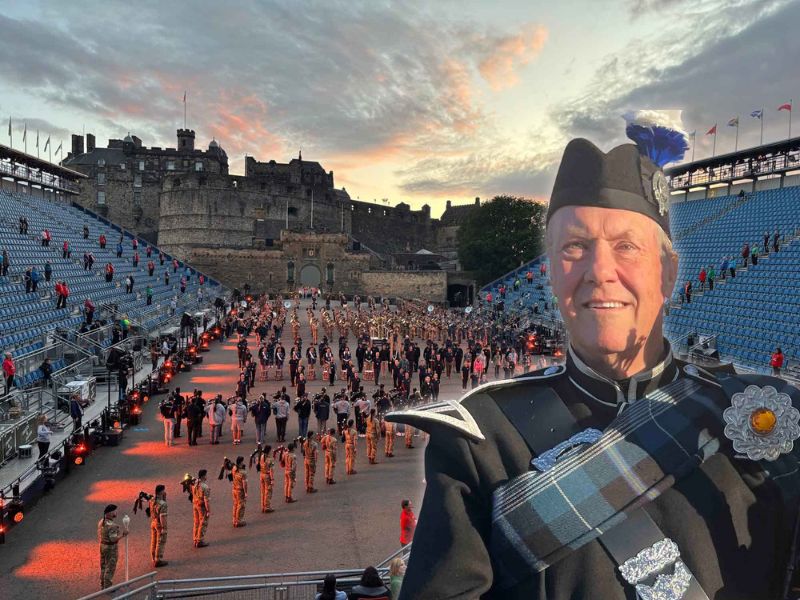
We make our way up the Esplanade, across the drawbridge, under the Portcullis Gate and up to the Argyle Battery for the first real Big Blow. The weather is cool and breezy on the top of the dormant volcano. We wait for the other bands to arrive, and then there are two loud beats on the bass drum to assemble. Major McCrindle gives a talk about who we are and how hard we’ve worked. The drum-major calls out, and we proceed into the first set. The second set is played, and we break out into our respective bands.
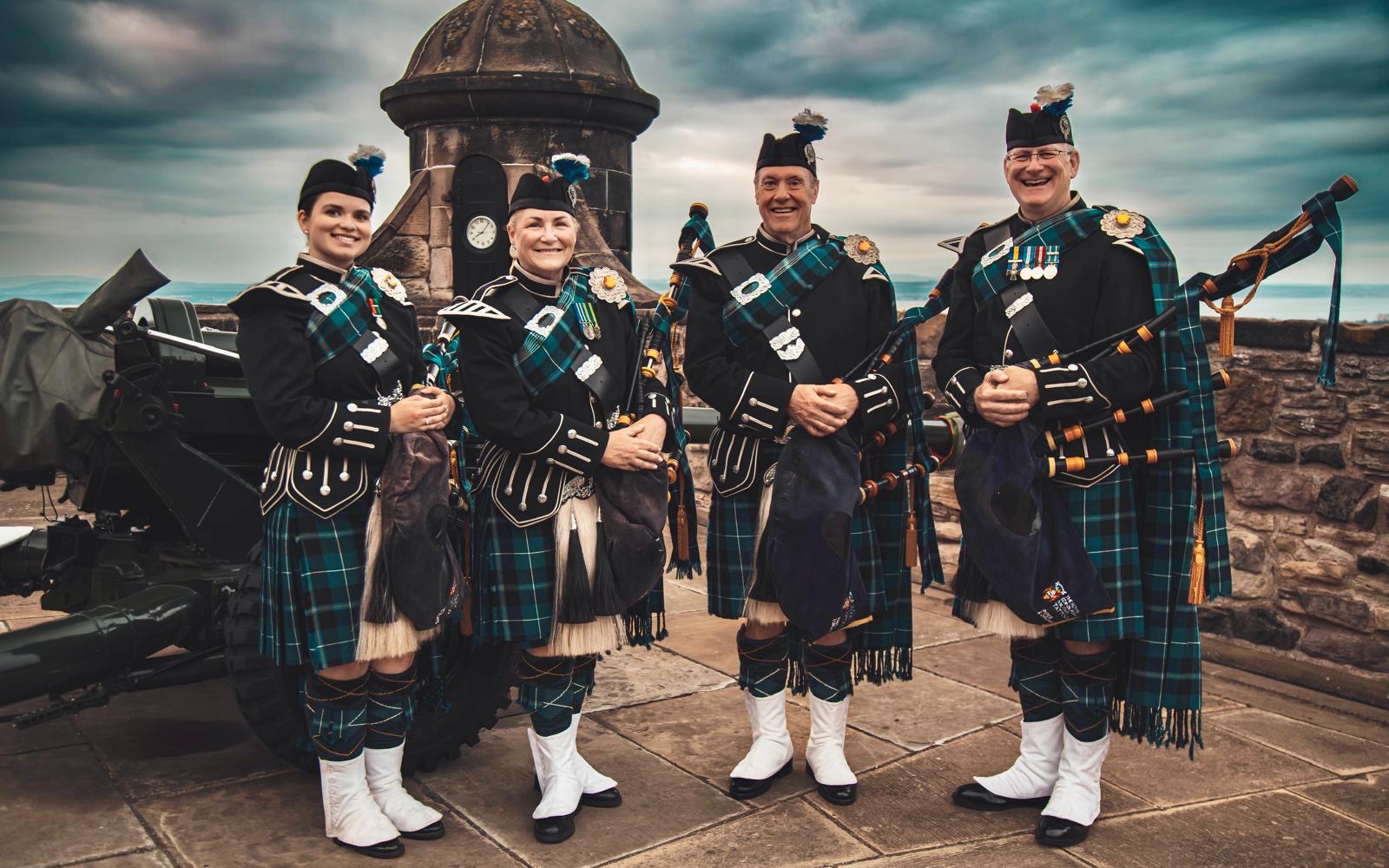
The REMT marks their territory at the top part of the Argyll Battery, south of the two black walnut trees. Drones are tuned, and chanters tweaked. Alisdair McLaren calls us to form a circle. We play through some of the tunes that are specific to the REMT band – “The Winnipeg Forger,” “Chasing Shadows,” “The Girl from Dungannon,” “Gettin’ Jiggy With It,” “The Jig of Slurs,” “Queen of the Rushes,” “Lochanside,” “The Green Hills” and “When the Battle’s O’er.” The sound is big and good for approximately 50 pipers. With a smile, I thought to myself: I get to do this for three weeks. The lifestyle is set: food looked after, exploring Edinburgh by day and playing my pipes at night. Awesome.
 There is an hour and 20 minutes until we pour through the doors and spill out onto the Esplanade, so we have more time to learn more about our REMT band members. Pawel is from Mexico City; Michelle from Far Northern Queensland; John from Tasmania; Richard from Southern England; Phillip from Germany; Mike from Ottawa; Malcolm from Perth, Australia; Ringo (a piper) from Manchester; Charlie from Northern California; Hazel from Edinburgh; Bennett from Northern Italy, and those are just some of the pipers. The drummers are from everywhere as well.
Time is coming up to the 9:30 start. We wander down in small groups to the Gate House. Justin (Newcastle, Australia), in my file, organizes the line-up for Lynsey and makes sure that there is a spare or two available to fill in if there are any issues of missing personnel, as it’s easy to get distracted in the organized chaos. Talk is everywhere, and energy is widespread. We are told to tone it down because we are louder than the 9,000 guests filing into their seats. Then it gets closer to kick-off.
I straighten my drones on my shoulder and fill my bag. In front of me is Ringo, and he is as excited as I am. Right above, with no warning, seven cannons from the castle walls above us discharge. A fanfare of brass instruments sounds off inside the stadium.
Two to three minutes pass, and I see the brass instrument musicians coming into our area, then the cannons fire off again. There’s a hiss of fog released into our pathway to the large doors. I hear a clink of metal on metal, and the doors open. The drum-major barks out, and the three-beat rolls begin.
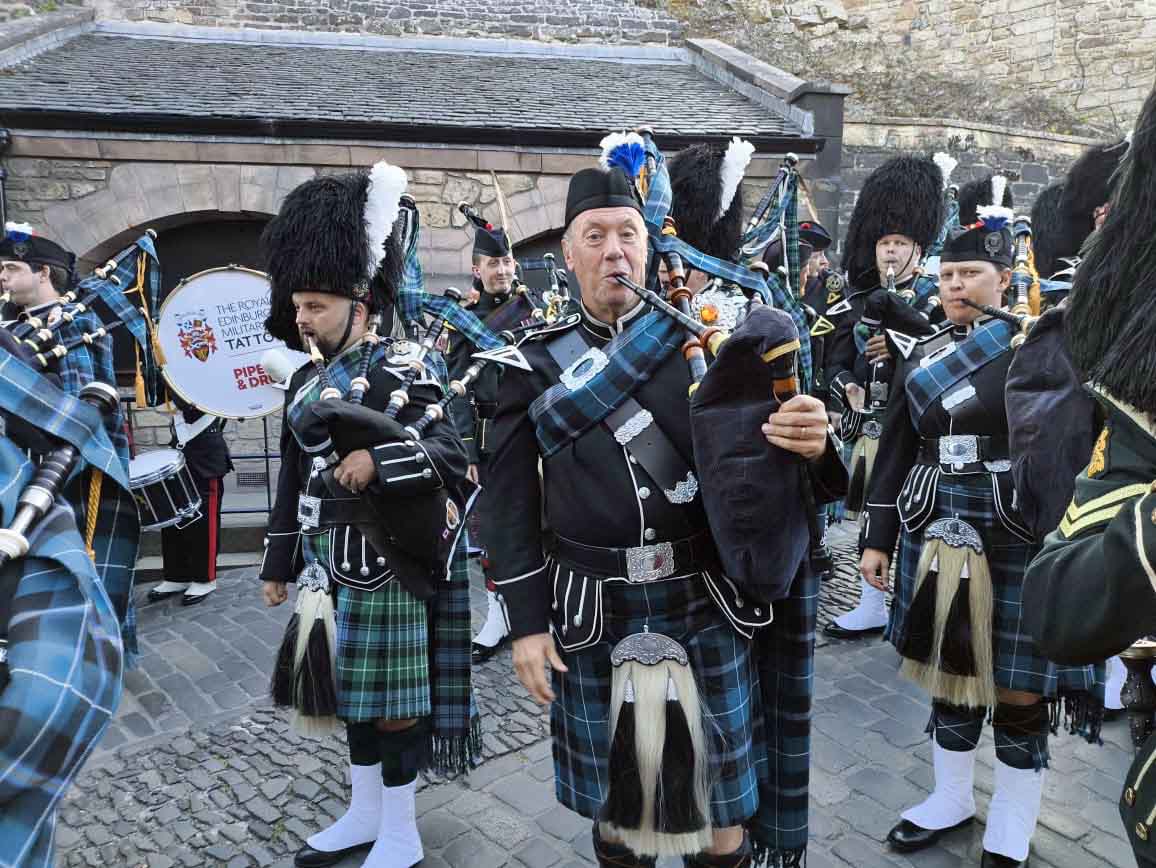
Holy Doodle. This is real, and I’m doing it.
My file (and 10 others) strike their bags as we move towards the now open doors. My adrenaline is pumping full tilt as I enter the fog. I can’t see Ringo, and he’s right in front of me. The jostling between files is at its peak, and we hit the start of the drawbridge. Moving forward is even more compromised as the combination of fog and bright lights blasts us. I can’t see a metre in front of me, but I can finally make out Ringo’s spats moving up and down, so I focus on them. And then the fog dissipates as I hit the solid surface of the Esplanade.
Ringo comes back into view, but he’s a good six metres ahead. I big-step to catch up as we start “Cabar Féidh.”
The file alignment is complete, and we mark time to the third part. The drum-major’s mace is hoisted aloft, and we stop marking time for the last part. I catch my breath, and then we slide into “The Jolly Beggarman” and more tunes to form into a tight formation before we get into the show-stopper “REMT 75” formation. My position is in the middle of the straight part of number five. I catch my breath once again as we end the set on the jig, “Fair Tae Middlin’.”
This is where I first look up and see the crowd. The cheers are thundering. But no time to dwell as the drum-major is barking orders again, and we start up on the 3/4’s to finish our first set. I correctly turn left (this time) and follow back up the Esplanade, where my file meets up with the bass drum, then does a 180-degree turn, facing back to the East Stand, to march out.
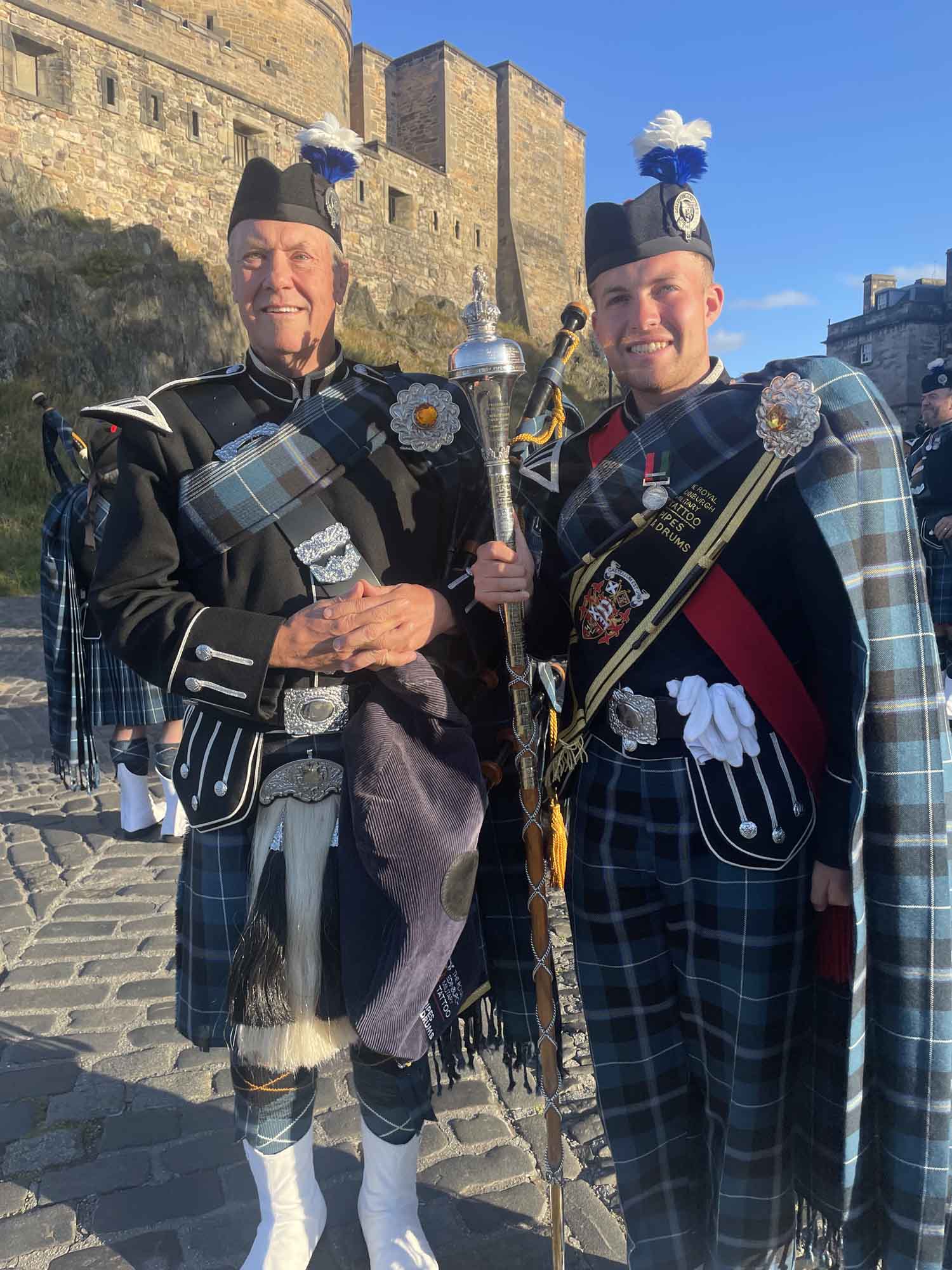
My file meets under the East Stand near the start of the Royal Mile for a quick debrief. Were we spread out on the “Five”? Is it the third part of “Caber Feidh” that we stop marking time? Did everyone see the drum-major’s mace to stop marking time? and other questions to make the next performance just that much tighter.
We have limited time for discussion as we move as a group to the other side of the East Stand to play the “Braveheart Set.” We start slow-walking up the Esplanade between a full brass band, and on cue, start the two-line tune to form up facing the East Stand.
“God Save the King” is sung, and at the conclusion, we march out with our right arms swinging at shoulder height. It’s a quick but brilliant set, with a formidable amount of emotion from the combination of pipe and brass bands. And yes, we are playing B-flat chanters and reeds.
We scatter into two groups after marching under the East Stand. The first group heads up under the South Stand to play for the Dance Set, while the rest of us file into the Cannon Ball Restaurant & Bar for a quick snack of focaccia bread and a mug of soup. The restaurant is the first building on the right when you leave the stadium. The bar is comfortable, and the food is excellent. We have approximately 25 minutes to sit and relax before the players of the Dance Set come in for their snack.
The weather during the first week of the Tattoo was cool, so, as a group, we would take refuge in the Cannonball to warm up. But as the weeks continued, the weather improved dramatically. The ice cream shop located a block away became a regular stop during the break.
There were many discussions about which flavour was best during this time.
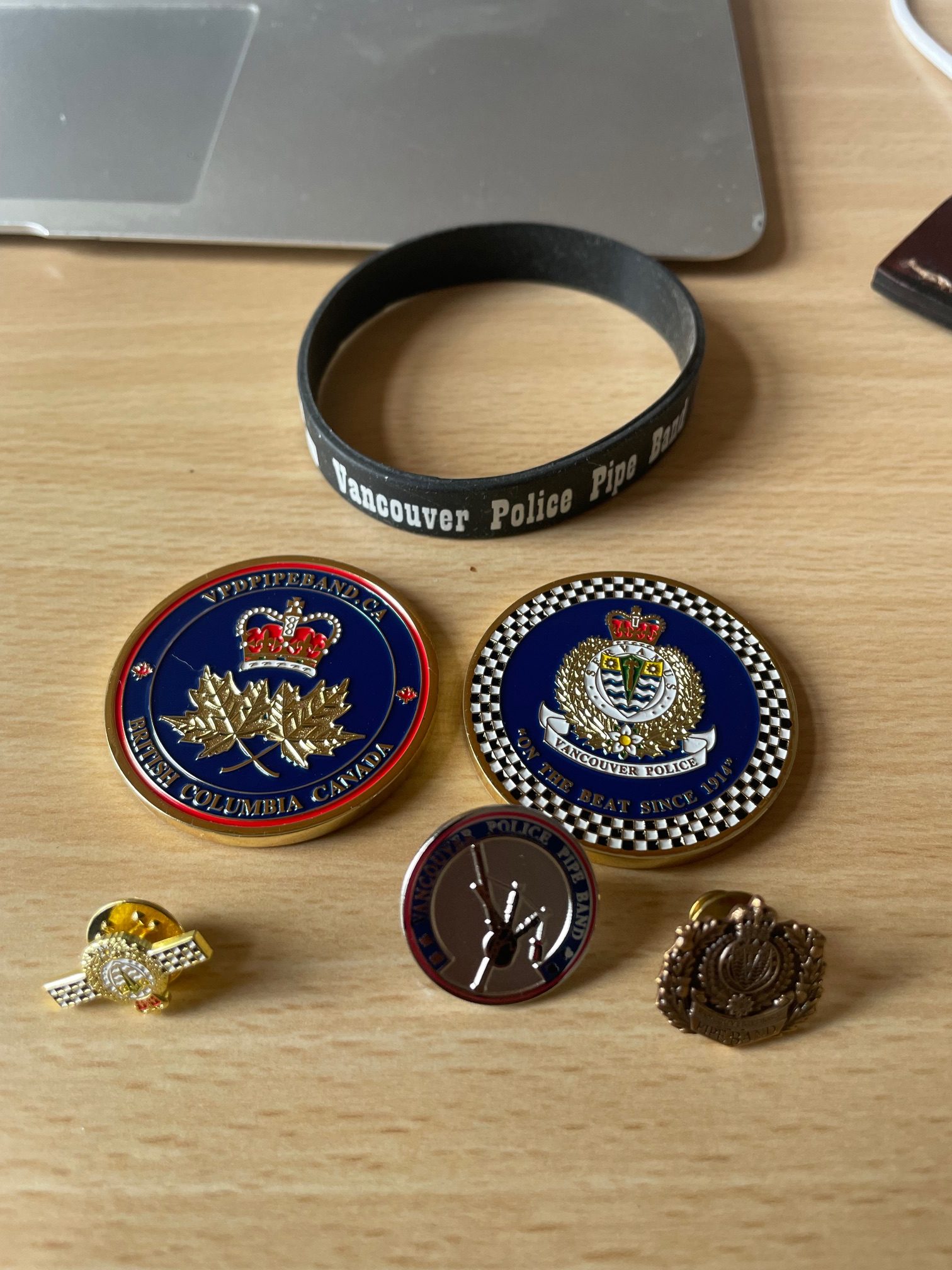
I brought a handful of Vancouver Police Pipe Band challenge coins and bags of pins to trade and/or give away. Military Police and Police Scotland were patrolling the area, so I would trade the Challenge Coins for patches and their Challenge Coins. The red-coated volunteers who were manning the fences and gates were given the pins. I became known among the volunteer group as “The Guy With the Pins.” In the first week during the breaks, I would be surrounded by these red-coated pin-seekers.
When the group who played the Dance Set completed their task, they would come into the Cannonball for their soup and bread. This was the signal for some of us to exit to make room. We would mill about on the Royal Mile until it was time to play the “Now That’s What I Call a Tattoo” set, or generally known as the “Strathspey Set.”
There was general agreement among the players that this was the most enjoyable set to play because of the music: Marching out to “The 79th’s Farewell to Gibraltar,” “Amazing Grace,” “The Rose Among the Heather,” “The Banjo Breakdown,” “The Silent Performer,” “Rocking the Baby,” “The Gael” and “Glasgow City Police Pipers” with excellent harmonies.
Monty Python-esque images of past Tattoo performances and players were projected onto the Castle walls. There was everything from dancing horses, snapping Chinese dragons, a solo piper being lifted away by a helicopter and Alsatian dogs with googly eyes. It took me a couple of shows to realize that the file leaders wore earphones that played a click track, keeping the images in sync with the tune’s timing. The images made it hard to watch Lynsey’s fingers while playing. The set would end there, and then the narrator would have another session of discourse, and then we would play “Amazing Grace.”
“A highlight for the guests was ‘Sing in the City,’ when a group of 800-plus performers including people like me who had been previously banned from singing in their own pub band.”
After exiting to the East Stand for the third time, the files would reform for the Finale. The majority of the performers were already positioned on the Esplanade while we marched into our various formations. The brass band was playing “Eagle’s Wings,” and the pipers would play the two lines of the tune twice as the Ukrainian dancers, and then the Highland dancers would enter the stadium.
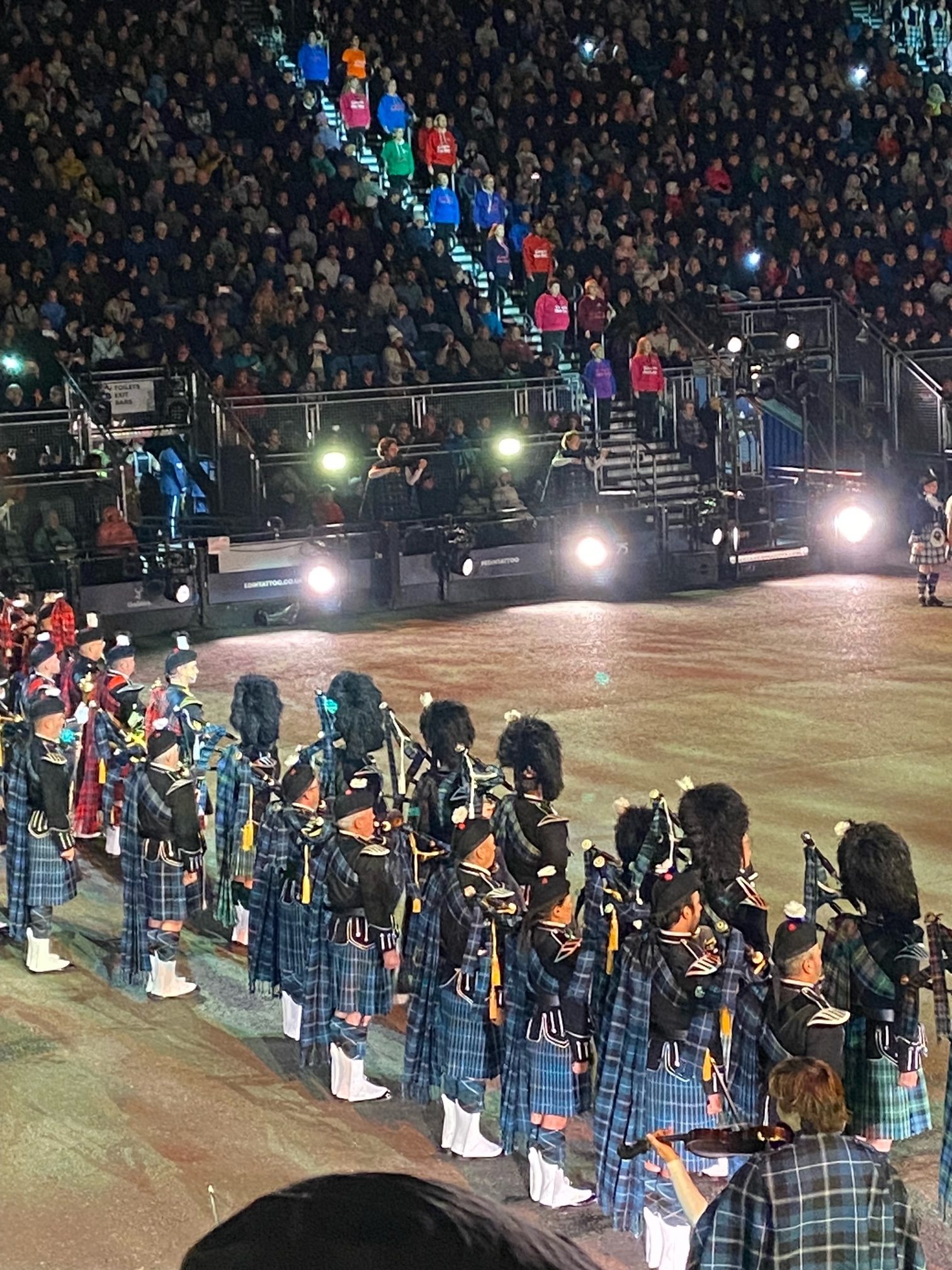
A highlight for the guests was “Sing in the City,” when a group of 800-plus performers (including people like me who had been previously banned from singing in their own pub band) would sing “Wherever We Go.” The stadium lights would dim, and tiny handheld lights would flicker on. All singers were given tiny LED lights to flash on during this song. I tucked my tiny light into a fold of my plaid to give easy access when called upon. Singing the song during the 25 shows never got tiring, and it became a touch emotional during the last performance.
I then tuck the tiny light back into the folds of my plaid and get ready for the reform. We play “Scotland the Brave” once through to give all the non-massed bands a chance to exit the stadium. Then the massed band formed up with our backs to the Castle for my favourite part of the show.
From under the East Stand, a young female piper emerges playing “Scotland the Brave” and finishes midway on the Esplanade only to be “questioned” by the narrator.
“Who are you?”
“I’m a piper,” she responds.
“You’re good, but you’re a bit young, lass,” he comes back with.
“I’ll get older; I’ll get even better,” she responds with a bit of cheek.
“I’ve no doubt. I’m afraid you’ve missed the show,” he says.
“I’m not here for the show. I’m here to make a promise,” she says.
“What’s that then?” he questions.
The young piper then brings out a light stick and responds, “To another 75 years.”
She arches her arm and throws it forward, and a burst of fireworks from the top of the stands explodes. The crowd goes wild.
The narrator then calls out, “Drum-major!”
“Sir!” responds the drum-major.
“I think we’ve left one behind. We’ll need her for the years to come,” and the young piper joins the massed bands’ front rank.
The narrator then turns and faces the East Stand and announces, “I guess that’s us then. Take us home, pipes and drums! TAKE US HOME!”
We immediately start into “The Black Bear,” marching down the Esplanade and into the first of two countermarches. By the time we finish the second turn, the band is finishing “Scotland the Brave” and into “The Black Bear,” filing out of the stadium and onto the Royal Mile. This is a bucket-list experience for most pipers, drummers and drum-majors: playing down the Royal Mile.
“I’ve played in the front rank of a Grade 1 band marching into a circle at the World’s. That was extraordinary. But the sound of 132 pipers pounding away and yelling during the second part of “The Black Bear” echoing off the ancient stone facades of the buildings is staggering.”
The feeling of being part of history is second to none. I’ve played in the front rank of a Grade 1 band marching into a circle at the World’s. That was extraordinary. But the sound of 132 pipers (and a bunch of Ringos pounding away and yelling during the second part of “The Black Bear”) echoing off the ancient stone facades of the buildings is staggering. And you get to do it not just once, but 26 times, while playing two classics and trying not to fall flat on your face over the cobbles.
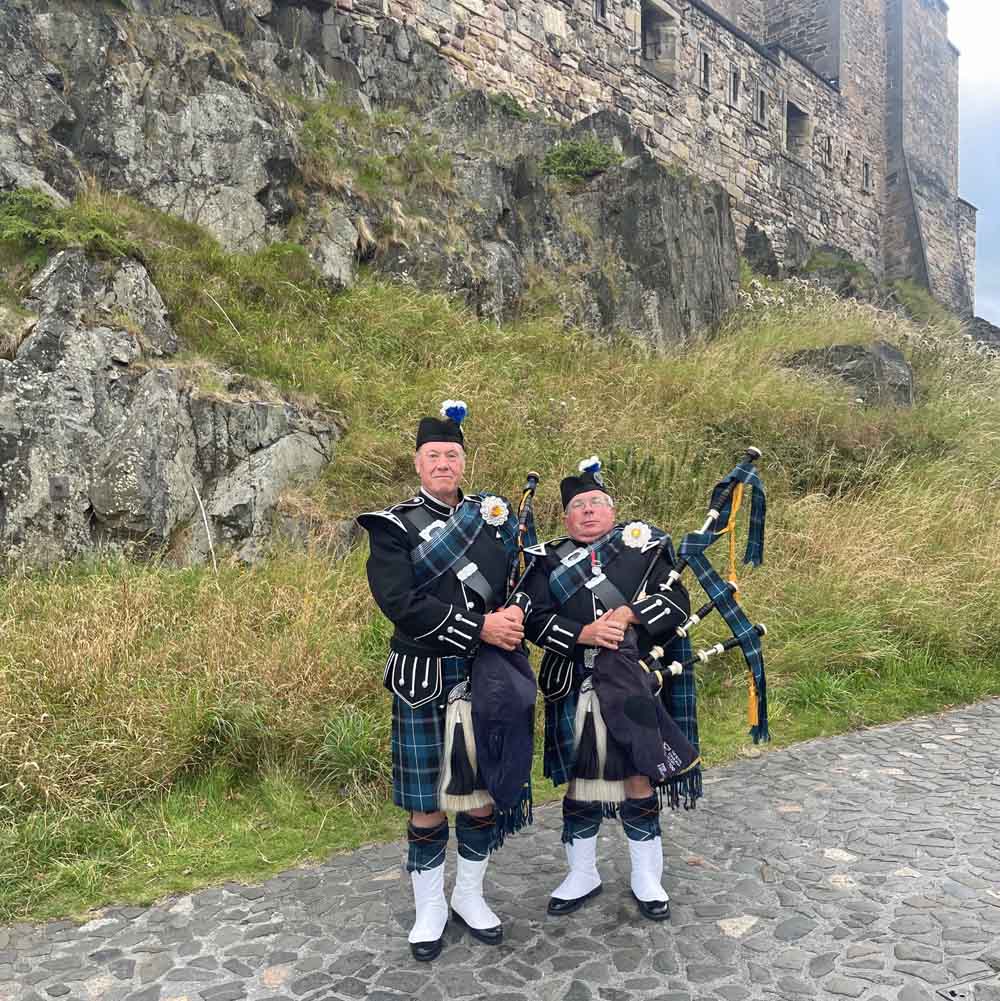
As you progress down the Royal Mile, you see another crowd assembled and cheering you on. You start making the turn towards Johnston Terrace, and the crowd expands, and the cheering erupts. You’re tired and elated at the same time.
And then it’s over. The drum-major hoists his mace and pumps it twice to mark the end of the performance. The bass drummer thumps out his signal that we’re done at the end of this part. We continue to file down Johnston Terrace to our buses. You pass your tiny light to an individual who collects them at each bus.
The ride back to Pollock Halls is generally subdued. Your night is over.
Summary
Playing in the Royal Edinburgh Military Tattoo is not for everyone, but it was for me. It completed my piping resume of things I wanted to do before I can’t play anymore. I met and made new like-minded friends from all over the globe. We’ve kept in touch via a WhatsApp group, sharing updates on our pipe band and life-related activities.
“Playing in the Royal Edinburgh Military Tattoo is not for everyone, but it was for me. It completed my piping resume of things I wanted to do before I can’t play anymore.”
Two weeks before I got on the jet to Edinburgh, I received a call from my pipe-major. A band that was scheduled to play at the 2026 Tattoo had pulled out, and the Vancouver Police Pipe Band received the first call.
Should we do it? Absolutely! And that was even before I had played one note at the Tattoo.
Then I had to “advise” my spouse.
“You’re going where?! Again?! For how long?!”
Absolutely!
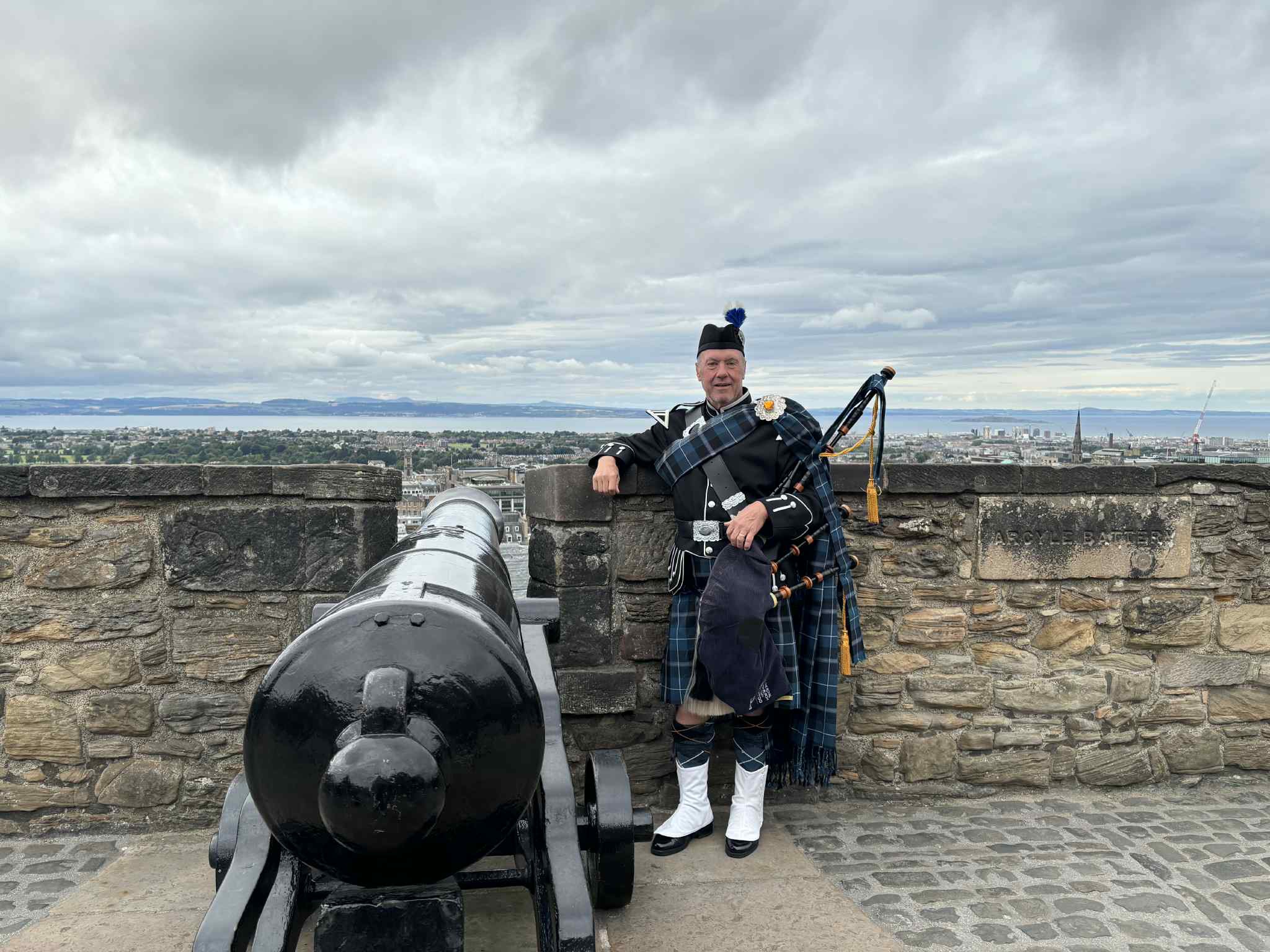
Owen Reid is a member of the Vancouver Police Pipe Band and a lifelong piper who returned to competition in 2020 after a 30-year hiatus. He was a member of Grade 1 Triumph Street in the 1970s and ’80s when the band was gaining prizes at major competitions in Scotland. His work has appeared in pipes|drums, where he chronicled his return to piping in “A Second Time Around: One piper’s 30-year journey back to enjoying pipe bands again.”
Do you have a piping/drumming/pipe band story to tell? We’re always interested to hear from our readers, so please send us your ideas!

NO COMMENTS YET