

The Drum Corps Conundrum, Part 3: Four drumming greats discuss the ongoing battle to recruit snare drummers and L-Ds
We continue with the third of pipes|drums’ four-part discussion panel with four of the world’s most accomplished pipe band drummers: Scott Armit of Boston; Ottawa’s Kahlil Cappuccino; Paul Turner of Blairgowrie, Scotland; and Barry Wilson of Troon, Scotland.
The shortage of snare drummers and leading-drummers is pretty much a pipe band tradition. But why? Throughout the hundred-year history of competing pipe bands, pipers and drummers have wondered why the perpetual lack exists, but has anyone ever seriously sought answers?
That’s where pipes|drums steps in. By creating a forum for constructive dialogue with four of the most insightful and experienced pipe band drummers, each with different backgrounds and nationalities, but all with unbeatable “street cred,” our sole objective is to begin a more constructive and productive search for ideas and answers.
Here’s a transcript of Part 3, with minor edits for written clarity.
Part 3
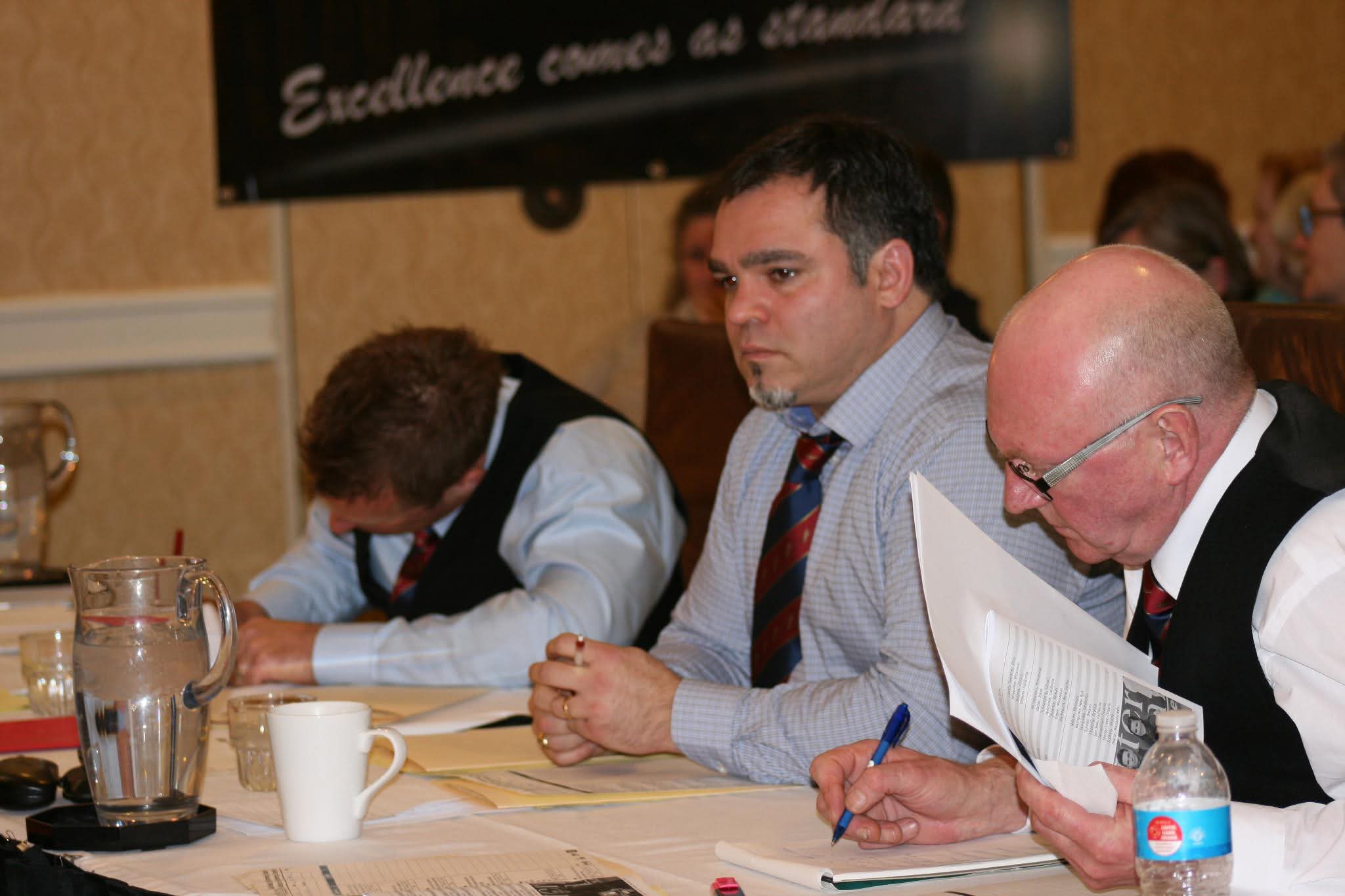
Kahlil Cappuccino: All the things that we’re all citing, whether they’re recordings on YouTube now or growing up with the Kerrs . . . social media is pervasive, but it would seem that there’s an absence of a body of work like “The Piper’s Tune,” like Alex Duthart that people could go to.
Anyone who’s going to be listening to this and has ambitions to be a leading drummer, or whatever, should take note of this, look at it, watch it, and learn from it. When I do workshops, and I’ve done workshops down in Kansas City, I always bring up Simeon Fraser’s Green Up, Live in Ireland. To me, that’s like, for me, that’s a standard. And I always remember when I started in pipe bands, Colin MacLellan was my pipe major around 1988; he pulled me aside because I was relatively clueless. And he said, Have you ever heard of Luke Allen? And have you ever heard of the Frasers? They just did an album, it’s green. Go get it, play like them.” And that was the first instruction I got.
When I raise [Live In Ireland] to people in workshops, they don’t understand. They don’t have a reference to it. They haven’t listened to it. And I’m thinking there needs to be a canon of music, recordings, and videos that people can turn to. And it’s not necessarily for the individual to do it. Maybe there’s a role here for associations and societies to try to put together a collection of tuition or learning materials that goes beyond what’s available now. And it’s almost a historical delve into invaluable nuance and opinion. In that regard, could associations and societies play a bigger role in teaching drummers, preparing them or encouraging them to become leading-drummers?

Scott Armit: I certainly think so. We’ve all probably taught workshops, but what are you teaching in them? You’re teaching the technical skills most of the time. Workshops on leadership would be a great start. In addition to everything you’re saying to put stuff on the internet, gather these different links and different YouTube videos or whatever, and make those available, too, but also run leading-drummer workshops. Who’s interested in being a leading-drummer? I’m sure there’s going to be some technical drumming parts of that, too, but all this other stuff we talk about there, there are ways to pass that on.
Paul Turner: It’s interesting when you talk about associations. The RSPBA College has done substantial work to change what used to be in the Elementary, Intermediate, Advanced, and Teaching certifications. That’s basically all changed.
What they have now is the piping and drumming qualifications board, PDQB [Piping & Drumming Qualifications Board], which is linked to the SVQ [Scottish Vocational Qualifications] education. It’s linked back to schools.

When you sat Advanced, if you passed it, you could sit in an orchestra and play because it went into everything, and it was more about orchestral music.
Now they have a Level Seven and a Level Eight, and it’s called Certificates in Pipe Band Musicianship, which is really interesting from a drummer’s point of view, because the practical aspects are very tight – similar to the old Advanced certification, but they have changed the theory aspects. They’ve taken the best bit out of basically a musical dictionary or a musical tuition book and said, Well, that’s good, but would we ever use that with a pipe band?
If the answer is “Never,” then why are we doing it? If the answer is “Maybe,” and you’re playing with an orchestral or brass group, we’ll get that in. When you actually go through the theory, it’s aimed at the theoretical side of both a leading drummer, drum sergeant, pipe sergeant, and pipe major. And the education has started to change at that higher level.
It’s getting people to actually go and sit it through the College at [RSPBA headquarters] Washington Street. I invigilated one in December for one candidate, and I was pleasantly surprised not only at the candidate’s performance, but when I actually had to look back through it and look at the content, both theory and practical.
It made more sense for pipe bands than the Advanced Certificate that I completed, which was more about giving you an orchestral grounding, rather than what you’re going to need as a leading drummer. I don’t know if you guys have come across that.
Scott Armit: I haven’t seen it, but it sounds more practical, which I always like, than trying to prove that you’re some grand musician outside of pipe bands. It’s a little more practically focused on pipe bands.

Barry Wilson: You alluded to the fact here, Paul, about the schools in the SVQ, in Scotland, anyway. This has been a bit of a quandary. There seems to be an inordinate number of Juvenile, Novice Juvenile bands and players within them, which raises the question: Why do we still have an issue with numbers? Because when I was young, the number of Juvenile bands was pretty small. You get a few Boys Brigade bands, and that was really about it because most of the youngsters grew up going to the local Grade 4, Grade 3 band who were in their village, their town or nearby. That doesn’t happen now as much because they have the facility within the school.
I would like to see a statistic showing that, once they finish the qualification, you still have the age-old issue of boys and girls getting to 17, 18, or 19 and discovering further education, life in general, a lack of funding, and probably socializing. The first thing they do is give up pipe bands because, with the number of kids who are playing at the moment, we shouldn’t have an issue.
“You build that camaraderie and friendship in a band outside of school, outside of work. You stick with them. I came up through a band of families, and I’m still playing with some of those people. Whereas after learning in schools, they disperse. They don’t have that infrastructure. When they graduate, it’s gone.” – Scott Armit
Scott Armit: Yeah, I thought about this, too. We don’t have that program in the States. But I’ve wondered if they’re getting burned out? Some of those school bands are pretty high level. Those kids’ bands are pushing hard to get that good. Maybe they’re getting burned out too young, versus, like you said, a local band that has a longer ramp up to get to that level.
The other thing we talked about earlier You build that camaraderie and friendship in a band outside of school, outside of work. You stick with them. I came up through a band of families, and I’m still playing with some of those people. Whereas after learning in schools, they disperse. Who knows where they might end up? They don’t have that infrastructure. When they graduate, it’s gone. That infrastructure is gone for them. And the next crop comes in.
It would be great to figure out where they all go. They have that in Drum Corps International [DCI], which is big over here. They push those kids really hard. They age out at around 18 or 20, and they all disappear. When they age out, why don’t they come to pipe bands? It’s because they’re burned out. They’re just done. I’ve met some of them, and they say, It’s too much work, I need a break.
“In my day, when they came through Juvenile, they went to Grade 4, Grade 3, got a wee bit more personality into their playing, a wee bit more technique. And then they went to Grade 2 or Grade 1. Nowadays, you get some of these kids, and because of the expert tuition they’re getting from 12, 13 years old, by the time they’re 18, they could buy and sell Grade 4, Grade 3 and Grade 2, and they’re graduating straight to Grade 1.” – Paul Turner
Paul Turner: It’s an interesting one with the schools. Going on Barry’s point about a massive fall-off. It seems to be the really talented ones. You look at Field Marshal Montgomery’s pipe corps in Matt Wilson’s first year [as pipe-major]. I think there are maybe four Dollar Academy Juvenile players where kids in our day, Barry, or certainly in my day, when they came through Juvenile, they went to Grade 4, Grade 3, got a wee bit more personality into their playing, a wee bit more technique. And then they went to Grade 2 or Grade 1. Nowadays, you get some of these kids, and because of the expert tuition they’re getting from 12, 13 years old, by the time they’re 18, they could buy and sell Grade 4, Grade 3 and Grade 2, and they’re graduating straight to Grade 1.
You’ve got the same with George Watson’s College, and [drumming instructor] Mick O’Neill’s been there 14, 15 years. If you look at [Leading-Drummer] Mick O’Neill’s Police Scotland Fife drum corps, you’d maybe have three or four side drummers and certainly three or four tenor drummers in his bass section who have all come through George Watson’s program. They like the style, they understand the style, and it’s a natural progression to go from Juvenile to Grade 1.
“I don’t know if piping and drumming is seen as a ‘school subject’ at the end of the day, so you get your qualification when you’re 16, 17, and unless you have that passion and drive to take it forward, it’s, ‘Well, that’s me done now. I’ve done my stint in the school with the pipe band. Why do I need to keep it going?'” – Barry Wilson
Barry Wilson: This might be a bit controversial, whereas before it tended to be more the private schools that promoted an internal pipe band, the George Watsons and all Dollars, now there’s a lot going through. Basically, every [state-run school] authority in Scotland has a pipe band program.
As I said before, that should not then create an issue. I don’t know if piping and drumming is seen as a “school subject” at the end of the day, so you get your qualification when you’re 16, 17, and unless you have that passion and drive to take it forward, it’s, Well, that’s me done now. I’ve done my stint in the school with the pipe band. Why do I need to keep it going?
Whereas the people who, as you said, Paul, came up through the Grade 4 and the Grade 3 system, they were probably there because they really, really wanted to be there, and it was in the evening as well. It was a hobby, whereas this is more an academic thing.
Kahlil Cappuccino: When I view Canada, there are some smatterings of teaching in local schools that are not affiliated with the school boards themselves. But I would say there’s a real dearth of that in Ontario, and it’s probably out in British Columbia with the SFU organization, with the most robust developmental progression of players. I don’t know entirely how they do it, but it seems every time I turn around, I look at the SFU’s corps, and there are new young faces in there and their kids. And they’re playing at such a great level. There’s a secret there that I think people in Canada, in Ontario, and I would say out in the Maritimes and probably in the Prairies, are trying to crack. And we haven’t been able to do that yet. There’s a gap.
I always joke that when I was in high school, I had a piping credit and a snare drumming credit because they were in the schools. I remember sitting in the cafeteria behind the stage, and John Kerr would put me through my paradiddles and my open fives and sevens and all that stuff. And I got it. I joke that they got me through to university. But the thing is, you get to that point, and it’s the death knell for pipe bands with most kids.
“In Ottawa, where I live, people have tried to get into the school boards and say, “We’ll provide the chanters, we’ll provide the pads and the sticks. We’ll come in and teach for free.” But there’s just no uptake.” – Kahlil Cappuccino
How do you fix that? How do you get that going? And how do you take a good look at the comprehensive landscape of schools, whether they’re private schools or in the public system? How do you get the public system to drive them now? In Ottawa, where I live, people have tried to get into the school boards and say, “We’ll provide the chanters, we’ll provide the pads and the sticks. We’ll come in and teach for free.” But there’s just no uptake.
It’s also a piece of the puzzle that’s creating this gap.
Scott Armit: I’ve recently approached a private school here. In America, the public school system is a real hard one to crack, to say, Hey, let’s start a bagpipe band! Their funding is always a challenge and a major political issue. But the private schools, Catholic schools or otherwise, are where I’ve started to look into.
Now that my kids are older, I have a little more time. I’ve actually started talking to a couple of these schools about the same idea and getting it going. Could that be something an association could help with? I think so, right? But right now, it’s literally just me, right? And that’s part of the problem, too: with all the other things we have to balance and juggle and do, it’s difficult to figure this out as an individual.
Stay tuned to pipes|drums for the fourth and final part of “The Drum Corps Conundrum,” coming soon.

NO COMMENTS YET