

The Oban Gold Medal achieves 150 years – what is the Highland Society of London?
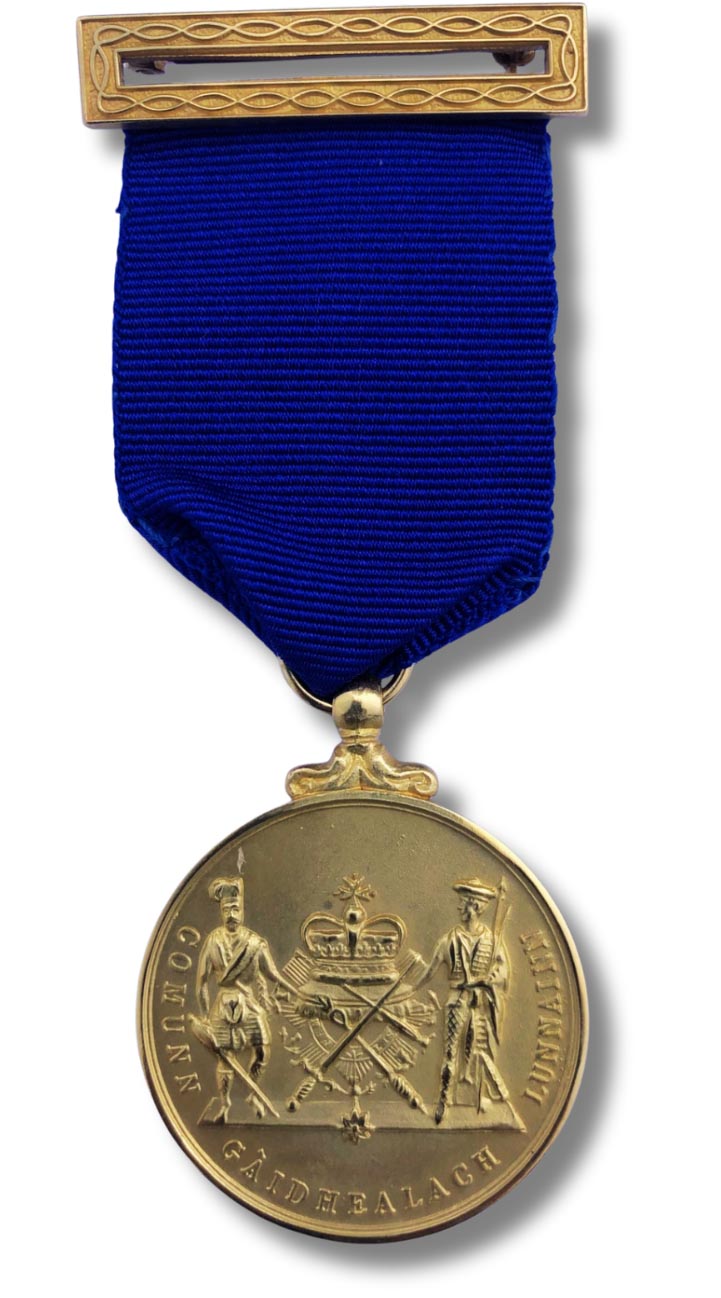
This year marks the 150th anniversary of the Highland Society of London sponsoring the Gold Medal for piobaireachd playing at the Argyllshire Gathering at Oban, Scotland.
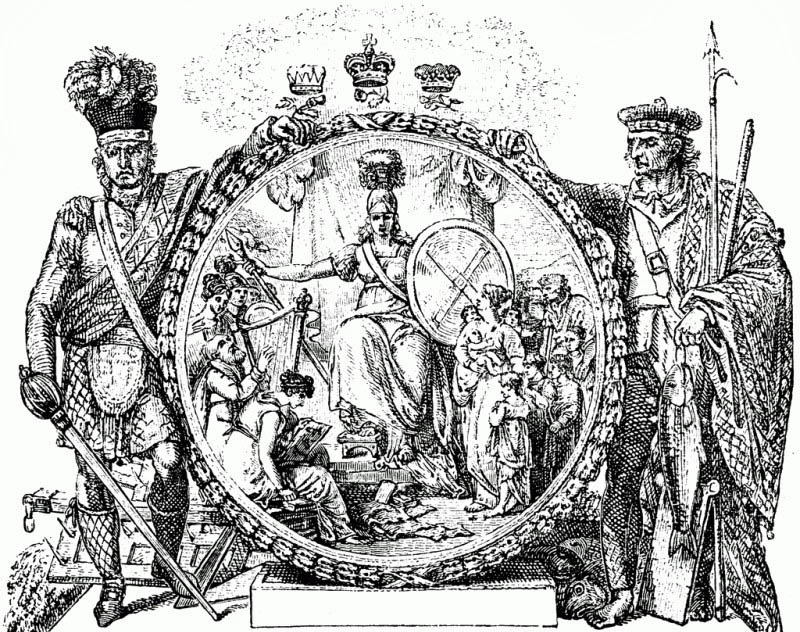
Founded in 1778, the Society aims to preserve Highland culture, support displaced Highlanders, and work toward the repeal of proscriptive laws like the Disarming (Dress) Act of 1746, which made donning Highland wear and playing the Highland bagpipes illegal.
The Highland Society organized the first known organized piping competitions in Falkirk, Scotland, in 1781. The “Falkirk Tryst” competitions were partly a protest against the proscription of Highland music. Thirteen pipers competed, including Patrick MacGregor, whose father had been a piper to Prince Charles Edward in the 1775 Jacobite rising to restore the House of Stuart to the British throne.
The Falkirk Tryst prompted annual piping competitions, including the Northern Meeting at Inverness, Scotland, in 1841. In 1849, the Highland Society of London donated a prestigious Gold Medal to the Northern Meeting. The organization also sponsored the publication of the 1869 collection of pipe music by William Ross, piper to Queen Victoria and the much more recent publication of the MacArthur piobaireachd manuscripts.
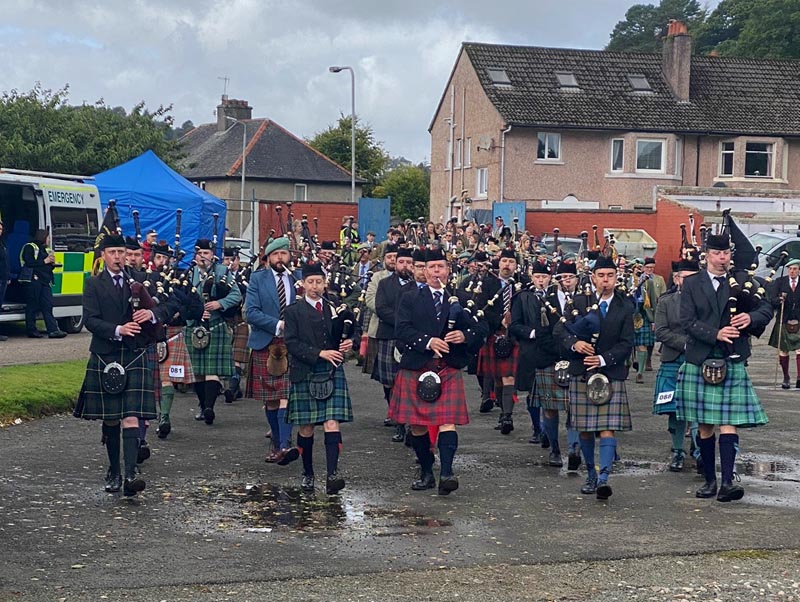
The Argyllshire Gathering was founded in 1871, and the first Highland Society of London Gold Medal for piobaireachd was won in 1873 by John MacBean, piper and valet to Lord Middleton of Birdsall House, Yorkshire. The two Gold Medal contests continue to be the most prestigious non-invitational, non-former winners’ solo competitions in the piping world.
The Society also sponsors the MacGregor Memorial Piobaireachd Competition for young pipers at the Argyllshire Gathering, the piping events at the Isle of Skye Highland Games, and the Scottish Piping Society of London’s annual solo contests in London.
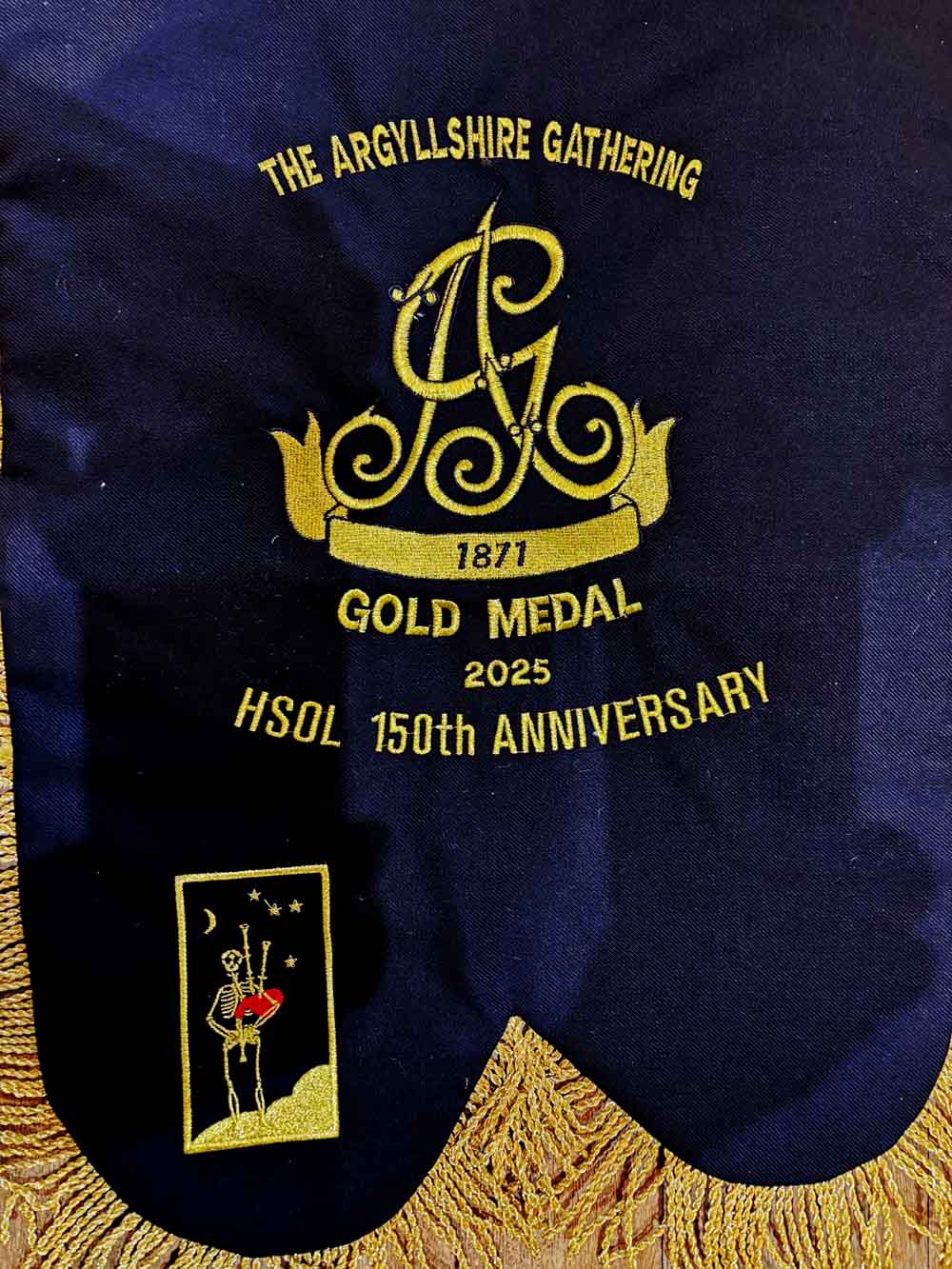
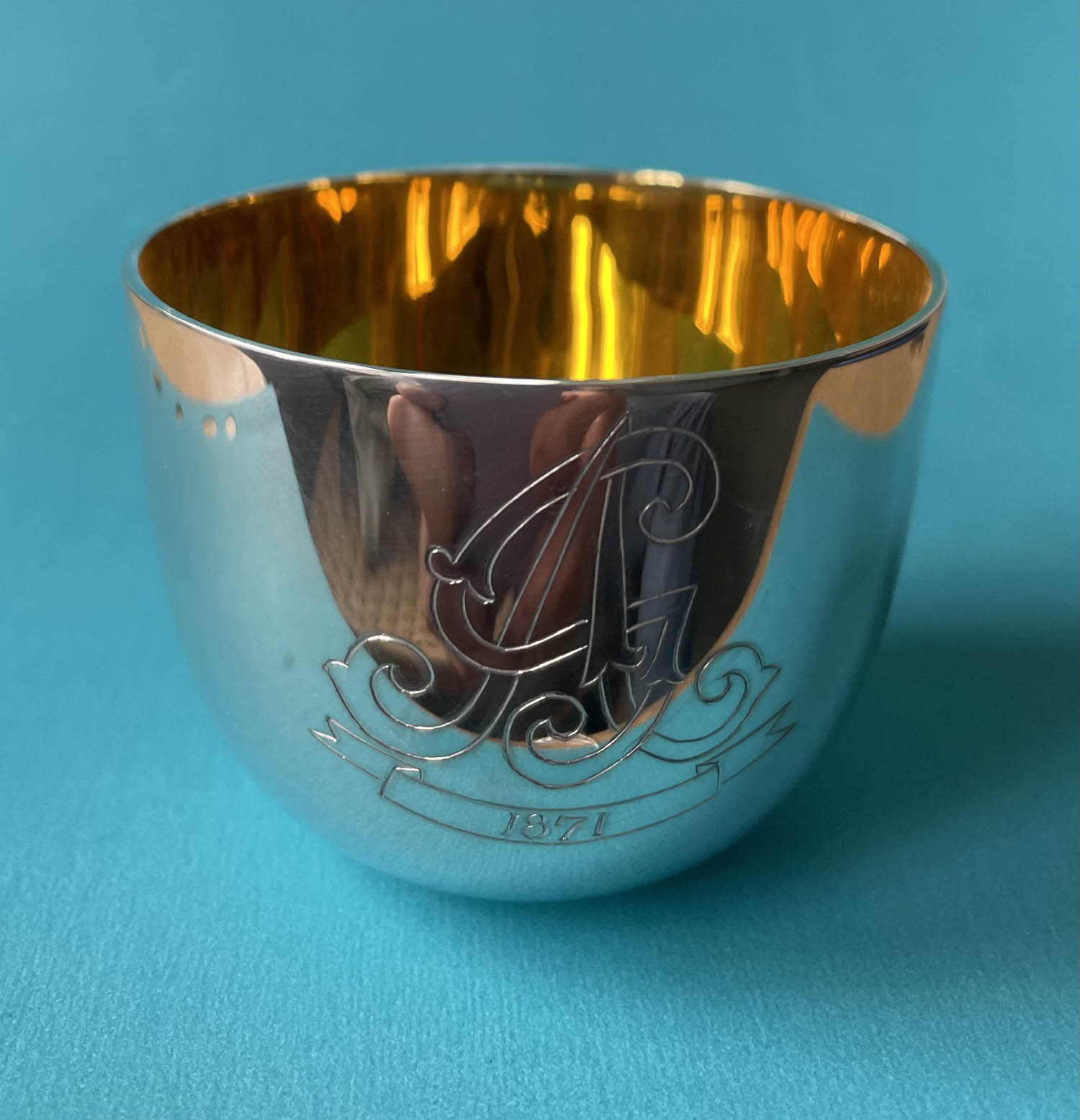
This year only, the Highland Society of London has also donated a silver tumble cup, and the Argyllshire Gathering has added to the bass drone banner it always awards to the winner.
Winning one or both of the Highland Society of London’s Gold Medals indelibly writes a piper’s name in history. It can be a springboard to performing and teaching opportunities for the rest of their life. Just getting a prize in the event is a massive achievement.
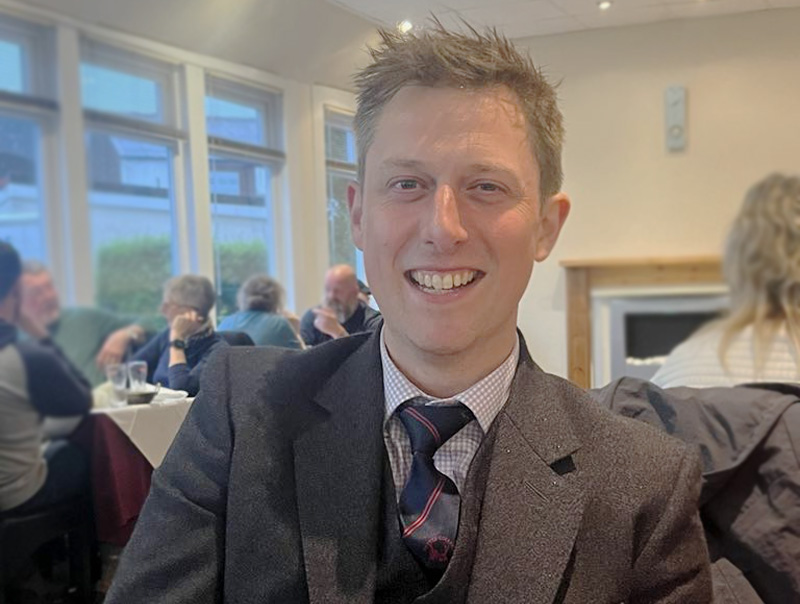
Since the Gold Medal at Oban is celebrating its sesquicentennial, we reached out to Highland Society of London member Neill Mulvie to learn more about the organization and its continuing support of solo piping. Mulvie is a well-known name in solo piping circles and has served as an adjudicator and organizer of many competitions, and a great friend and personality in the UK’s solo piping scene.
Here’s a transcript of our conversation, with minor edits for clarity.
 pipes|drums: We are pleased to have Neill Mulvie with us. He’s coming to us from Stirling and we thought we would connect with Neill as a member of the much talked about, perhaps little known Highland Society of London, the sponsors for a very long time of the Gold Medals for piobaireachd at the Argyllshire Gathering and the Northern Meeting. And this year, the Argyllshire Gathering marks 150 years of the Highland Society of London sponsoring its Gold Medal. Neil, thank you very much for taking the time. Why don’t we start with the basics? What is the Highland Society of London all about?
Neill Mulvie: The Highland Society of London was formed 1781 or thereby in London. There was a similar society in Scotland. William Donaldson describes it as “a patrician society” by which he means that these people came from the upper classes, the landed gentry of Scotland based in London.
At that time, it aimed to preserve the culture of Scotland and, as a subsidiary aim, to try to get a repeal of the Disarming Act that had occurred as a result of the 45 Rebellion. The third issue that concerned the society at its foundation was the return of confiscated lands to those people who participated in The 45, and they managed to achieve the return of forfeited lands in about 1782 or thereabout.
“Today, it’s really focused on the preservation of Scottish culture, not so much Gaelic, as it used to be. They widen their activities to the arts in general, as they’re formed in the Highlands.”
Those are the aims, but today, it’s really focused on the preservation of Scottish culture, not so much Gaelic, as it used to be. They widen their activities to the arts in general, as they’re formed in the Highlands.
pipes|drums: How many people are members of the Highland Society of London now?
Neill Mulvie: I’m not sure of the exact numbers, but it’s around about 300, it’s a few hundred anyway. Not all participate regularly, but as far as the society is concerned, they meet about four times a year for dinner or something like that.
pipes|drums: You talked about the society’s aims now, but when we go back to the original sponsorship of the Argyllshire Gathering Gold Medal, how and why did the organization get involved specifically with the Argyllshire Gathering and the Northern Meeting?
Neill Mulvie: The sponsorship of piping competitions is compatible with their aim of preserving Scottish culture and music, particularly as piping is one aspect of it. How they got involved with the meeting in Inverness and the gathering in Oban is not absolutely clear, but my own suspicion is that, as I said earlier, it’s a patrician society, or it was very much so at the time of foundation. And these people would all be connected. The same was true with the Northern Meeting, which was run really by the gentry, and the same was true with Oban. For example, you go to the Oban Games, and there is a tent specifically for what a friend of mine, Graham Richardson, used to call “landless lairds,” from which the plebs, such as you and I, are excluded.
I think it would result from networking and contacts with these people. It’s like everything else in this world: it depends on who you know and your influence over groups of people. I suspect that’s what happened, and the Gold Medal was that one guy in Oban would ask his pal in London, How about sponsoring this competition? And it would occur that way or something like that. I have no proof of that, but that’s my general view of how that happened.
pipes|drums: I believe the Highland Society of London goes back to the Falkirk Tryst in the 1700s. It’s interesting that such a patrician society would be interested in sponsoring these non-patrician competitions.
Neill Mulvie: That’s right. The British class system, which is now beginning to disappear to some extent, has always been one of division, where, for example, in cricket, you had players and gentlemen, and in piping, you had professional and non-professional pipers. For example, the role of the Scottish Pipers Society was, at one time, essentially players and non-players.
“It was a class thing. I’m not complaining about that. It’s just the way the world was in those days.”
It’s not quite true, but it was a class thing. I’m not complaining about that. It’s just the way the world was in those days. But the key thing is I think there were a group of people in London and in Scotland with the Highland Society of Scotland who were interested in trying to preserve Scottish culture, language, and arts. And the way in which they could do that was through sponsorship of competition.
The point has to be made that neither of these Highland societies actually ran the competitions, they just sponsored them. For example, the Falkirk Tryst was run on behalf of the organization by the Gaelic Society of Glasgow.
pipes|drums: To this day, obviously, the Highland Society of London still sponsors both of the prestigious Gold Medals and other events, like the Skye Gathering or the Skye Highland Games.
Neill Mulvie: And the MacGregor Memorial. And they’ve just recently got involved in a recital of piobaireachd in London, organized by a chap called Gordon Tughan Jones, who’s a member of what’s called the Pinstripe Highlanders, another group of non-competing pipers in London. They’re organizing a recital, and the Highland Society of London is sponsoring that, too.
But it’s not just piping. They also sponsor a prize for Gaelic literature and the Gaelic Singer of the Year at the National Mod. Their activities are quite wide-ranging, and they’ve offered support, for example, to country museums in Scotland and so forth.
pipes|drums: Anything more to add before we wrap up?
Neill Mulvie: I don’t think it will ever stop, in terms of sponsorship from the Highland Society of London. They regard it with almost religious fervour and support these medals because they are highly prestigious. As you know, most pipers try to win the Gold Medal if at all possible. The Highland Society feel quite proud that they do that. That’s my impression. I’m a director of the Highland Society of London, and in discussions, there’s been a phenomenal amount of enthusiasm for these events and the other things they support.
pipes|drums: It’s undoubtedly one of the great traditions of solo piping competition in the world. And the Highland Society of London is synonymous with two of the biggest prizes in competitive piping. Pipers everywhere thank the Highland Society of London for its support, not just this year, but for the last 150-plus years. So, thanks very much. Long may it continue.
Stay tuned to pipes|drums for results from the 2025 Argyllshire Gathering, August 27-28, as they are made available.
It would be great if the Oban and Inverness piping events were broadcast live.
The 150th anniversary banner would be quite nice to receive for the accomplishment, but that giant product logo … well, let’s hope that’s easily removeable.