

Ensemble judging goes worldwide at RSPBA APMB online workshop
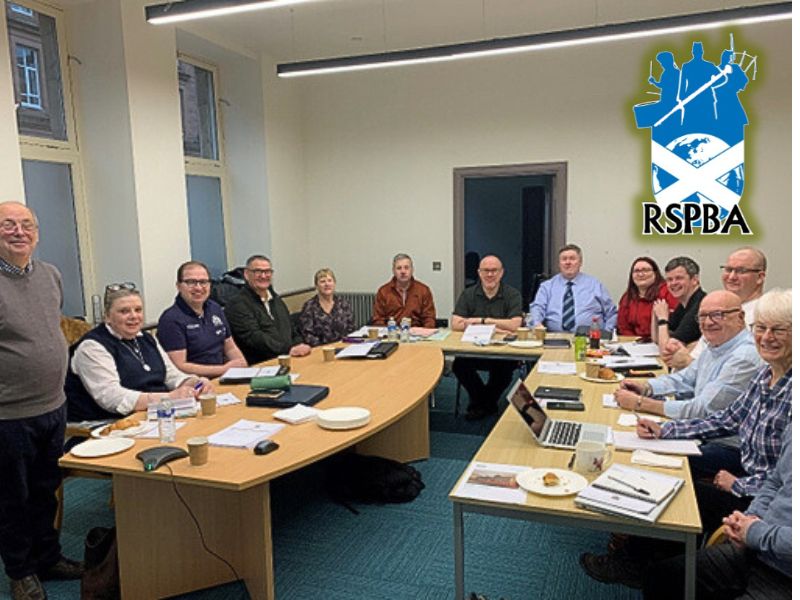
 About sixty fully accredited and potential pipe band ensemble judges from around the globe got together online in a landmark event for the Royal Scottish Pipe Band Association on February 7, 2026, when its Adjudicator Panel Management Board held an online Ensemble Judging Workshop in a five-hour structured and free-flowing discussion.
In addition to 33 representatives from the UK and Ireland, six judges from Australia, six from British Columbia, six USA, two New Zealand, two from Ontario, and one from Alberta turned out for the history-making event, led by APMB Convenor Robert Mathieson, with each of the seven other Adjudicator Panel Management Board members – Paul Brown, Donald MacPhee, John Reville, Maurice Rhodes, Paul Turner and Ross Walker – running various segments over the five-hour session.
Among the topics discussed were “Musicality of MSR Playing,” a conceptual discussion of the definition of “Ensemble,” practical exercises, “Moving from a Single Discipline to Ensemble,” “Effective Ensemble Critique,” and the emotional aspect of pipe band music and how it can and should influence ensemble judging.
The Adjudicator Panel Management Board is essentially the governance, quality-control, and professional-standards authority for all RSPBA adjudicators. The group works to ensure that only qualified pipers and drummers become adjudicators, that are properly trained, that judging is consistent and fair, and that the judging system supports the musical and competitive integrity of RSPBA contests.
Within minutes of the workshop’s conclusion, we connected with Robert Mathieson to learn more about the workshop and the short- and long-term goals of the RSPBA and the Adjudicator Panel Management Board, particularly as they pertain to the worldwide pipe band community.
Here’s a transcript of the discussion, with minor edits for readability:
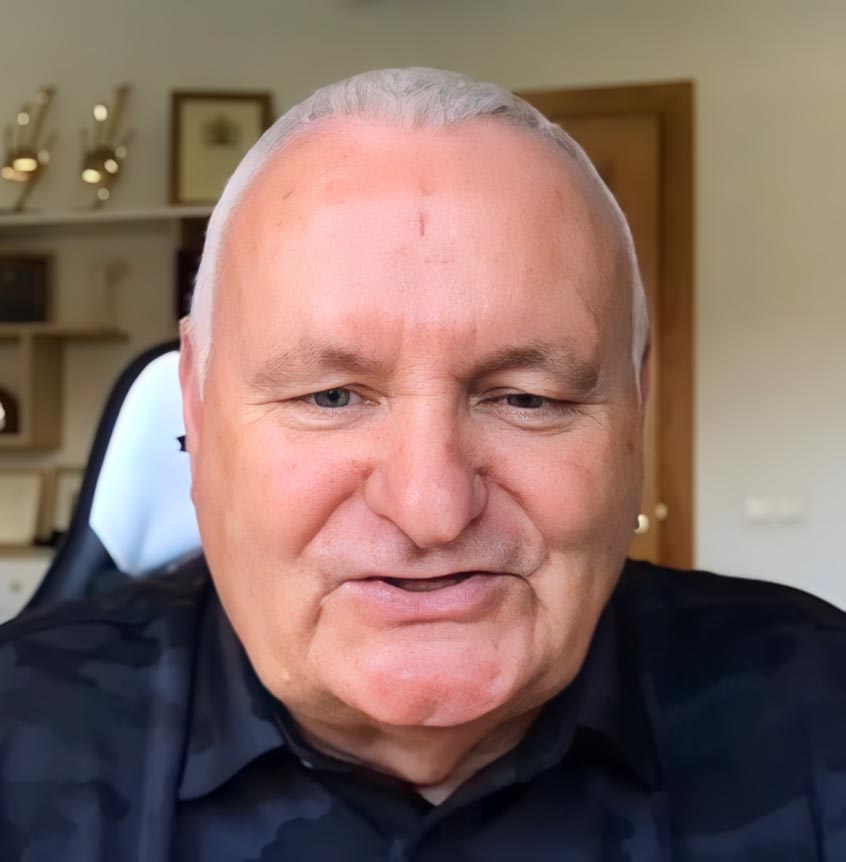
pipes|drums: The RSPBA has just completed an ensemble workshop for judges, not just for RSPBA judges, but for ensemble judges worldwide. And the head of the Adjudicator Panel Management Board, Robert Mathieson, is here just to talk about that session and what went on. Thanks, Rab. Really appreciate you taking the time.
Robert Mathieson: Thanks for the opportunity.
pipes|drums: You just completed this session. It was a good five hours, and a worldwide session for ensemble judges. Why did you decide to do it on ensemble?
Robert Mathieson: Well, it’s part of an overall plan. The APMB is well aware that the area for improvement is ensemble adjudication and how we deliver our critique. And once we go into it, say, How can we improve this? How can we get some kind of alignment across our own panel? And how can we upgrade the adjudicators? Then the conversation continued: “We have to involve the affiliated associations as well.” We don’t want to end up with Scotland’s ensemble adjudication versus Canada’s, New Zealand’s, or Australia’s. We thought, Well, okay, let’s grab the bull by the horns and invite them in.
pipes|drums: And how do you think the session went? Are you pleased?
Robert Mathieson: I’m absolutely delighted with the session. The engagement from overseas was excellent. Over 60 people were there, and there were some big hitters in the pipe band world. It was very good from that perspective. It’s a team effort. The APMB’s current membership is very strong. There are a lot of big hitters in there, big prize winners, good pedigree and enthusiasm to get this right.
“It’s got to be two-way traffic. We need to learn as much from the affiliated associations as they take from us.”
I think we did hit the spot today as a starting point, but this isn’t a standalone project. This is the first, as far as I’m concerned, and the first step toward becoming more transparent about the adjudication process and more approachable. Hopefully, we can also align globally on where we’re going. Because I don’t think we’re that far apart. It’s just how we execute it and how we prioritize it.
It’s got to be two-way traffic. We need to learn as much from the affiliated associations as they take from us.
pipes|drums: Could you give a synopsis of the remit of the APMB?
Robert Mathieson: The Adjudicator Panel Management Board is appointed by the adjudicators. The adjudicators are a kind of satellite group. We’re not actually members of the association. The association has member bands, and within those bands, members. We’re associate members. We have a certain amount of autonomy in terms of how we serve our profile and deliver our aims and tasks. There is a set.
terms of reference for our role when we’re working on behalf of the RSPBA. That is published on the RSPBA website. It covers our code of practice, management responsibilities for APMB members, and how we operate. And if you get the right bunch in there, it can become quite a good working tool. But it’s become very apparent to us that as soon as we got into ensemble, and we started producing video modules and information sheets and other things.
The reaction we got was, We need to get this information to the bands. The bands need to know what this is and where we’re going. We thought, right, there needs to be some more workshops where we invite some of the bands in. Especially the lower grade bands. If we can motivate the ensemble presentation from all bands, because at the moment, some of the bands are a bit disillusioned by what is expected in terms of presenting a good ensemble.
pipes|drums: What elements of the session did you think were most productive? What stood out in your mind?
Robert Mathieson: Most of our training for adjudicators is coming from a playing environment, coming onto the panel. They all know their subject, but the difficulty is finding the words and the narrative to put on the sheet in a minute-and-a-half window of opportunity, when a Grade 4 band presents you with four marches. That is a skill in itself. During training, that’s the skill we’re developing, to upgrade the narrative, be more defined, be more specific, so this becomes useful feedback to the band.
It’s not just about getting in and picking a result. The result will emerge from the process. It’s about being confident, giving defined terminology and good vocabulary.
pipes|drums: Is it important to have commonality? Ensemble is notoriously subjective, but is having that definition, that commonality, worldwide of what a good pipe band ensemble important?
Robert Mathieson: As long as music is an art form, it’s very important.
pipes|drums: You reached out in a large way to worldwide associations, judges, panels worldwide to take part in this session. What about reciprocity between associations when it comes to judges and accredited judges? Should they be welcomed? Should the accreditation of all judges be honoured automatically worldwide? Are we getting to that point?
Robert Mathieson: I think we’re heading for a mutual recognition. I was greatly influenced when Michael Grey took the Ontario Pipers and held a seminar for all the adjudicators. And suddenly, we had this online platform with a great number of people, all very experienced pipe band folk, contributing to this. And I thought, why has it taken decades and decades for this to happen?
Globally, there’s a fragmented approach. And there’s no reason for that now. I can understand that, when the online facility was not available, you would see all the difficulties in bringing judges from this country and that country. Once they arrive, they don’t understand our system. We need to do fast-track training in the morning, etc.
One of the things that changed our role was COVID, when we thought, “Okay, let’s develop training modules and make them videos and PowerPoints so we can deliver them at the drop of a hat online.” Now, the minute you do that, it doesn’t matter whether you’re in Melbourne, Timbuktu, Toronto, or wherever; it could be accessible to everybody. We’re just exercising that.
“We fully intend to give the bands access to our thoughts on Ensemble, for example. There will be another workshop specifically for these lower-grade bands to say, Hey, guys, we can help you. We can find you some points here and improve Ensemble. And that is going to be open to any band, any pipe band across the globe.”
pipes|drums: On that note, will we see more of a proactive worldwide leadership role by the RSPBA? Obviously, it’s kind of the mothership of pipe banding. But will the RSPBA be more proactive in other things? Will we see more sessions run by the APMB or other groups within the association?
Robert Mathieson: I’m not driving the RSPBA, but I’d like to think that that’s the direction they’re going. Certainly, the APMB are setting that as an example. We fully intend to give the bands access to our thoughts on Ensemble, for example. There will be another workshop specifically for these lower-grade bands to say, Hey, guys, we can help you. We can find you some points here and improve Ensemble. And that is going to be open to any band, any pipe band across the globe.
It’s not just for RSPBA. We need to look at the whole thing globally. The membership is growing fast globally. We have another training course for new members joining the panel in October-ish, at the end of the year. We have a busy training schedule this year, and I think this will be the highest number of overseas representatives attending. And we have some big hitters globally coming on, which I’m pleased to see.
“It shouldn’t be exclusive. We need to impart the knowledge across all our affiliated associations and say, Look, let’s see how you guys do things as well. We can learn from you as well. There’s no point in maintaining all these lines of communication if you’re not benefiting from them both ways.”
pipes|drums: It’s been a great conversation, but want to ask, Is this a new philosophy for the RSPBA, to reach out more proactively?
Robert Mathieson: I’ve never heard anybody say this is the new sermon or whatever, but certainly from the APMB’s point of view, we’re leading by example, and we know the expertise that’s out there globally. And we know the people who come year after year to the Worlds. I agree that the RSPBA is likely always to be the mothership, as long as we are educating in schools and producing pipers and drummers at the level we’re currently doing. And that seems to be growing.
But it shouldn’t be exclusive. We need to impart the knowledge across all our affiliated associations and say, Look, let’s see how you guys do things as well. We can learn from you as well. There’s no point in maintaining all these lines of communication if you’re not benefiting from them both ways.
pipes|drums: Good to hear some of your insights. It’s an interesting development for the RSPBA and the APMB, and we’ll look forward to more.
Robert Mathieson: Watch this space very soon, lower-grade bands. Ensemble will be the topic.
Stay tuned to pipes|drums, as always, for more.
If you would like to share your fair and respectful thoughts, please use our Comments feature below.

NO COMMENTS YET