

The Medley Playbook: Field Marshal Montgomery
 Has a band ever had a logo for a competition medley? Field Marshal Montgomery is not only the first to be branded, but also the band’s 2026 Gord Duncan Tribute competition medley is the first to feature every tune by one composer.
The band debuted the medley at the Dollar Competition on May 16th and performed it again at the British Championships in Edinburgh on May 30th.
The band’s Gordon Duncan Tribute medley is the subject of the third installment in our exclusive series on the new medleys of the world’s top Grade 1 bands, and the construction, orchestration, arrangement, and intentions behind the music.

Matt Wilson has been a member of Field Marshal Montgomery since 2003, and in 2024, he embraced the challenge of following Richard Parkes, who led the band to a record 13 World Championship wins and more than 100 major championship victories. In Wilson’s first year as pipe-major, the band won the Scottish and was runner-up at the 2025 Worlds, an exceedingly rare achievement for a first-year Grade 1 pipe-major. From Collinton, Scotland, near Edinburgh, he has run the world-renowned Dollar Academy piping and drumming program.
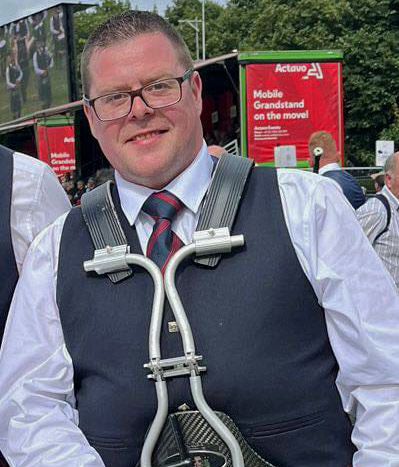
Like Wilson, Leading-Drummer Willie Glenholmes is a longtime Field Marshal Montgomery member and, in 2025, enjoyed a debut season running the corps in 2025. A regular prize-winner at the World Solo Drumming Championships, he was a member of the Cullybackey Pipe Band for more than 20 years and, for one year, leading-drummer of the now-defunct Grade 2 Lomond & Clyde before joining Field Marshal Montgomery. Glenholmes’ corps won their first major title when they won the 2026 UK Pipe Band Drumming Championship in Belfast on June 13th, which was, like Matt Wilson winning a major in his first year as pipe-major, rare for a leading-drummer in their first few years.
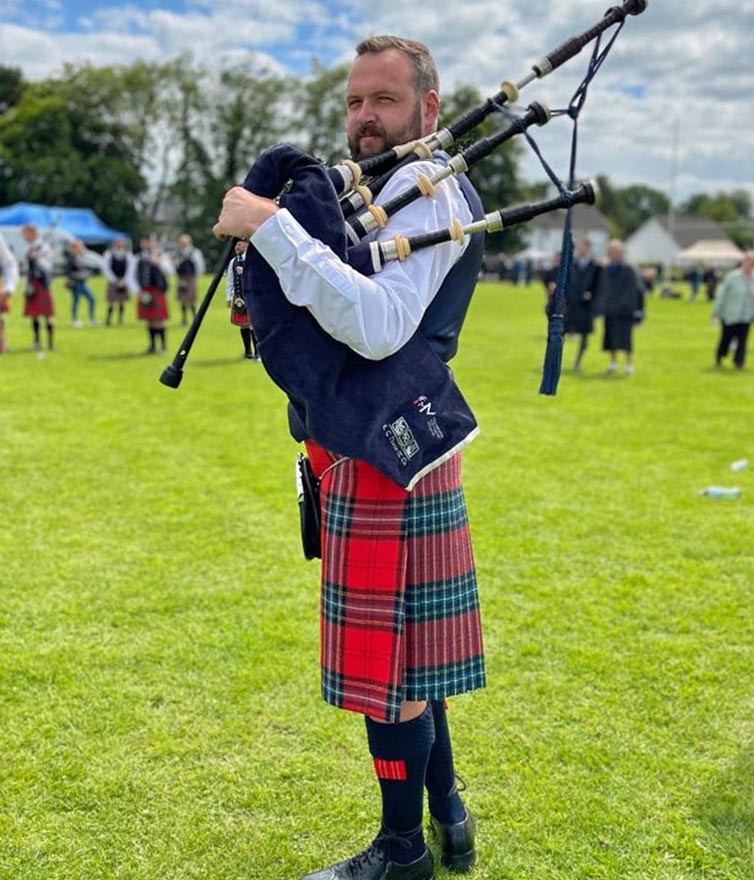
Ben Duncan joined Field Marshal Montgomery in 2022, and this year was appointed pipe-sergeant by Wilson. Now retired after a nearly 20-year military career with the Royal Scots Dragoon Guards, serving in Iraq and Afghanistan. He achieved a double distinction on the Army Pipe-Majors’ Course and was the pipe-sergeant instructor at the Army School of Bagpipe Music & Highland Drumming before he was appointed pipe-major of the Royal Scots Dragoon Guards in 2018. One of the world’s elite solo pipers, winning a raft of prizes around the games and at the major gatherings, Duncan enjoyed his first appearance at the Glenfiddich Invitational Solo Piping Championships in 2025.
Field Marshal Montgomery’s new medley for 2026 is a six-and-a-half-minute epic journey through Gordon Duncan’s incredible library of musical brilliance. The selection of tunes and their arrangements pays homage to one of the most popular and profound creators in the Highland piping canon. The medley is intricate, nuanced and compelling, perfectly suited for an elite pipe band like Field Marshal Montgomery. In our conversation, Matt Wilson, Willie Glenholmes and Ben Duncan guide us through the band’s thought processes and objectives, and open our eyes and ears to the behind-the-scenes inner workings of a band at the top of their own creative game.
Here’s a list of the medley’s content:
“Ian Green of Greentrax” (hornpipe) – composed by Gordon Duncan
“The Famous Baravan” (strathspey/jig) – composed by Gordon Duncan, arranged by FMM
“Rory Gallagher” (jig) – composed by Gordon Duncan
“Pressed for Time” (jig) – composed by Gordon Duncan, arranged by FMM
“The Sleeping Tune” (air) – composed by Gordon Duncan
“Grande Nuit in Port Du Peche” (accelerando/reel) – composed by Gordon Duncan
“Clueless” (reel) – composed by Gordon Duncan
“The Golden Wedding” + “The Sleeping Tune” (hornpipe/reprise finisher)
Enjoy our exclusive conversation with Pipe-Major Matt Wilson, Leading-Drummer Wille Glenholmes and Pipe-Sergeant Ben Duncan:
For those who also like text, here’s a transcript of our conversation, with minor edits for clarity.
pipes|drums: We’re excited to have the third installment of the Medley Playbook, our series of interviews with leaders of Grade 1 bands and their new medleys for 2026. And in this installment, we’ve got the leaders of Field Marshal Montgomery with us: Pipe-Major Matt Wilson, Leading-Drummer Willie Glenholmes, and Pipe-Sergeant Ben Duncan. Thanks for taking the time.
Matt Wilson: Thank you very much for having us on.
pipes|drums: The medley is really interesting. It’s all about Gordon Duncan, and probably, maybe for the first time, it’s an entire medley devoted to a single composer. This will be a great conversation.
Before we get into that specifically, Matt, can you talk about the process that Field Marshal Montgomery goes through when creating a new medley?
Matt Wilson: Like most bands, we have a team of people who will go through lots of ideas, lots of different tunes. I’m really fortunate that we’ve got a great team of people who contribute. I’ve always been an advocate of making sure that everybody feels like they can contribute to the band. We have a specific music group, which consists of about six or seven people, and essentially for any medley we try and draw on everybody’s input, because there will always be something there that maybe you don’t think about yourself and it’s really important that you get as many people’s input, to bring more ideas to the table. It’s worth its weight, really.
pipes|drums: The theme we mentioned at the very beginning: Gordon Duncan. It’s been 20 years since his unfortunate passing; he would have been 62 this year. Gordon was one of the great composers of all time. Incredibly creative. You pay homage to him through the medley, through a thematic composer-approach that has never been done before. Can you talk about how that came about?
Ben Duncan: I believe Matt had a conversation with Ruairidh Brown, who had come up with the idea of a Gordon Duncan medley. Matt and I had a chat about it. Obviously, it’s a kind of risky thing. It hasn’t been done before, but we both thought there was a lot of merit in it.
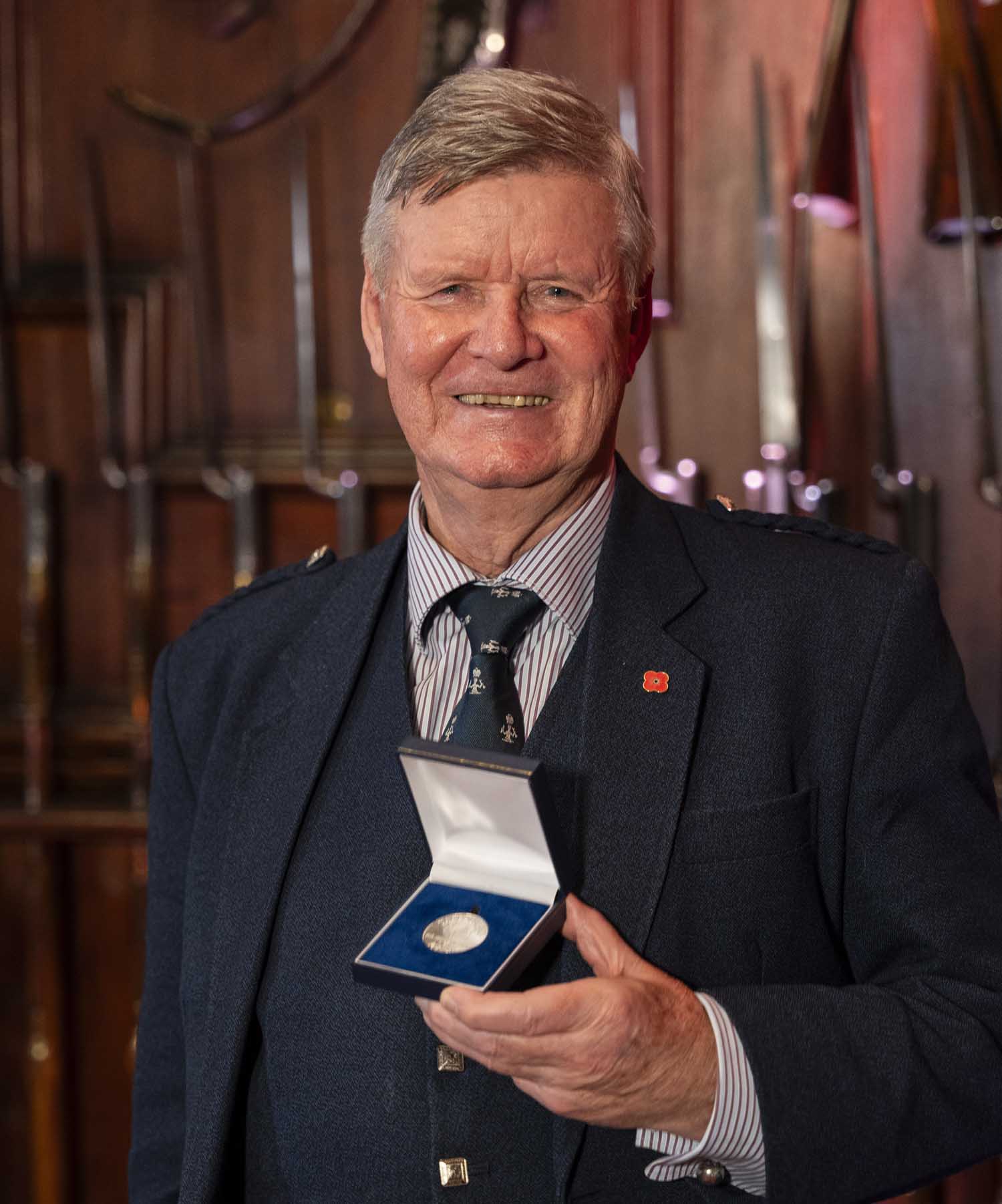
pipes|drums: You put together a medley of entirely Gordon Duncan material. Were there any other decisions you’d have to make? Did you talk to the family about it?
Matt Wilson: Yes, one of the first things was to approach Ian [Duncan] to discuss it with the family. We wanted to make sure the medley was delivered in the right way and to go about it in the right way. If there was something the family didn’t feel was right, we wanted to be respectful to them and obviously the wider family, so that it wasn’t something that was maybe seen as a bit crass. That was something we were adamant about when we approached Ian. Luckily, he gave it his blessing

We involved Ian in finding out whether Gordon had written any strathspeys, for example, that there were maybe a couple that were left in a filing cabinet somewhere. That was very important to us.
Also, there were areas of the medley like “The Sleeping Tune” that hold a lot of emotion. One of my memories of hearing Lothian & Borders Police play It was Ian and [his son] Alex playing it together. There’s a lot of emotion for the family. Especially after Alex’s passing, we wanted to make sure that it was done tastefully.
pipes|drums: That’s very considerate of you and quite appropriate. Of course, Ian Duncan is one of the great creative minds in the evolution of the medley genre itself, back in the Vale of Atholl days and beyond.
pipes|drums: Willie, beyond the drumming, did you have strong input on the piping side? And conversely, Matt and Ben, did you have input into the drumming side? Willie, maybe talk about your input on the structure of the medley.
Willie Glenholmes: Obviously, Matt and Ben headed up the piping side of things. It’s in strong hands, but touching on what Matt had mentioned about the collective music group we have in place, which gives us a good platform not only for me but also for other people within the group to put ideas across, whether it’s tune selection or the way we play things. That’s a really good system we have in place.
I’m adamant that Willie has his role to produce the scores that he sees fit within that context of whichever tune it is. If I implied my thoughts too early, it might change the pattern of what Willie brings to the table. The important thing is to let Willie and the group around him come up with the initial idea, and then we would discuss it. I’ve been fortunate in the way Willie details much of his scoring. – Pipe-Major Matt Wilson
pipes|drums: Matt, when you work with Willie on the whole package, would you have a strong involvement in the drumming?
Matt Wilson: As far as drumming’s concerned, if there was something that I felt didn’t particularly work, then we would have a conversation about it. I’m adamant that Willie has his role to produce the scores that he sees fit within that context of whichever tune it is. If I implied my thoughts too early, it might change the pattern of what Willie brings to the table. The important thing is to let Willie and the group around him come up with the initial idea, and then we would discuss it. I’ve been fortunate in the way Willie details much of his scoring.
It’s not something I ever have to pick up on. The only thing we’ve probably had some input on are little bits of bass and tenor that I’ve had an input on, but again, it’s very minimal, just to try different things during breaks and whatnot. We’re fortunate that Willie comes up with some really fantastic scores to enhance the music.
pipes|drums: Willie, it bears mentioning that you’re fresh off the UK Championships in Belfast, and your first drumming title with Field Marshal Montgomery. Congratulations on that.
Willie Glenholmes: Thank you.
pipes|drums: Why don’t we get down to it and play sections of the Gordon Duncan medley? We’ll pause here and there to discuss what’s going on and highlight a few things people might hear when they listen to it again. So here we go.
pipes|drums: I don’t know about you, but inevitably every Gordon Duncan tune I hear makes me smile. They’re always terrific, energizing pieces of music. Great sound coming in; terrific playing. We’re not going to talk about the technical side of things, but Matt, what is your objective with that tune coming in?
Matt Wilson: That’s a tune I’ve always loved. With all the tunes we play, I’m a great believer that if you play music you enjoy, you’ll play it better. Choosing that tune, as Ben mentioned, we had a discussion. I picked Ben up; we were going to a Royal Scottish Pipers’ Society dinner, and we basically both said the same tune at the same time. I’m kind of into that kind of thing, and if you’re on that same page, then you’ve got to go with it.
“If you play music you enjoy, you’ll play it better.” – Pipe-Major Matt Wilson
But the tune itself has that drive; it’s got that excitement about it. You bring the harmonies in that third part, and it elevates the tune. It was to create that excitement and, you’re right, it’s a tune that makes you smile. You want to try to get as many of those elements to pull on, whether it’s memories of Gordon playing it or situations you may have been in, you’ve maybe witnessed him playing it. We’ll touch on other things throughout the chat about emotions.
pipes|drums: And the orchestration, with the harmonies coming in in the third part. What process is there for creating harmonies and counter-melodies?
Matt Wilson: A lot of our harmonies are written by Ben and Ruairidh Brown and Iian Crawford. We’ve got a lot of people who have great input, and sometimes there are areas where we have to reflect on the harmonics that come through, so that we don’t get carried away with certain things.
Sometimes, something sounds quite good inside, but when you get outside, you think, actually, we need to change that a little bit. That’s important. But all of the people I mentioned are very astute to how it sounds. Again, the difference between what works on practice chanters and what works on the pipes is another issue.
pipes|drums: When we left off, we were going into the strathspey arrangement of “The Famous Baravan,” so let’s pick it up there.
pipes|drums: I hate stopping it, but you’ve taken the strathspey timing, flipped it back to jig time, then seamlessly into “Rory Gallagher.” Who came up with that? It’s brilliant.
Ben Duncan: When we were putting the medley together, the biggest thing that struck us was that Gordon didn’t compose any strathspeys. We initially set out to have “Craig-a-Bodach” in there, because he played it on Just for Seamus, and then we would do the wee “Famous Baravan” strathspey time and merge into the jig.
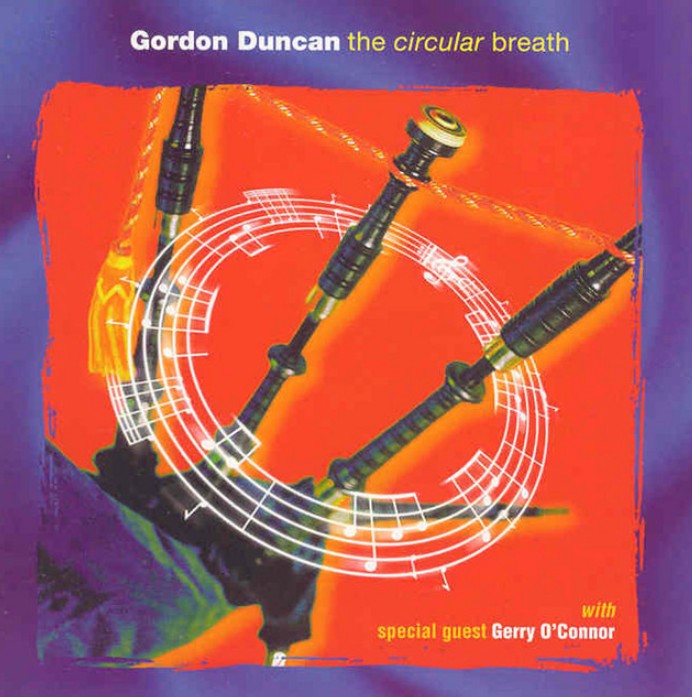 But the initial medley that went out was about eight-and-a-half minutes long. So, we had to start chopping things down a wee bit. We decided that by having a wee hint of a strathspey to get us going, it’s probably the right way to give Gordon the nod – honouring what he’s actually done and not just putting tunes in because they have to be in there. It does kind of encapsulate that. We thought we’d put that first bit of “The Famous Baravan” into strathspey time, then merge into “Rory Gallagher” from there, with a simple harmony the band had played in the past. Nothing too in your face; just keep it nice and light before heading into the break into “Pressed for Time,” which, as most Gordon Duncan fans like myself will be aware, on the circular breath album, the “Pressed for Time” track is played in reel-time and has a whistle part that goes over the top with [the piobaireachd] “The Earl of Seaforth’s Salute.” We thought it would be only right to incorporate as many authentic parts of Gordon’s music throughout the medley.
Initially, we had thought about doing the “Pressed for Time” jig and then popping out in reel-time to do it as it was on the album, with “The Earl of Seaforth’s” in reel-time. Again, time was an issue. We actually had a video chat with the three of us and the rest of the music group, and there were some great suggestions. We worked through them, and that’s what popped out.
As you can hear, we’ve got probably two-thirds of the band playing “The Earl of Seaforth’s” with just a wee hint of the “Pressed for Time” jig poking through, and it pops out the other side. That was the idea.
pipes|drums: the circular breath is an amazing album, and that’s my favourite track on it. When I first heard it, I thought it was absolute genius. You do a great job of paying tribute to that arrangement. Let’s keep going here.
pipes|drums: There’s another intricate and clever bridge to the next tune. But let’s go back to “The Sleeping Tune,” and the use of the bass section, Willie. It’s very effective and restrained.
Willie Glenholmes: Yeah, once you get to a slow air, it’s time for the drummers to dry their hands and take a wee breather. We just let the piping come through there, and then, once we get to the second part, we’re trying to catch the more metric, rhythmic pattern that runs through it, and it’s a good opportunity to highlight the bass and tenors within the piping.
pipes|drums: I wanted to ask earlier, Willie, about the style of snare drumming: it features great momentum and an on-top-of-the-beat approach, which creates great energy. There’s little worse than a drum section that’s on the back of the beat, dragging a band down. Just my personal preference. Are you intentionally trying to get that energy out of the drum score with that style of playing?
Willie Glenholmes: Absolutely. Playing on top of the beat, I think all drummers should be trying to do. Sometimes you get bogged down and fall behind, and it just drags the whole thing down. If you’re sitting on top of the beat, it’s definitely gathering energy as the set goes on. Obviously, putting dynamics in helps that come through.
pipes|drums: Good stuff. So, we’re travelling into “Grande Nuit in Port Du Peche,” with an accelerando into the reel. Let’s get back into it.
pipes|drums: the tempo is right up there, feels like on the edge. Is that intentional or was that the adrenaline flowing on the day?
Matt Wilson: It’s something that has to happen when you’re playing certain Gordon Duncan tunes. It’s amazing when you play some Gordon Duncan compositions slower; they don’t come out the way they should, especially if you’re listening to his recordings. Tempo is key in certain areas, especially in that second reel when we go out of “Port Du Peche” into the next tune. You have to get those little doublings on C coming through, and it’s tough. There’s a lot of challenging fingerwork. With that complexity of tune, you need to have the hands that can cope with it as well, and we’re fortunate that there are lots of great fingers in the in the band that can can deal with that. But it shows off an element of dexterity as well as being musically entertaining. I know that that’s subjective, but for me that’s a little nugget of joy in in there. But the reels definitely need that forward motion for them to come alive.
pipes|drums: It’s terrific energy and excitement; incredible stuff. So we’re taking it home now with Gordon Duncan’s “The Golden Wedding” and a reprise of “The Sleeping Tune.”
pipes|drums: That’s truly brilliant stuff. A lot is going on there. And again, edge-of-your-seat playing. Coming back to “The Sleeping Tune” and all kinds of things are going on.
Ben Duncan: As I said earlier, the idea was to try to get as many snippets of Gordon as we could, all the way through the medley. When we brought back “The Sleeping Tune,” it was a prime opportunity to put in bits of music that we hadn’t played in the medley until that point.
Underneath “The Sleeping Tune,” we’ve managed to squeeze in six tunes: “Davy Webster’s 40th,” “Thunderstruck,” “Port Du Peche,” “Break Yer Bass Drone,” “The Belly Dancer,” and “The Thin Man.” It would be a good one for a pub quiz, actually! Initially, we were trying to figure out exactly how to orchestrate the whole thing.
In the first part, we had a conversation between Ruairidh Brown and Harris McLenann to explore how we could make it a reflective piece. We mucked about with some bits and bobs, and we came up with this kind of question-and-answer thing, if you like. [sings] And then in with “Davey Webster’s” [sings] and then “Thunderstruck.” [sings] And then hit it in double time with “Port Du Peche,” then back to “Davey Webster’s” [sings] and then when “Port Du Peche” comes back again [sings] “The Thin Man is actually running over it, although it’s not that audible, but “The Thin Man” is running over that in half-time. And then “Break Yer Bass Drone [sings] and then the iconic “Belly Dancer” [sings] and then burst out the other side back into “The Golden Wedding.”
“At the start, it’s quite simple, the question and answer, and then it gets frantic. And that’s what we’re trying to create: lots of energy, basically. Then it pops out the other side, and the harmony clears up with basic pedal harmony. It’s almost like the sun coming out.” – Pipe-Sergeant Ben Duncan
The idea was to encapsulate Gordon’s life in a single snapshot. Again, it’s subjective. People will either love it or they won’t. But we’re trying to achieve a musical effect rather than overpowering harmony. It was never meant to be a single melody line and some simple harmony. The idea is that it builds tension. At the start, it’s quite simple, the question and answer, and then it gets frantic. And that’s what we’re trying to create: lots of energy, basically. Then it pops out the other side, and the harmony clears up with basic pedal harmony. It’s almost like the sun coming out.
So that was the idea of it anyway. I know it sounds very arty, but there we go. That’s it.
pipes|drums: No, not at all. It’s great that you’ve outlined that. A lot of people might not have realized. It’s almost a medley within the last minute of a medley, which is quite incredible. If there’s any such thing as genius, that’s pretty much there. Terrific stuff. I’m at a loss for words. That’s incredible.
Willie, again, your team is backing off a bit. We hear the tenor drum contributions that are quite simple but effective.
Willie Glenholmes: Yeah, especially in the last tune, once we get out of the third part and back into the reprise, we just back off a bit. Once we get the second part, just covering the harmony that Ben explained, there’s a kind of riff coming through from the snare line and the tenors pick that up as we go along, trying to do it as subtly as possible and then break into the last tune and just give it stacks and impact and go for the finish, it’s really cool.
Matt Wilson: It was important that the story of bringing the reprise in also reflected on Gordon’s life. That kind of emotional sadness that comes through “The Sleeping Tune,” with the reflective inputs of a lot of his music through it, but also the happiness and the joy going into “The Golden Wedding.” He wrote that for his parents, and that in itself was a celebration. It was important that not only the music has that reflection, but there’s a lot in the tune names as well that reflect the story. I thought that was important.
pipes|drums: That’s really nice. Now one thing we’ve asked other bands: Inveraray’s “Dream Valley” Medley from last year’s Worlds got a lot of attention. We had Stuart Liddell. Ali Henderson and Steven McWhirter talking about it. Do you think that opened doors for you or for bands everywhere to be more experimental? That seemed to be the big message coming from them and other bands, too.
Matt Wilson: Inveraray always had very clever areas of their medleys, very well arranged. In a sense, it probably opened doors in certain respects, but there’s always a thought process within our own minds as well. Yes, Inverary’s medley was well documented. If we reflect back to our Richard Parkes tribute medley last year, that in itself had a theme running through it, and how we came to choose tunes that had been successful tunes in World Championship-winning medleys, or a winning year. There are bands that are doing lots of great work with musical ideas, but Inveraray last year was well documented. It was very well put together, and there’s probably scope for medleys to go too far. It’s one of those things, and as Ben edged at earlier, medleys are so subjective. This is a great opportunity for bands to explain the thought process and get to the nitty-gritty of how we got to those outcomes.
pipes|drums: It’s good to be able to talk about it. I’ve listened to that several times and there are so many things I didn’t realize were happening. It’s important. I didn’t mean to suggest that there wasn’t creativity before or that other bands haven’t opened doors. It’s a continual evolution. And speaking of evolution, are there more changes to come with this medley, or is it locked and loaded for the rest of the year?
Matt Wilson: As I alluded to earlier, until you get into the competition circle to hear how it projects, and you can set up as many of your own devices to take recordings to hear how it comes across, but until you get into the competition circle and get better recordings from an audience point of view, the majority of what we’re doing is staying the way it is. We have tweaked little bits and pieces of harmony where, yeah, there was perhaps over-harmony. When you stand in certain areas of the audience, you will pick up a low G harmony or something that’s a little bit more aggressive, but if you stand at a different point, it comes in and blends really well. But we take into consideration all things and how that balances out. Every band will face that. They will pick up on little things.
By August, you’ve hopefully got a more refined package out of it, because of the detail that Ben and the team have gone into with writing, such as underneath “The Sleeping Tune,” there are times you have to wonder, Is that audible enough? Is it coming through enough? Is it obvious enough? Because sometimes, if it’s not obvious, the listener has to strain to understand what’s actually happening. We have to be aware of that aspect. But on the whole, it’s pretty much staying as-is, with small tweaks here and there for the little pieces that will just hopefully be enhanced for the listener.
pipes|drums: As we’ve mentioned, one of the hardest things for an artist is to decide when it’s finished. The temptation to keep getting better, if it can be better. I, for one, will be listening to this medley many times and comparing it to what you guys have talked about. It’s opened my eyes and ears to what’s going on, and that’s a good thing.
Thank you very much for taking the time. It’s been a fascinating conversation. Enjoy yourselves and keep making great music. Thanks again.
All: Thank you.
pipes|drums: Stay tuned for the next installment of the Medley Playbook coming soon.
Our thanks to Matt Wilson, Willie Glenholmes and Ben Duncan for taking the time to share their insights into Gordon Duncan medley, new for Field Marshal Montgomery for 2026.
Here’s the entire audio of Field Marshal Montgomery’s Gordon Duncan tribute medley from their performance at the May 30, 2026, British Championships, in Edinburgh.
pipes|drums readers/viewers are encouraged to contribute to the Gordon Duncan Memorial Trust.
Also, be sure to check out Field Marshal Montgomery’s merchandise at the band’s online store.



NO COMMENTS YET