

The Medley Playbook: Peoples Ford Boghall & Bathgate Caledonia
 The second part of our exclusive series of conversations with the musical leaders of the world’s top Grade 1 bands, discussing the construction, orchestration, arrangement, and intentions behind their new medley is Peoples Ford Boghall & Bathgate Caledonia.
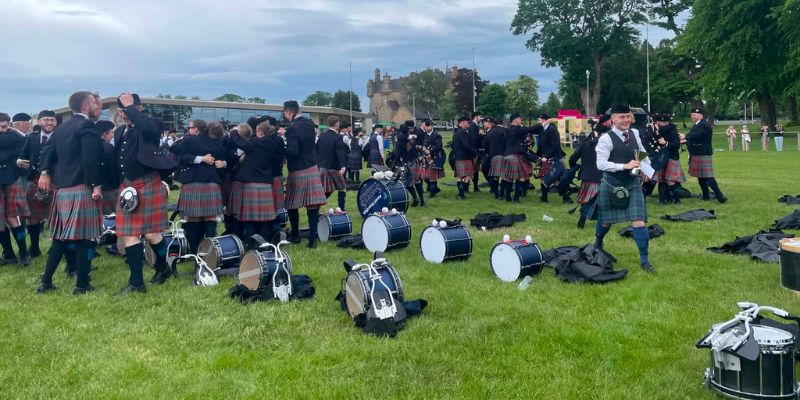
The band was second at the 2026 British Championship at Ingliston, on the west side of Edinburgh on Saturday, May 30th, led by Pipe-Major Calum Watson and Leading-Drummer Kerr McQuillan.
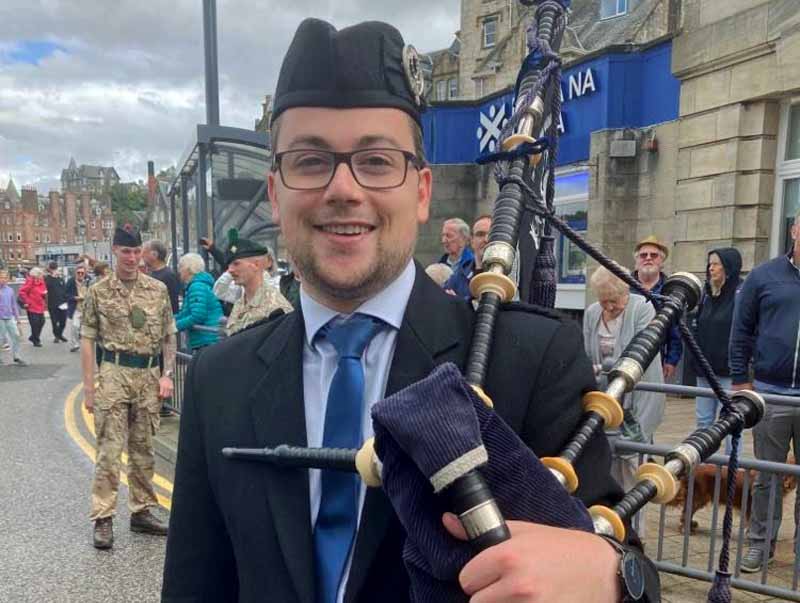
Watson became pipe-major of the famous West Lothian band after the 2024 competition season, succeeding Ross Harvey in the role only a year after Harvey had guided the group to its first World Championship victory in 2023. Watson has been a member of the Boghall & Bathgate Caledonia organization for decades, and is one of the world’s top competitive solo pipers.
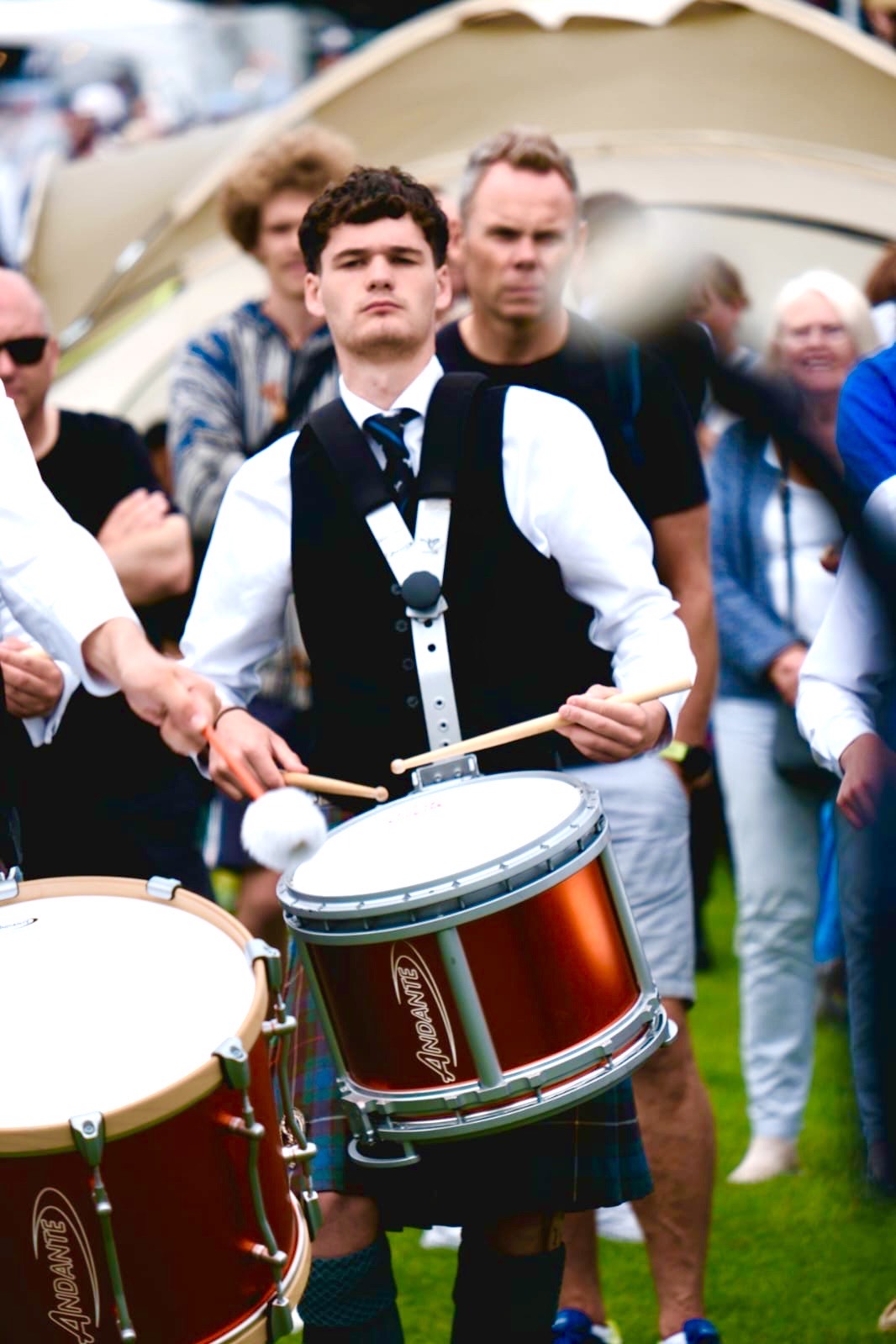
Similarly, McQuillan is a lifelong member of Boghall & Bathgate and, after the 2022 season, at age 19 followed in the footsteps of 50-year member Gordon Brown. Brown had served as leading-drummer for more than 30 years, guiding the band’s drum section to a multitude of pipe band drumming championships. Since working to fill Brown’s large ghillies, McQuillan’s corps has won several championships and he himself has won the World Solo Drumming Championships twice.

Joining Watson and McQuillan in our Medley Playbook conversation are two more creative forces behind the selection: Pipe-Sergeant Bradley Parker, who joined the band in 2025 after many years with Grade 1 Field Marshal Montgomery. Parker is a graduate of the Royal Conservatoire of Scotland, earning a bachelor’s degree in music, majoring in piping.
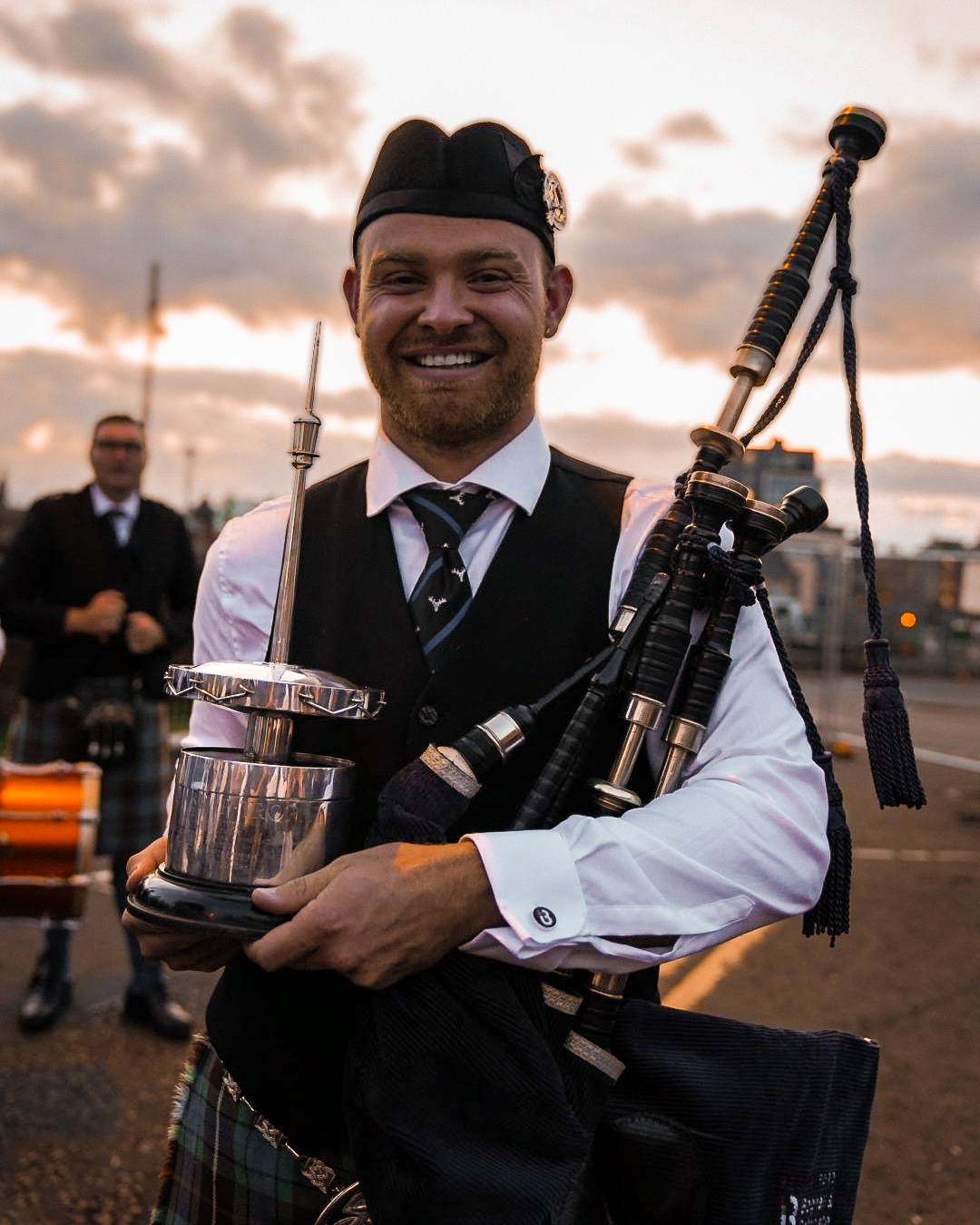
Chris Coates is a three-year member of Poeope Ford Boghall & Bathagte Caledonia and one of the band’s creative forces. A top-flight piper and Celtic folk musician, we met Coates when we spoke with him and McQuillan after the duo had won the World Solo Drumming Championship in Glasgow in October 2025.
Peoples Ford Boghall & Bathgate Caledonia’s new medley for 2026 is a fascinating and intricate arrangement with an emphasis on melody, built primarily around a thematic and even cinematic slow air by acclaimed piper and Celtic folk multi-instrumentalist Ross Ainsley. It’s a selection that is at once immediately accessible and compelling for first-time listeners, and leaves listeners wanting to hear it again and again, discovering new nuances every time.
Here’s a list of the medley’s content:
“Back In Black” – hornpipe, composed by Murray Blair
“The 9/8 Jig” – composed by Gordon Duncan
“Sparky Cherry” – jig, composed by Ryan Canning
“Lullaby for Mel” – slow air, composed by Ross Ainsley
“Reel of Bogie” – strathspey, traditional
“Kildonan” – strathspey, composed by Donald MacLeod, arranged by Peoples Ford Boghall & Bathgate Caledonia
“Kildonan” – reel, composed by Donald MacLeod
“Knees up in Hanoi” – reel, composed by Calum MacCrimmon
For those who also like text, here’s a transcript of our conversation, with minor edits for clarity.
pipes|drums: Welcome to the latest installment of the Medley Playbook. We have the leaders of Peoples Ford Boghall & Bathgate Caledonia to discuss their new competition medley. I’m sure the entire band did, but we have Pipe-Major Calum Watson, Leading-Drummer Kerr McQuillan, Pipe-Sergeant Bradley Parker and piper Chris Coates with us. Thanks, guys. Really appreciate you taking the time.
Calum Watson: Thanks for having us.
pipes|drums: Congratulations also on your solid performance at the 2026 British Championships. It opened a lot of ears to what’s going on with new medleys this year. Tell us about the process the band uses to put together medleys and, more specifically, this medley.
Calum Watson: Well, the key thing we try to aim for is to be as collaborative as possible from the start. It’s not a case of the traditional way: I would pick a tune, send a recording to Kerr, he would write a score, and then that’s it. The four of us and Jill Watson our leading-tenor spent a lot of time at Kerr’s house to bounce ideas off of each other.
“It’s not a case of the traditional way: I would pick a tune, send a recording to Kerr, he would write a score, and then that’s it. The four of us and Jill Watson our leading-tenor spent a lot of time at Kerr’s house to bounce ideas off of each other.” – Calum Watson
We all brought our own ideas to the table. Some of it made the cut, but was later chopped. Some of it lasted from the start, and we also ended up with a pot of material to move forward with. Maybe call it a jam session through various tunes to bounce off each other and contribute to each other’s ideas. We work very well together on it. It’s been a lot of fun.
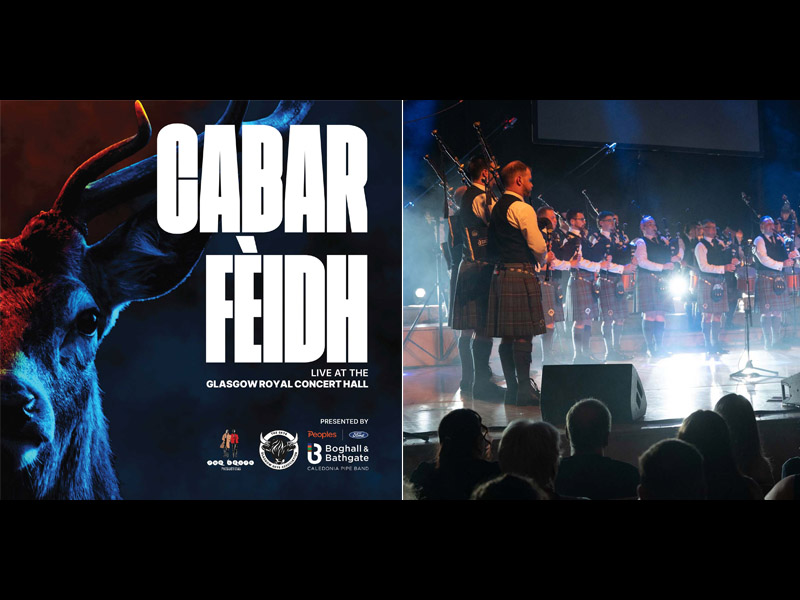
pipes|drums: Am I right to think that the 2024 Cabar Féidh concert helped in terms of content for this year’s medley?
Calum Watson: Yeah, we’ve got a lot of good material going. The reason we put the medley together this way is that that’s how we put Cabar Féidh together, with a few of us around my kitchen table. Geographically, I was in the middle of [former pipe-major] Ross Harvey in Edinburgh, Kerr’s in Glasgow, and I’m in the middle. So, we spent a long time in my kitchen. It makes the whole thing easier from the ensemble point of view, as well, getting the full picture, not the bare bones of the tunes.
pipes|drums: Kerr, what about your input? Many know that you’re also a very good piper, so do you have a lot of input on the piping?
Kerr McQuillan: Yeah, as Calum says, we all chip in with different things. So, definitely, from a melodic point of view, there’ll be things I’ve suggested that could maybe help the drumming in some respects from a rhythmical point of view. Maybe there’s a rhythm I want to play that we can try and shoehorn into the melody. But then, the opposite way, for example, at the end of the medley, Calum was instrumental in the drum score, actually. So, we were still piecing together the end of the medley, and Calum created this vision in his head with some of Ross Ainsley’s harmonies over “Lullaby for Mel.” He actually sent me a rough drum score that had snare, bass and tenor parts; it was all split, and it was going with the harmonies and whatever section was moving together was doing. So, that was terrific. Calum’s been instrumental in that, and the same with Chris and Bradley. There are so many things from a drumming point of view, all four of us, plus Jill Watson, who is a contributor.
pipes|drums: Now wait a second, you’re telling me that, Calum, you’re a drummer as well, like Kerr is a piper?
Calum Watson: Absolutely not! When we put a medley together, or any piece of music, over the winter, it sounds one way in your head, and then it never quite pans out like that once you get on the floor. We’ve even noticed that when you go from the practice hall to outside with harmony balance, the whole thing sounds different. So, it was trying to communicate the full picture of how I saw it working, rather than them just hearing a melody. It’s not pipes and a simple drum score tracking it. It’s how we bring the best out of each section of the band and the overall picture.
pipes|drums: Something we’re talking about with each installment: Inveraray & District’s 2025 “Dream Valley” medley was a sensation, and our conversation with their leaders included them telling a story, simplicity and other things. Did that have an effect on the way you put together this medley? Has it had an effect across bands universally?
Calum Watson: They went for a theme that in itself isn’t a new concept. A lot of bands have played a slow air and a reprise at the end. What that Inveraray performance did was give us the confidence to play the music we really wanted to play, and not be as guarded with a strict competition head on. There are going to be pros and cons to that when we go out on the field, potentially but, yeah, it’s that confidence.
There have been a few ideas that have been in the background for a few years, and it was probably something we initially saw as a concert piece. We can touch on some of that as we go through the medley. But, yeah, I would say it gave other bands and us the confidence to go for it — let’s push things on and play music we really enjoy.
pipes|drums: Let’s queue up the performance from the British, and go through it, starting with “Back in Black,” the hornpipe opener.
pipes|drums: You’re into the circle. What was your thinking behind opening with “Back In Black”?
Chris Coates: I’ve been with the band since 2023, and in that time, we’ve predominantly played lighter-hearted, D-major, dot-and-cut hornpipes going in, which are very musical, as Kerr has always brought the score out very well. We’ve been putting a lot of work in over the past, and prior to me joining the band, on really getting a sound that competes at the top of the grade.
We’re really making headway in that and that did feature in part of the decision to play a tune like that. It brings out some of the main harmonics of the chanter really well, and it’s got a great drive and great strength. We wanted to change it up and give a fresh sense for the band’s music, where the band’s going and where our aspirations are. The main connotations we were trying to achieve in that tune were strength and presence at the start of the medley.
“It’s got a great drive and great strength. We wanted to change it up and give a fresh sense for the band’s music, where the band’s going and where our aspirations are. The main connotations we were trying to achieve in that tune were strength and presence at the start of the medley.” – Chris Coates
pipes|drums: You establish the melody with very strong and straightforward initial parts, and then come in with orchestration and the mid-section, Kerr, playing a crucial role in that, latterly.
Kerr McQuillan: One of the things we’ve been exploring this year is a lot of space, playing in the in the right spaces, essentially. So, using the snare drummers in the right places to provide impact, and the same with the bass section. One really cool bit is a run down the line with the tenor drums going into the second part, and I’m sure that was another decision at my house when we were all eating a pizza, when Chris heard something in his head, it was a tenor rhythm, boom, boom, boom, boom, boom, boom, boom, boom down the line.
Then it got to Bradley’s idea of staying in a square for that bit, as a bit of presence to say, Right, here’s what we’re opening with, and then when it goes to the high A in the second part, we’re going to turn in. That’s when the harmonies start to creep in. It’s how every section talks to each other. We’re really lucky with the bass section that we’ve got the capability, rudiment-wise, and their melody understanding is superb.
pipes|drums: We’re now coming to Gordon Duncan’s “98 Jig.”
pipes|drums: “The 98 Jig” is a handful, but the band’s totally in the pocket there, really sounds fantastic. And the “Sparky Cherry,” which is closely identified with Field Marshal Montgomery, setting up “Lullaby For Mel,” a Ross Ainsley piece. Talk about that orchestration and how you came about bridging to the air.
Calum Watson: The jig passage was mostly Bradley’s arrangement, so he can take that.
Bradley Parker: “The 98 Jig” . . . Gordon Duncan was a big influence on me as a solo piper, style of playing and tune selection. Like Chris said, we wanted a bold start to the medley, and we were also aiming for forward motion throughout and as seamless as possible between tunes. Essentially, we’re staying in the same key of A mixolydian, but we’re changing rhythm. It’s as smooth as possible; it’s quite rhythmic, and gives the bass-section a chance to flourish early on, and then a bit of space in the third part, using it for a riffy bridge to get into the jig.
Then “Sparky” is a nice key change up to E minor in the second part, which we found was suitable to float “Mel” over. We do that from the beginning of the second part and then swap the balance between the harmony and melody players and crossfade them so that “Mel” becomes the focus, and then, all of a sudden, we’re there as seamlessly as possible. Those are the thoughts behind that section.
pipes|drums: It is seamless, even for a first-time listener to get it right away. It sets things up nicely, and that crossfade is interesting. It would be even more interesting live. Okay, into “Lullaby for Mel.”
pipes|drums: Maybe a little unusual to have so much of an air, with sparse drumming accompaniment. What’s the intention with that section of the medley?
Kerr McQuillan: The theme melody of the medley is “Lullaby for Mel,” which is such a beautiful tune. When it hits the second part, to more minor-y notes, that’s when the snare drummers turn their sticks to the back end. It gives more depth to the sound of the drum, and a bit of a contrast and a different tonal aspect to what we do. It fits in with some of the minor notes from the pipers, and then we flip them back towards the end, going into the strathspey when we want more of a major feel, playing at the front end with a sharper sound.
We’re trying to maximize the scope and the contrast and tone that you’ve got within the drum to make sure that it’s fitting in with the music. That’s the thinking there. There’s a lot of space in the first part because it’s such a beautiful melody and it plays itself. In the second part, when you’ve got those darker piping notes, it’s nice having that contrast with the drums with a bit of a flatter sound.
“The only thing I’m thinking about when I’m composing is what’s best for the music. That’s the only thing going through my head with that; what feels natural, what feels right to motivate the music. That’s all that’s in my head at that point.” – Leading-Drummer Kerr McQuillan
pipes|drums: That could be seen as a risk, turning the sticks around. Did you consider that? It sounds like you were going for the music and nothing but the music, but you never know if a judge is going to have a bad day and not like it, or find a reason not to like it.
Kerr McQuillan: The only thing I’m thinking about when I’m composing is what’s best for the music. That’s the only thing going through my head with that; what feels natural, what feels right to motivate the music. That’s all that’s in my head at that point.
pipes|drums: And it works. We’re into the strathspey section.
pipes|drums: Donald MacLeod’s “Kildonan,” first in strathspey time, then in reel time. What was the game plan?
Calum Watson: It was actually quite a late addition, both strathspeys. We had a completely different section between “Lullaby for Mel” and “Knees Up in Hanoi.” It was probably two or three weeks before the Aberdeen concert, and that section wasn’t quite working. We didn’t feel it, so again it was another trip to Kerr’s for pizza!
The strathspeys came in, and the first strathspey was instant because it’s a tune, and that bridge into it works out of “Mel.” I actually did that arrangement with the harmonies during lockdown. Kerr and I had spoken about it before, and it hadn’t made it into a medley. This was its time. We came up with “Kildonan” late in the night. We went through possibly every single A-major strathspey any of us knew before we turned one of Donald MacLeod’s tunes into a strathspey.
pipes|drums: When in doubt, turn to Donald MacLeod!
Calum Watson: Yeah. My arrangement of it was much more straightforward, the initial phones of it, and then Chris and Bradley added the flair.
pipes|drums: Let’s continue on with “Kildonan” in reel time, and then the final reel, “Knees Up in Hanoi” by Calum MacCrimmon.
pipes|drums: “Knees Up in Hanoi.” It seemed like you’re on the brink, pushing the tempo. It’s incredibly exciting.
Calum Watson: Bradley, this was your idea!
Bradley Parker: Yeah, it has to be a wee bit on the edge for everybody’s sake. I heard the tune on a Breabach album, played it for a few years, and brought it to the table. Once we had the theme of “Mel,” the reprise was pretty straightforward. We used a similar crossfade technique as “Sparky Cherry.” It’s the same thing, really, where we flip the melody and harmony. So, the focus changes in that last section.
“It’s more subtle in ‘Lullaby for Mel’ over ‘Knees Up,’ because the rhythm’s slightly different, or maybe not as obvious. It’s more of an easter egg, but it’s the same concept to get you back into the slow air as smoothly as possible.” – Pipe-Sergeant Bradley Parker
pipes|drums: That’s “Lullaby for Mel” integrated into “Knees Up”? We’re hearing that drift in as harmony or a counter-melody.
Bradley Parker: Yeah, the same concept as “Sparky.” It’s more subtle in “Lullaby for Mel” over “Knees Up,” because the rhythm’s slightly different, or maybe not as obvious. It’s more of an easter egg, but it’s the same concept to get you back into the slow air as smoothly as possible. Kerr can talk about the drumming, but we tried to replicate rhythms from that Breabach track and use each section almost separately as complementary layers.
Kerr McQuillan: The bit in the tenor drumming when the tenors play with the pipes on their own, that’s the guitar rhythm in the Breabach track, which is really cool. You don’t need to know that track for it to make sense. It works as a full band. The bass section does a terrific job every time, and it’s pinpoint with that bit.
If you’re on either side of the beat, it can be difficult, but they’ve absolutely nailed it every single time. Again, it’s that use of space between giving the bass section their voice and the medley, and then the snares come in to back it up, giving it a little more impact on the other side.
“What Ross Ainsley had for the first part is absolutely stunning. It became the obvious place to finish. We didn’t have a reel ending for the medley, so that was the only option.” – Pipe-Major Calum Watson
pipes|drums: It’s interesting that you’ve taken the cue from the guitar, which is often used as percussion in all kinds of music. It can be as much a percussion instrument. It’s very effective, and the reprise of “Lullaby for Mel” ends on a triumphant note. Were you aiming for that kind of big finish?
Calum Watson: Again, the ending only went in when the strathspeys did. We called back to part of the section that we didn’t end up using. We had to come up with a different ending. Traditionally, bands take the easy option, I suppose because it’s effective, to go to a D-major reel or a jig or whatever, or Plan B, keeping it A-major, but it’s always fast-paced. I couldn’t shake the Ross Ainsley recording. It was around lockdown time. He did a pipe suite of “Lullaby for Mel” and some of the chords; we based the slow air off as well. What Ross had for the first part is absolutely stunning. It became the obvious place to finish. We didn’t have a reel ending for the medley, so that was the only option.
pipes|drums: It really works. Is the medley still considered a work in progress? Are there going to be more tweaks?
Calum Watson: There’ll be some tweaks. It’s not until you get outside that you can properly hear what it sounds like, and we’ve had some feedback, as well, mostly positive, but there are a few comments we’ve taken on board. There are potentially a few things we could tweak, but we’re not planning any wholesale changes; the band will certainly be pleased to know!
Even this week, we’ve been chatting about minor things. We’re always thinking, Is there something we’re missing? Every time you listen to music, you can find something else. We certainly come up with slightly different ideas all the time, and having this team, there are enough ideas for about a thousand medleys. It keeps it fun and exciting.
pipes|drums: The mark of true creativity is always looking for something more, and it’s hard to lock it down for any serious musician. But at some point, you have to. It’s a fantastic medley, and congratulations on a great start to the season. We’re going to hear more at the next medley contest, the European Championships in Perth on June 27th, and then, of course, the Worlds, when we’re guaranteed to hear this medley again, so we’ll look forward to that. Best of luck for the rest of the year.
All: Thanks very much.
Here’s the complete “Lullaby for Mel” medley by Peoples Ford Boghall & Bathgate Caledonia:
Our thanks to Calum Watson, Kerr McQuillan, Bradley Parker and Chris Coates for taking the time to share their insights with us.
Stay tuned to pipes|drums for the next installment in our Medley Playbook series, coming soon.
Be sure to check out Peoples Ford Boghall & Bathgate Caledonia’s merchandise at the band’s online store.
A correction was made on June 17, 2026: An earlier version of this article incorrectly stated that “Back in Black” was composed by Mark Saul. The composer of the honpripe is Murray Blair, and the article was amended accordingly.



NO COMMENTS YET