

A chat with new Pipe Bands Australia President David Doyle
 David Doyle of Tasmania was elected president of Pipe Bands Australia at the organization’s 2026 annual general meeting on October 18, 2026, after Ainsley Hart served six years in the role.
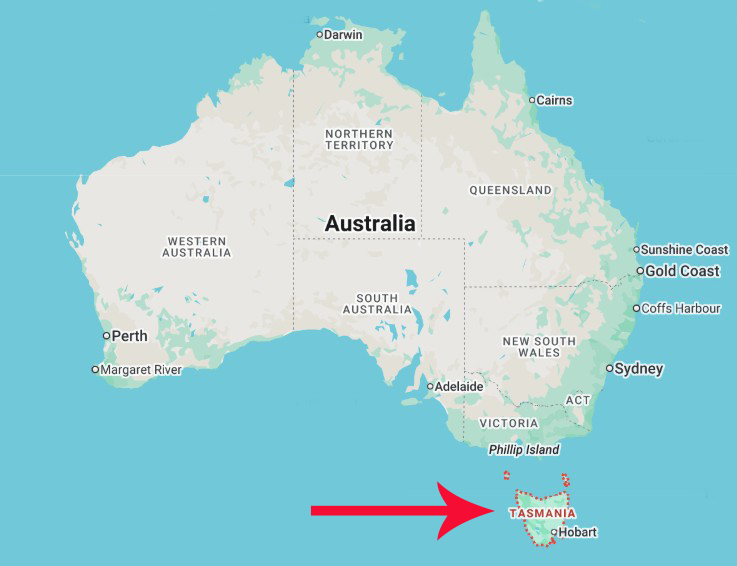
Like the United States, Canada and so many other countries, Australia is “a nation of immigrants,” and Doyle is no exception. Only three years since emigrating to the vast country, and what’s more, to the relatively small, remote and idyllic southern island state of Tasmania, he has quickly contributed both his piping and professional talents to the pipe band scene.
As chairperson of Pipe Bands Tasmania, one of the six state associations that make up the Pipe Bands Australia national collective, he represented the state association with Pipe Bands Australia, gaining first-hand experience of the management side of the somewhat complicated Australian piping and drumming scene.
In addition to his nearly two decades as a piper in Ireland, rising to a prominent role withWexford’s New Ross & District, he brings a career in communications, marketing and public relations – certain assets for any modern pipe band association or pipe band. He’s a member of St. Andrews Caledonian, competes with Grade 2 City of Melbourne, is pipe-major of the Tassie Spirit Pipe Band, and works as a piping instructor at Scotch Oakburn College in Launceston.
Only a few weeks into the job, we connected with David Doyle to learn more about him, how Pipe Bands Australia works, and his goals for the organization and for piping and drumming across the vast country.
Here’s a transcript of our discussion, with minor edits for written clarity.
pipes|drums: We’re pleased to speak with Pipe Bands Australia’s newly elected president, David Doyle. Thanks, David. It’s great to connect, introduce people to you and talk about what Pipe Bands Australia is all about.
David Doyle: My pleasure, and thanks for having us on.
pipes|drums: Congratulations, first of all, on being elected to the role. You’re the first person from Tasmania, Australia’s southernmost state, to hold this role with PBA. What prompted you to step up for this pretty demanding role?
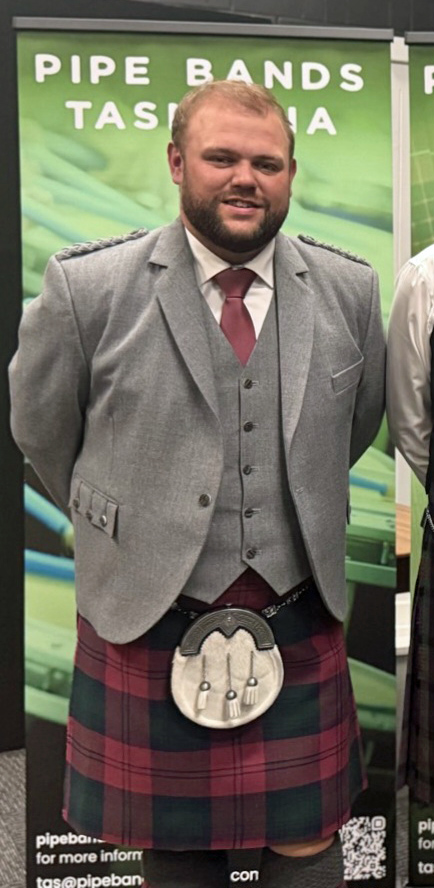
 David Doyle: I should probably address the elephant in the room. Obviously, I have a very strong Tasmanian accent! I’m originally from Ireland, moved out here three years ago. What prompted me to step up? In the last year, I’ve been getting more and more involved in this kind of work within pipe bands, or volunteered, I should say, as chair for Pipe Bands Tasmania for the last year, and it’s been a pleasure getting to work with the bands, getting to work with other office holders in their roles. I really enjoyed it, and thankfully some people liked what I was doing.
That prompted conversations as the national elections were coming up, and I kind of got tapped on the shoulder to see if I would be interested. A few of us were thinking similarly about who would be the best person to take over, and those conversations were happening, and people were on the same wavelength that we needed to bring a new, fresh approach to the association. And it ended up that I went forward for it. But we’ve had a change across a couple of roles in the association, which has really helped me as well in my role, that we have a lot of people working on the same page, which is great.
pipes|drums: And Pipe Bands Australia: it’s familiar, and then it’s also not familiar. It’s a collective of the six pipe band associations in the six Australian states that have a pipe band association. But they operate independently, as okay. Can you just talk a little bit about how PBA works and the scene overall in Australia?
David Doyle: You’re doing well! You’re on the right track. We have the National Association, which is PBA, and under that, you have a national management committee, which I’m on. There are five of us, and alongside that you have the association’s educational arm, which is the college, and that’s your principals, who look after the five disciplines of piping, drumming, ensemble, drill and dress, and rural administration. Then you go down further, and you have six branches, as you said. They’re spread around, and they then have their own elected officials as well. They have their own executives, and then they have their own localized college of those disciplines. Those disciplines are then known as vice principals under the national principal of that discipline. There are all these working groups, but it’s quite a big organization, and given the size of Australia, it’s needed because a national association of five people would be a big headache to look after all of those branches. It would be a logistical nightmare.

Thankfully, people in every branch run competitions, work with promoters, work with the bands, and obviously run solo competitions. And then you also have the whole area of the college, where they’re bringing forward examinations, getting people into the system in terms of doing their certifications, working towards advanced, and hopefully going on further then to actually become adjudicators, which feeds that whole area of the association.
pipes|drums: So, you’re unifying the six state organizations under a common set of rules and regulations? Or can they work independently?
David Doyle: We have the national rules of the association, then we have the contest rules, which all those branches would follow. And then you would also have a branch constituency, or branch rules, that they will follow. It’s not a heavy document with a massive amount of pages that they’re following. There would be a couple of separate documents people can reference, depending on what they need.

The important thing is, yes, we’re all coming in under Pipe Bands Australia. We would have a council meeting, and we’re going to be developing more of those as the months come on. The council basically keeps me to account, and it keeps our officers to account. That’s made up of two national councillors for every branch. They all get a say; they all get a vote on matters that need to be discussed and voted upon. That’s probably the biggest area that I’ll be looking at: bringing all those national delegates, those branch members together.
The most important element then is communicating that to our members, which is an area we want to very much focus on, making sure that our members know what’s going on, but are also happy with what’s going on and invested in where we’re taking the association, what we’re trying to do. And at the core of it all, it’s our members, and they’re the ones who are out, whether it’s playing a competition, and not to forget, there’s the whole community aspect of piping and drumming as well. It’s not just competitive pipe bands; we can’t forget the community side. So there’s quite a lot going on.
“We should all be invested in where we’re going. It’s the members’ association at the end of the day. It’s not our association as a national management committee. We’re doing this on behalf of members. A lot of people forget that people in positions like mine are mostly players as well, so we come from understanding that side of it.” – Pipe Bands Australia President David Doyle
pipes|drums: Your vast geography is similar to that of the United States or Canada, and it’s difficult to bring people together in a unified way. It’s something lacking in Canada and the United States, except for the Alliance of North American Pipe Band Associations, which is perhaps edging towards what PBA is about. Maybe they could learn from your experience.
You’re only a week or so into the job, but can you talk about some of the short- and longer-term goals you and your team have for Pipe Bands Australia?
David Doyle: I touched on a few of them. Communication, which is my background. It’s very natural for me to open up communication and showcase what we’re doing. I don’t believe in hiding decisions in secrecy. We should all be invested in where we’re going. It’s the members’ association at the end of the day. It’s not our association as a national management committee. We’re doing this on behalf of members. A lot of people forget that people in positions like mine are mostly players as well, so we come from understanding that side. Communication is definitely one.
Collaboration, and bringing the likes of the College, the National Council, the branches together and reminding people and encouraging them to work under one banner, and that we’re all in it for a shared purpose.
“How can we get kids coming out of school to stay in bands? And once again, it doesn’t have to be purely competitive. To me, as long as they’re playing pipes and drums, that’s my job done. As long as they’re involved in pipe bands in some shape or form, or as solo players, that’s the main thing.”
Longer-term goals, there are definitely, a few areas that we want to touch. Being very involved in the Irish scene and playing regularly in Scotland, we’re very fortunate here. I see that in competitions throughout Australia. We’re very fortunate to have the school system here in Australia. So many schools and tutors are doing an amazing job. But like everything, there’s a drop-off rate when they go to leave school. We’re looking at ways to see how we can help with that and how we can keep those retention rates up. How can we get kids coming out of school to stay in bands? And once again, it doesn’t have to be purely competitive. To me, as long as they’re playing pipes and drums, that’s my job done. As long as they’re involved in pipe bands in some shape or form, or as solo players, that’s the main thing.

Those are a couple of areas that we need to look at. Obviously, the nature of the job comes with how we can better align some of our regulations, and how we can make some of our paperwork easier to understand on the governance side. Are there new ways that we can help with all that? These are some of the pressing issues that we’ll be dealing with over the next while.
pipes|drums: They seem common around the world these days – more of a sense of community and teaching. That’s been a big change. You’re only a few years in Australia and Tasmania, even, since immigrating from Ireland. And apart from that massive geography that we talked about, what are some of the unique challenges that you’ve seen between the Irish Pipe Band Association or the RSPBA Northern Ireland or the RSPBA proper? What differences really stand out to you between Australia and those regions?
David Doyle: I can only talk about the Tasmanian scene, because I’ve been invested in that in the last couple of years. Even though we say “geography aside,” that’s probably the biggest problem, whether it’s getting bands travelling between branches for competitions.
In Tasmania, for example, we have our state championships next year, and a band from Melbourne came down last year, which was fantastic. It’s a huge investment for a band to come down on a “local” level, we’ll say, in the same country, never mind if a band wants to challenge themselves and go to New Zealand or go to the Worlds or one of the majors, or go across to America. It’s a big investment, and it takes forward planning. They can’t do it at the last minute. I’m speaking to a couple of bands about it. I’m involved on the Celtic side as well, with the Festival Interceltique de Lorient. For a band to come there, it’s time, it’s money, it’s always forward planning.
I know from just being in bands, forward planning is really good, but it’s keeping people motivated along that journey as well. We were very fortunate in Australia to have had bands representing us at the Worlds this year, which was fantastic, and that’s something we definitely want to encourage bands to go and do, but it’s not a cheap exercise to undertake. We need to encourage our bands and help them at a local level to feel empowered enough to do that, with good development and workshops, and make sure they’re comfortable in their playing to perform at something like that.
pipes|drums: It was impressive to see Hawthorn at the Worlds, and they acquitted themselves so well with really creative medleys that impressed a lot of people.
David Doyle: They did a phenomenal job. I was delighted to be standing on the sideline watching them and seeing them tuning up. And [Pipe-Major Matt Fraser] and [Lead-Drummer Steven Shedden] are there doing a great job and showcasing what can be done in terms of competitive pipe bands. I had a conversation with Matt a few weeks back, and he said, “I want to see more bands in Grade 1. I want to see more bands here in Australia in Grade 1.” It gives them something to be motivated by, some healthy competition, and it spurs the whole scene on as well, which is great. We need to be encouraging that.
pipes|drums: Anything that you’d like to add before we wrap up?
David Doyle: As we said, when we talked separately, the big thing is communication, and we’re always open. If anyone has ever wanted to travel to Australia, definitely reach out to us or to one of the associations or branches, and we’ll do our best to encourage people to come to Australia. Communication is our biggest thing, so keep an eye out for what we do.
pipes|drums: We’ll look forward to that. David, thank you again for taking the time to talk about Pipe Bands Australia. We wish you nothing but success in your role going forward, and we’ll be watching closely.
David Doyle: Thank you.
Stay tuned for more constructive conversations on pipes|drums coming soon.



NO COMMENTS YET