

The Drum Corps Conundrum, Part 2: Four drumming greats discuss the ongoing battle to recruit snare drummers and L-Ds
We continue with the second of pipes|drums’ four-part discussion panel with four of the world’s most accomplished pipe band drummers: Scott Armit of Boston; Ottawa’s Kahlil Cappuccino; Paul Turner of Blairgowrie, Scotland; and Barry Wilson of Troon, Scotland.
The shortage of snare drummers and leading-drummers is pretty much a pipe band tradition. But why? Throughout the hundred-year history of competing pipe bands, pipers and drummers have wondered why the perpetual lack exists, but has anyone ever seriously sought answers?
That’s where pipes|drums steps in. By creating a forum for constructive dialogue with four of the most insightful and experienced pipe band drummers, each with different backgrounds and nationalities, but all with unbeatable “street cred,” our sole objective is to begin a more constructive and productive search for ideas and answers.
For those who also enjoy reading, here’s the transcript of the discussion:
Part 2
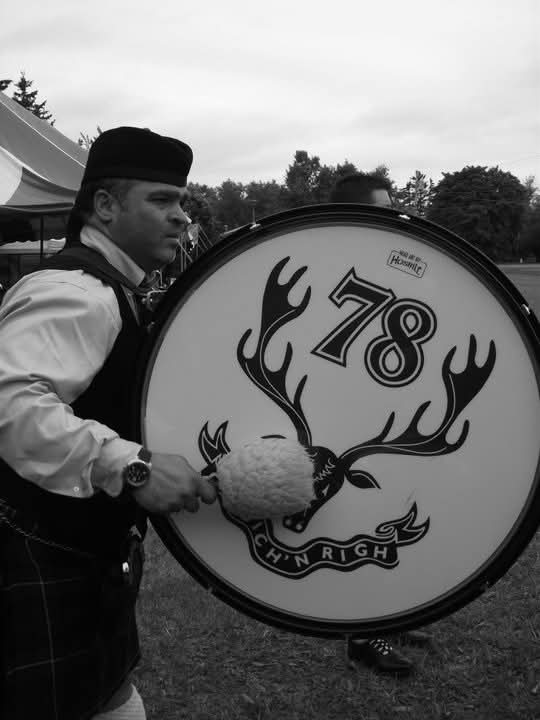
Kahlil Cappuccino: Paul, you had mentioned that there are some very capable people that could come in behind you and be that lead or that second-in-command. Beyond the pedigree of championships and having played in high-level corps and bands for and your familiarity with their skill-levels, as a drummer, as a musician, what would be, and this would be for all of you, the one skill or aspect that stood out as a deciding factor as to whether or not they would be that next lead-tip?
Paul Turner: For me, it was the ability to listen. I said earlier, I’ve been lucky enough to play with a lot of very talented players. Barry alluded to friendships and support structure that works in the corps, that always worked in the corps for me as the 2IC [second-in-command]. Everybody’s voice is valid. Throw down a piece of music, and it could be the quietest voice in the corps who comes up with the best solution, for the effect that you’re trying to get, the ensemble effect the pipe-major’s trying to get. And it could be the newest, softest voice in the corps: “Have you thought about that?” And that ability to listen, make people hear the reasoning, where they’re coming from, does it fit in with what we’re trying to get?
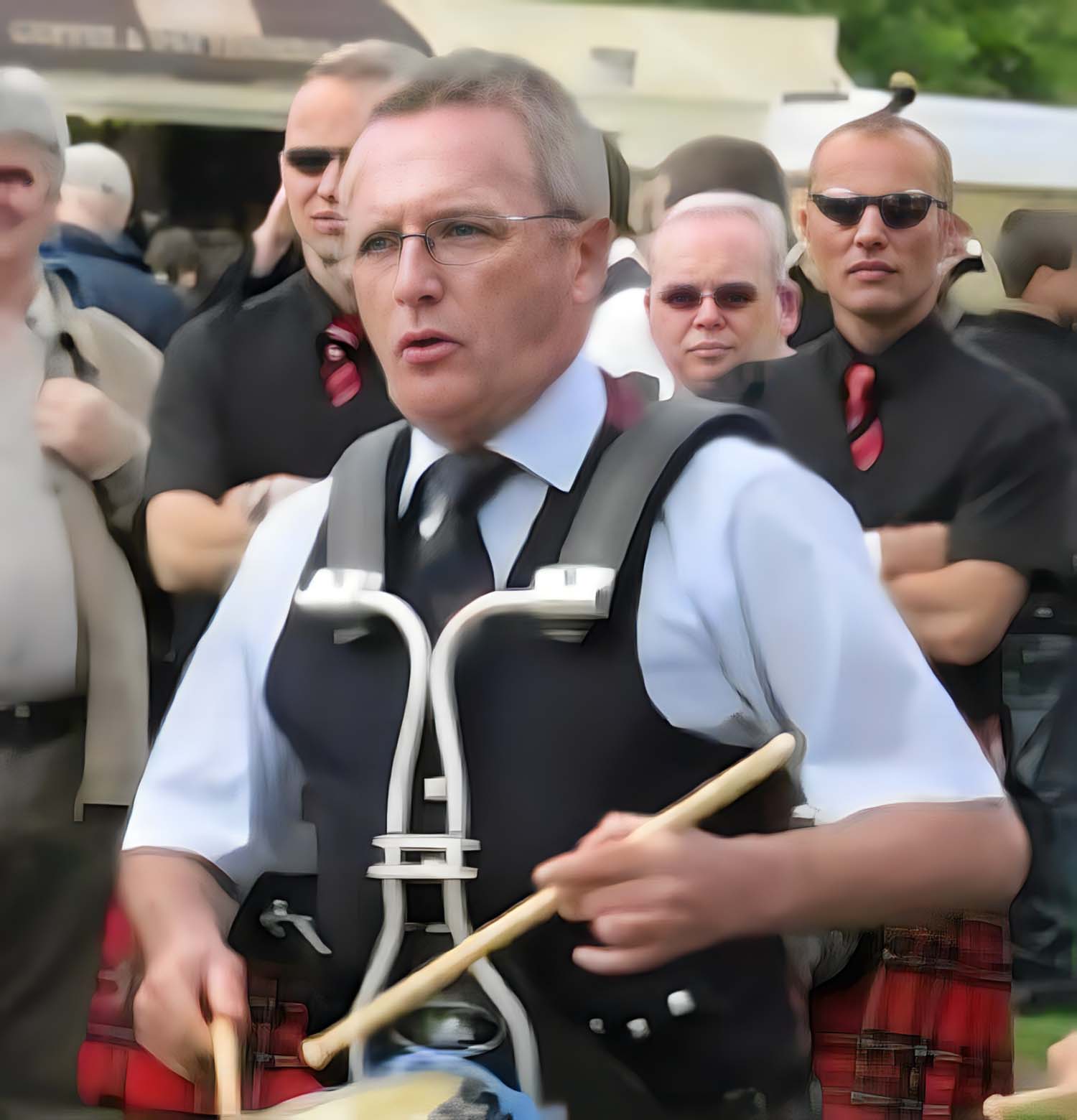
From my point of view as a 2IC, I needed somebody to do that. We had really, really good listening skills among the team. Because every one of us will have come across somebody who is multi-talented but shies away from voicing their thoughts and their reasoning. And a 2IC can be that tie between a really good idea from a younger inexperienced member to the leading-drummer.
The reason we’re doing this is because we’re coming from a band that’s not named after us. We’re the leaders of the service of the nation, to the pipe-major and all of a sudden, their ideas are on board.
So, the technical talent and the musicality was never in doubt with these guys. But the big thing that they all brought to the table was their ability to listen and utilize the talent that was in the team.
Kahlil Cappuccino: Barry, your thoughts?
Barry Wilson: I agree with Paul. If I were to do it again, I would adopt that more. Because I don’t think I listened as much as I should have at the time. To get someone to come forward, a leading-drummer needs to have an element of drive, an element of ambition.
“There’s a saying in Scotland, ‘If you fly with the crows, you get shot with the crows.’ There’s an element of that. If you’re putting yourself up there, be expected to be criticized and brought down a peg or two, but you need someone who’s willing to step up to the plate and take on that responsibility.” – Barry Wilson
Sometimes, guys may not have the talent to back up their driving ambition. But when you get the combination of everything happening, you need that individual who’s willing to stick their head up above the parapet. There’s a saying in Scotland, “If you fly with the crows, you get shot with the crows.” There’s an element of that. If you’re putting yourself up there, be expected to be criticized and brought down a peg or two, but you need someone who’s willing to step up to the plate and take on that responsibility.
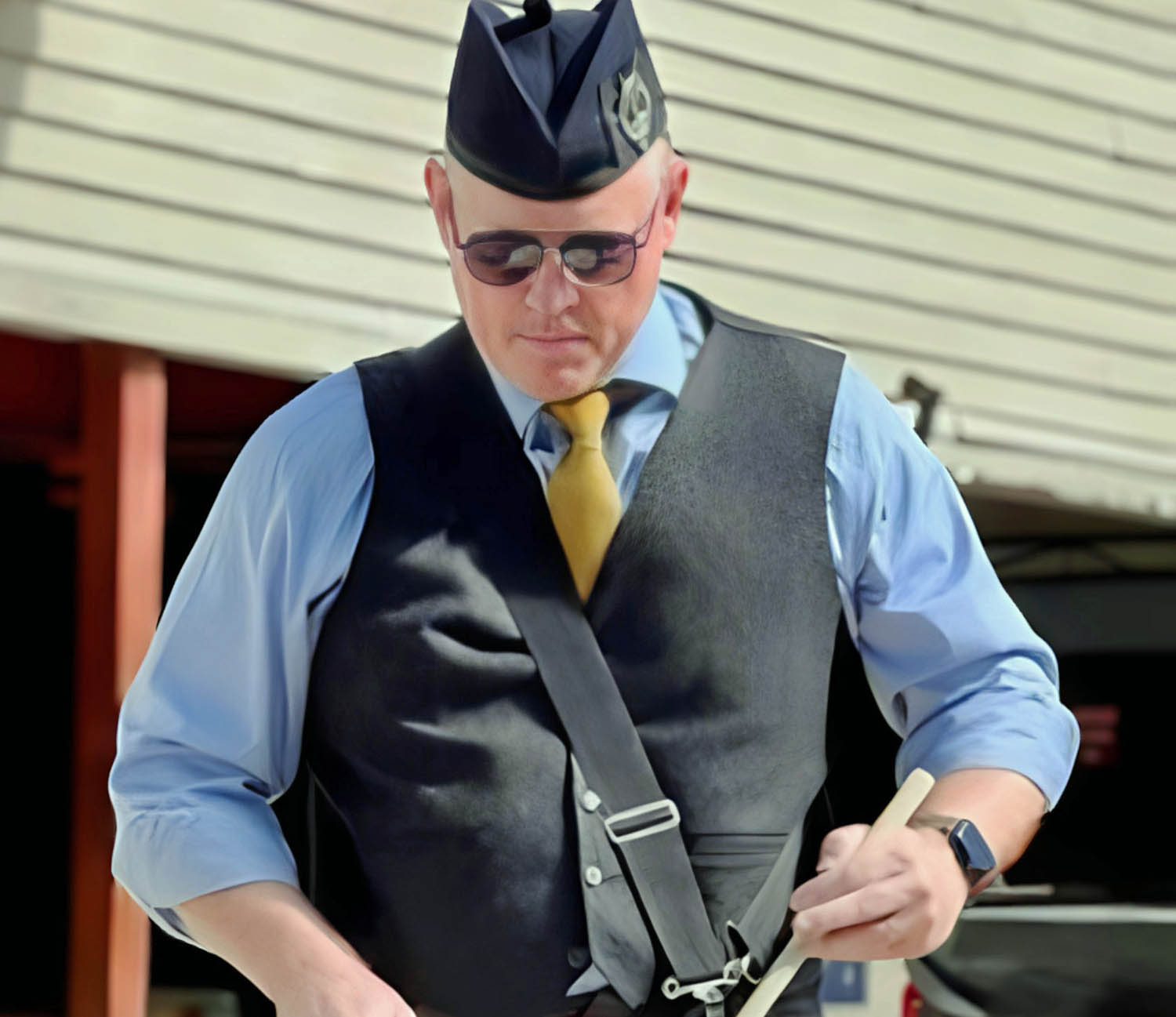
Scott Armit: Yeah, I’ll add a little different one. Obviously, I agree with all of that, but I’ll say attention to detail, if I have to pick one aspect. Fortunately, that’s just my nature. Attention to detail on the playing to hear that somebody’s jumping the drag early or whatever in the music, but also just everything. I see a little ripple on that head – remind you to order some heads. I noticed that the third tenor drummer from the left looks a little bummed out today – let me remind myself to talk to her. All these kinds of things: just full attention to detail. I’m always thinking about, Are these the right sticks for us right now? Do we have the right set of heads? Is everything in line? Attention to detail for me is huge.
Kahlil Cappuccino: Interesting. What is the right balance or say, the right spread of intuition, whether it’s people or music and understanding and hearing versus the more technical aspects of it, and the ability to, say, compose a score or understand how a note should look on the page versus how should those notes actually sound? How does that work into the dynamics you guys had in corps and as leaders?
I’ll just take that one further as part of something Paul mentioned about ensemble. Probably the most fundamental relationship is the lead-tip to the pipe-major. Maybe we could delve into the dynamics of that relationship and how it influences where a lead-tip or a drum corps goes, that ability to intuit and to have the intuition and to have the qualitative versus the quantitative, to have the interpretation that the quality of the choice is very different.
“That other 50% is that intuition part. It’s like a human resources manager – I’m thinking of it more in terms of my people in the corps – to figure out that feeling of there’s something off, or there’s something wrong, or that intuition piece.” – Scott Armit
Scott Armit: It’s 50-50, in terms of the percentage of those two things. A lot of the detailed type is on your own. It’s in your own head. It’s sitting writing the music. It’s thinking about all the things you have to do. And then that other 50% of the time is the intuition part. It’s like a human resources manager – I’m thinking of it more in terms of my people in the corps – to figure out that feeling of there’s something off, or there’s something wrong, or that intuition piece.
Kahlil Cappuccino: But have you encountered players who maybe use the score and the composition as guidance? They’re sitting down and playing and thinking, Okay, I know where Scott’s going with this; I know how he’s going to turn this phrase, and they count more on that than they do the actual composition itself.
Scott Armit: Yeah, back to the discussion we all had earlier about drum corps sticking together. It can be frustrating. I’m building a corps right now. We’re getting better and better. But I have a mix of the old and the new. And you can see the old guys are just like, Why are we still going over this? They just know exactly what I want. And then the newer folks don’t get that yet.
What’s exciting is now I’ve had some guys who I’m bringing along who are, after a few years, starting to do that. I’ll start to look over at them and they’re like, I know, I know, I rushed the ratamacue. That’s great, that’s very rewarding. I don’t know about you guys, but I love that when they start to guess what you’re going to criticize.
“You give them a wink and a smile. It was kind of a, ‘Don’t do that again’ smile. It was perfect, because it was very subtle and gentle way of showing that they knew. You knew and they knew.” – Kahlil Cappuccino
Kahlil Cappuccino: Paul, there’s a great video of you leading Vale of Atholl at the Worlds. You’re warming up, and somebody towards the end of your corps goes off. And you just step out and look at them and you give them a wink and a smile. It was kind of a, “Don’t do that again” smile. It was perfect, because it was very subtle and gentle way of showing that they knew. You knew and they knew. That’s a great example of some of that sort of that dynamic that goes on.
Paul Turner: It also lets them know that they’re due me a beer after we’d competed! [laughter]
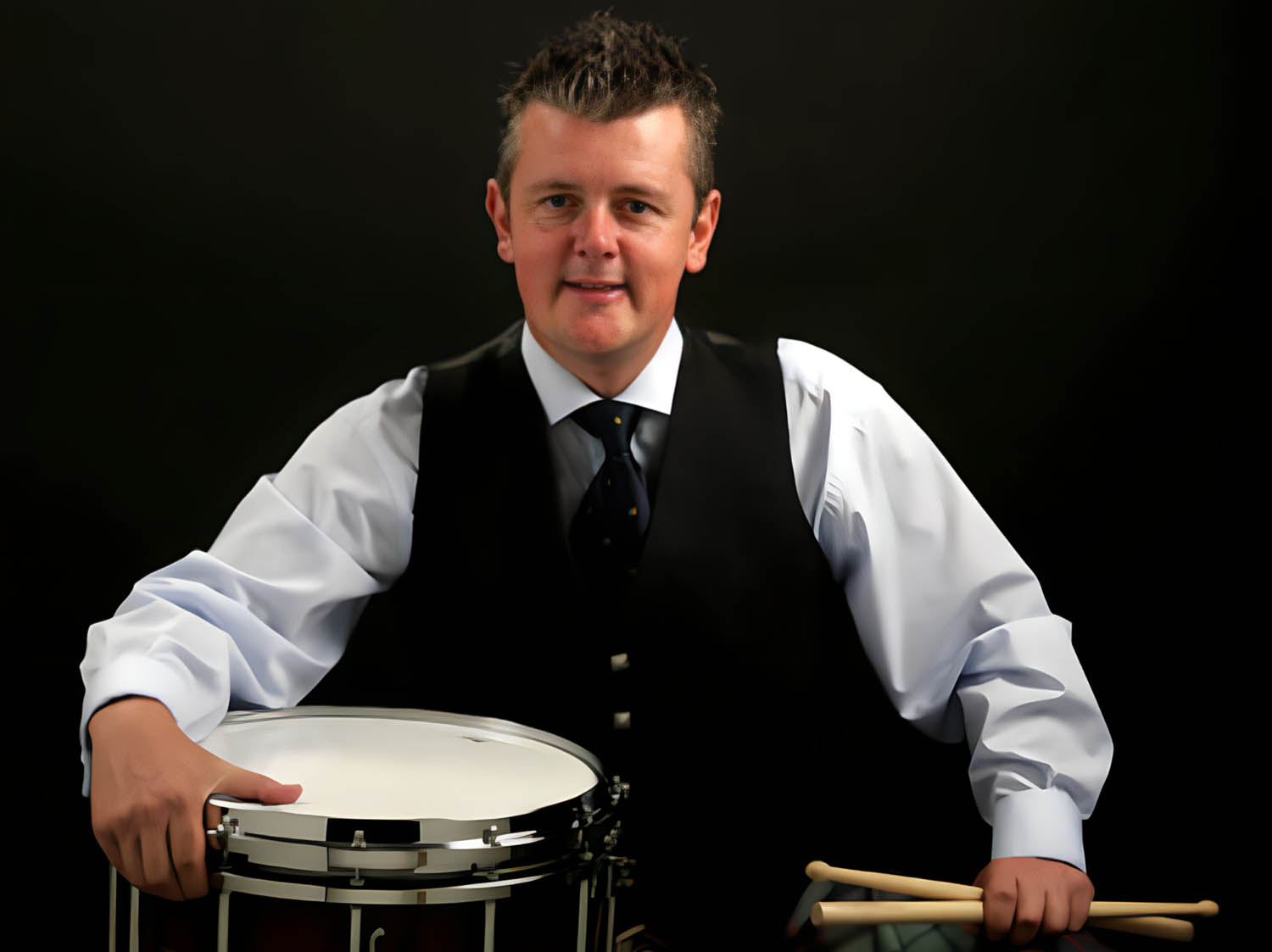
Barry Wilson: I used to say to my guys, If I’m looking at you because you went off, I’m not looking at you to chastise you, but I’m looking at you so that you can acknowledge that you went off, because if you saw that they looked as if they hadn’t a clue they went off, then you’ve got trouble.
Kahlil Cappuccino: Moving to just the aspects of the lead-tip pipe-major relationship, and how much that might influence either moving as a pack or not, because there have been so many lead-tips who have come through some of the bands I played in, as a bass drummer I became more tied to the pipe-major than I did the lead-tip. I valued that more in some instances than I did the lead-tip. What’s the mark of a good relationship that will help a drum corps?
Scott Armit: First, we’ll all say we’re offended by your comment there that you chose pipe-majors over us! [laughter]
Kahlil Cappuccino: Yeah, well, I’m sure if it was one of you, then it would have been different! Barry, what do you think?
Barry Wilson: Communication. I think, again, it’s down to personalities. It’s not being frightened to raise points. Like Paul spoke about earlier, if you feel something can be done better, don’t take this as criticism, but be free to comment. I’m not trying to criticize, but have an open dialogue.
I can remember sitting a few times with [Pipe-Major] Chris Armstrong at the Power [ScottishPower Pipe Band], and we’d sit down at the end of the season, a week or two after the last competition, going through scores and a couple of times I said, No we can’t play that, but other times he would make a comment on the stuff we were doing within the drum corps. It’s all about that back-and-forth. It’s for the benefit of the end product at the end of the day.
But you need to have that openness between the two personalities. Sometimes I’ve seen it in other bands where it can be quite a clash, because you’ve got two people who are very similar and don’t like criticism pointed in their direction.
Kahlil Cappuccino: Paul, with you and your pipe-majors, were they good partnerships?
Paul Turner: The reason why I’d moved to the specific bands I’ve been lucky enough to play with was the music that band was generating. That goes from the old Royal Ulster Constabulary days and the Victoria Police with [Pipe-Major] Nat Russell, right the way up to [Pipe-Major] Andy Renwick and Adrian Cramb at my last stint at the Vale.
With all the travelling we’d done and discussions we’d had outside the band, especially with the medleys and things changing, there was no point in my trying to second-guess a pipe-major. I used to sit down with them, be it MSRs or medleys, but especially medleys, and before I would put pen anywhere near paper, I’d say, Right, tell me what you want to do. What are you trying to do here? Because the vision is in the pipe-major or the pipe-sergeant’s head. Before I’d put anything near a piece of paper, I’d say, What are we trying to do? What do you want? What’s the effect you want here? And why do you want it? You tell me.
It meant that, when I went away and wrote a first draft, I wasn’t just writing to specific notes and melodies. I was writing to the pipe-major’s idea. This is what he wants to do.
I actually picked that up in an old interview that Seumas MacNeill did. Somebody gave me a recording of it when I became leading-drummer of the R.U.C. in 1984. It was Seumas MacNeill speaking to Bob Shepherd and Alex Duthart on two occasions. These recordings were from the 1970s.
Barry Wilson: “The Piper’s Tune.”
Paul Turner: I think you’re right. That was the old Seumas MacNeill program.
Barry Wilson: It was recorded at Dean Castle in Kilmarnock just up the road from me.
“You look at all the top ensemble bands throughout the years. All these bands, over all the different decades, had one thing in common: the pipe-majors and the leading-drummers talked.” – Paul Turner
Paul Turner: Yes. What they were saying was, This is new. But it wasn’t really “new”; they were just putting it down on audio tape. And that has never changed. You look at all the top ensemble bands throughout the years: Strathclyde Police, Field Marshal Montgomery, Victoria Police, Vale of Atholl, Shotts & Dykehead, Simon Fraser University, the 78th Fraser Highlanders. All these bands, over all the different decades, had one thing in common: the pipe-majors and the leading-drummers talked. So, the ensemble started whenever they had that conversation, because then the two of them were coming off the same piece of canvas to paint that picture.
Kahlil Cappuccino: Barry, you twigged to the recording Paul just spoke about. What are your thoughts?
Barry Wilson: I can remember I had a worn-out VHS tape watching that because it was Dysart & Dundonald playing “The Banjo Breakdown,” and they had the interview with Bob Shepherd, and he was promoting the semi-circle presentation rather than a circle for the band.
The Alex Duthart one was great. I think you still get it on YouTube. It’s the old faces. You’ve got Bert Barr and Arthur Cooke and all these guys playing the [“Max Raine”] fanfare. And Alex Duthart, basically, is doing his thing and explaining. He made quite a big deal about the new wave of bands coming through at that time: the 78th Fraser Highlanders and Bill Livingstone [and others]. It’s a great program if you’ve never seen it, look it up. But yeah, I watched that endlessly.
Scott Armit: I was lucky with my dad [Davey Armit] coming from Shotts and then moving over here and then having Alex [Duthart] at the house all the time, talking about some of these things and me watching my dad with the [Grade 1] Worcester Kilties with Pipe-major Jimmy Kerr over at the house all the time, back before people talked about “ensemble.” I was a little kid watching my dad and Jimmy talking about MSRs, talking about the medley. I was really lucky in that right in the house, I saw it on a regular basis, watching them interact. Once I took over, I kind of expected that from my pipe-major.
Back to the pipe-major question: I’m really proactive. I’ve been lucky with the pipe-majors I’ve had, but I’m very proactive about getting my ideas in there early, too, not waiting for them to just say, “Here are the MSRs we’re playing; here are all the tunes for the medley.” I jump at it early and put my own ideas out there as well.
Stay tuned for Part 3 of the Drum Corps Conundrum with Scott Armit, Kahlil Cappuccino, Paul Turner and Barry Wilson, coming soon, exclusively on pipes|drums.
What are your thoughts? Please use our Comments feature to provide your observations and opinions.






NO COMMENTS YET