

Guest opinion: A collaborative grading framework for international pipe band competition
We were pleased to receive this thoughtful opinion piece from one of North America’s most accomplished pipe band leaders. The opinions expressed are not those of pipes|drums. They are presented here to create constructive dialogue and, if it makes sense for the piping and drumming community at large, positive change.
By Adam Holdaway
As we in the northern hemisphere look ahead to another exciting season of pipe band competition, I write not just as a band leader but as someone who believes deeply in the responsibility of our associations to support fairness, consistency, and mutual respect, especially when bands compete internationally.
The way we handle grading across associations has become a serious concern. Recent events have shown that our current systems are not working as well as they could. We need a more transparent, consistent, and cooperative approach to grading bands that travel outside their home jurisdiction.
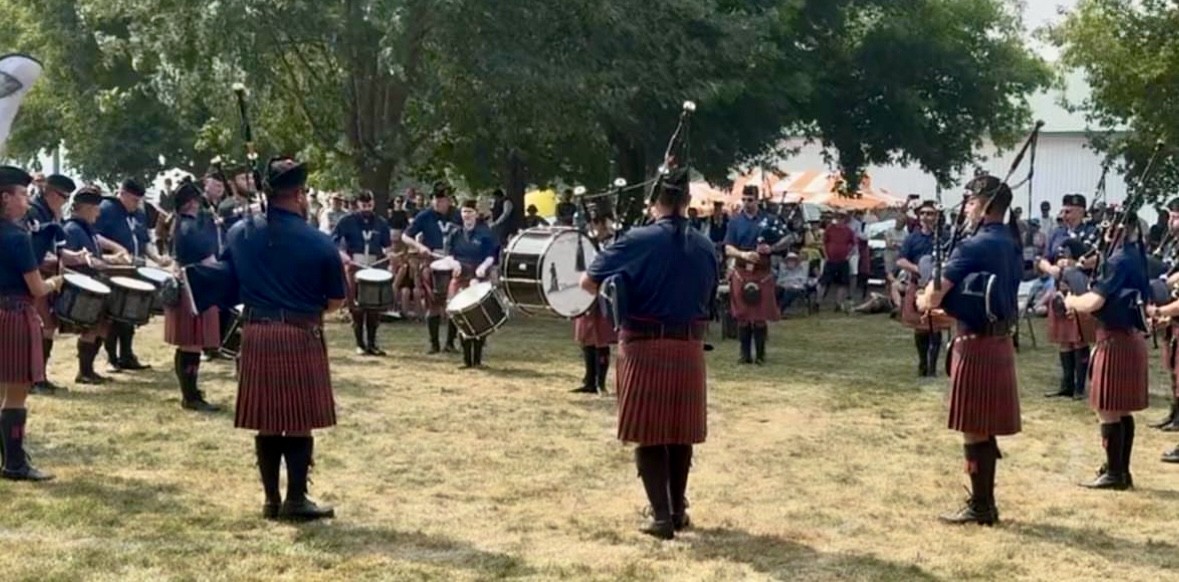
A real-world example: why this matters
In March 2025, The Commonwealth Pipes & Drums, a Grade 3 band registered with the Eastern United States Pipe Band Association, was informed by the RSPBA that they would be required to compete in Grade 2 at RSPBA events. This decision was made without consultation with the home association.
“This kind of experience is not unique, and it shouldn’t be repeated.”
After six months of appealing, the RSPBA ultimately agreed to allow the Commonwealth Pipes & Drums to compete in Grade 3A. But during that period, the uncertainty led to the loss of two pipers and a drummer, who left due to the added pressure of preparing for the higher standards. The situation caused significant disruption to the band’s season.
This kind of experience is not unique, and it shouldn’t be repeated.
Why this affects everyone
1. It’s about fairness to bands and members.
Bands spend countless hours and often thousands of dollars preparing for contests. Sudden regrading decisions, especially without clear communication, create unnecessary stress. This stress isn’t just administrative; it affects the musicians who volunteer their time and passion.
2. We need consistency across associations.
Each association has its own grading standards based on local conditions. But when a host association regrades a visiting band without context or collaboration, the result can be misalignment and confusion for both the band and other competitors.
3. We need collaborative, not centralized, decision-making.
In Commonwealth’s case, the RSPBA’s decision was made before the EUSPBA was consulted. When host associations act unilaterally, it damages trust and overlooks the expertise of the home association.
4. International competition should be encouraged, not discouraged.
Grading disputes discourage bands from competing internationally. That’s a loss for everyone. If we want to promote cross-border participation, we need a clearer, fairer path for bands to follow.
 How we can work together
Here’s a proposed framework for how all pipe band associations could work collaboratively on grading for international competition:
1. Joint pre-entry grading consultation.
- When a band from Association A enters a contest run by Association B, both associations should review the band’s grading, roster, and recent results together before making a final.
- This review should be completed within 8–12 weeks of entry and communicated in writing to the band and both associations.
- In Commonwealth’s case, the RSPBA made a grading decision before any such consultation with the EUSPBA took place.
2. Transparent reasons for any regrading.
- If the host association wants to regrade a visiting band, it should explain why using results, roster changes, adjudicator comments, or other measurable factors.
- The band should be allowed to provide more information and appeal the decision within a defined timeframe.
“Respect the home association’s grade as the starting point.”
3. Respect the home association’s grade as the starting point.
- A band’s home grade should be assumed valid unless there is strong evidence to change it.
- The responsibility for justifying a regrading lies with the host, not the band.
4. Create a shared international grading database.
- Associations could work together to build a shared database (respecting privacy policies) that includes:
- Grading history.
- Contest results.
- Roster changes.
- Adjudicator feedback.
- This shared resource would make grading decisions more informed and efficient.
5. Appeals should involve both associations
- If a band appeals a grading decision, both the home and host associations should be part of the review process.
- A timeline should be in place, such as a final decision within 90 days to avoid long delays, as in Commonwealth’s case, which took six months.
Who benefits from this?
- Bands gain clarity, less stress, and more time to prepare.
- Home associations ensure their grading decisions are respected abroad.
- Host associations make more informed decisions with less risk of dispute.
- The global pipe band community builds a stronger and more connected competitive system.
A call for open dialogue
We are calling on major associations, including the RSPBA, EUSPBA, PPBSO, BCPA, and others, to come together to form a working group focused on International Band Grading & Entry Standards.
This group could:
- Draft a shared document of understanding between associations,
- Develop best-practice guidelines for grading consultation, communication, and
- Release a report and proposed system before the 2026 season.
Let’s protect what makes this community strong
Our pipe band tradition is built on shared standards, musical excellence, and mutual respect. As more bands travel internationally, our systems must evolve. Bands should not be left in limbo, feeling confused, stressed, and unsupported.
The experience of Commonwealth Pipes & Drums, as covered by pipes|drums this past Spring, shows how important it is to have a better process. Let’s learn from that moment and work together to ensure it doesn’t happen again.
Adam Holdaway is the pipe-major of the Grade 3 Commonwealth Pipes & Drums, based in Boston. He previously served as pipe-major of the Grade 1 Stuart Highlanders. In 2011, he led the pipe section to first-place finishes in both the Grade 2 Qualifier and Final at the World Pipe Band Championships. Holdaway is a member of the Eastern United States Pipe Band Association Judges’ Panel and a former member of the EUSPBA Music Board. He lives in Boston.
What do you think? Please use our Comments system to ensure your thoughts are preserved.
pipes|drums is all about constructive discussion. If you have an opinion or proposal that you would like to share, please let us know. We’d be pleased to . . . discuss!



These issues deserve a much more timely response by the RSPBA or any other relative governing body.
So much time, effort, planning, and money goes in to any band’s efforts to compete, not to mention traveling overseas.
Why it takes so long for decisions, and possible appeals, to be made must be addressed.