

The Medley Playbook: Simon Fraser University
 Is your band part of the 400,000-mile club? How about the $4.5-million league? Probably not.
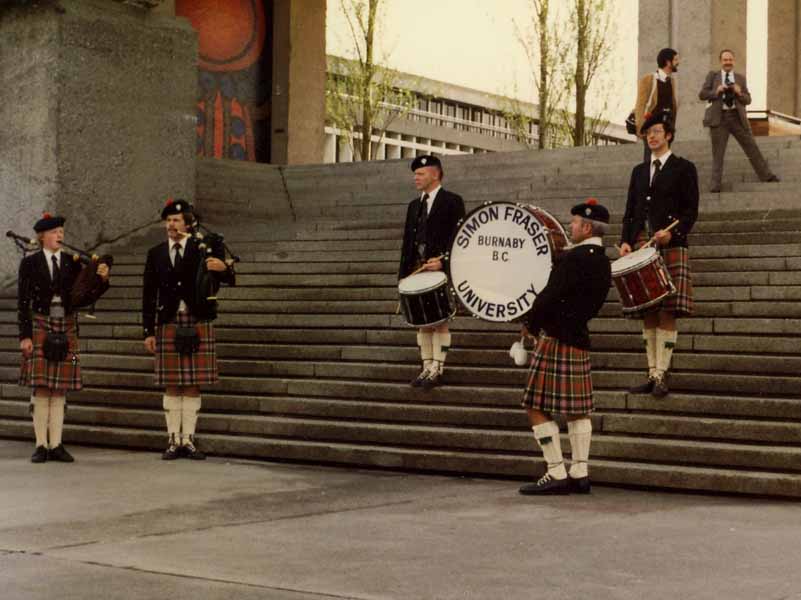
No other pipe band in history has travelled so far so frequently and spent as much as Simon Fraser University since they made their first annual journey (and in some years, journeys) to Scotland to compete at RSPBA championships in the UK in 1983.
What’s more, the band has shown unmatched consistency in featuring in the Worlds prize list, including, of course, six World Championship titles (1995, ’96, ’99, 2001, ’08, ’09). The band has missed the prize list only seven times in 40 attempts – a winning percentage of 83%.
That consistency is due in no small part to their reliable ability to create a new compelling and prize-winning medley every year.
How do they do it? What’s their process and strategy for pulling together the compositions and arrangements that satisfy judges, crowd and their own pipers and drummers in a balanced way?
Unlike non-UK or Irish bands, the band doesn’t have the benefit of receiving regular feedback from RSPBA judges in competition, which would allow them to consider and adjust if necessary. Being 5,000 miles from Scotland, and about 2,500 miles from the nearest Grade 1 band, SFU’s ability to maintain such consistent excellence over 43 years is nothing short of miraculous.
Thus, the fourth in our series of conversations with the world’s elite Grade 1 bands is with the leaders of SFU.

Pipe-Major Alan Bevan has been at the helm of SFU for 12 years. He had the daunting task of following Pipe-Major Terry Lee, the band’s co-founder and the co-author of those six World Championships. Since 2014, Bevan has maintained their legendary stability, aided greatly by having come up through the SFU system from the early days of his piping life. It helps greatly that Bevan is one of the world’s top solo pipers, the winner of both Highland Society of London Gold Medals (Inverness 2008, Oban 2013), the Glenfiddich Piobaireachd (2025), the Masters (2024, 2025), and umpteen other high-rise contests.

“Legend.” That’s a word often used when the name Reid Maxwell is mentioned by pipers and drummers worldwide. As leading-drummer of SFU since 1992, he’s been a part of the six Worlds wins, plus six World Pipe Band Drumming awards (1999, 2004, ’08, ’09, ’22, ’23), as well as being leading-drummer of the 78th Fraser Highlanders’ relentlessly talked-about 1987 World Championship as a band and a drum section. Add to those his two World wins (1978, ’79) and four World Pipe Band Drumming titles with Dysart & Dundonald as a corps snare drummer, and Maxwell’s resume is truly eye-popping. A prodigious teacher of hundreds of pipe band drummers, his contributions to pipe band drumming are indeed legendary. In 2014, Dr. J. Reid Maxwell was awarded an honourary doctorate degree by Simon Fraser University (the university) in 2024.

Pipe-Sergeant Craig Sutherland succeeded SFU co-founder and 42 years as Pipe-Sergeant Jack Lee after the 2024 season and, like Bevan, walks in size 20 brogues. A native of Crieff, Scotland, and the winner of both Highland Society of London Gold Medals (Oban 2017, Inverness 2024), the Uist & Barra (2023), the A-Grade MSR at the Northern Meeting and, since moving to Vancouver in 2023, just about every significant event on the super-competitive Pacific Northwest solo circuit. SFU has attracted more elite-level pipers and drummers from abroad than any non-Scottish Grade 1 in the world, including Stuart Liddell, Steven McWhirter and Blair Brown, and Sutherland is the first Scots immigrant to Canada to be appointed to an SFU leadership role.
SFU has performed their new medley several times at various games on the British Columbia Pipers’ Association circuit. It’s yet another fascinating and effective selection, with much of the band’s popular, trademark compositional and ensemble style intact, but with an injection of orchestration flair from the many creative minds in the band.
Here’s a list of the medley’s content:
“Return to Barra” (hornpipe) – Robert MacNeil, arr. SFUPB
“Glentruim” (strathspey) – P-M Donald MacLeod, arr. SFUPB
“Lt.-Col. D.J.S. Murray” (jig) – P-M Angus MacDonald, arr. SFUPB
“Lough Erin Shore” (air) – Traditional, arr. SFUPB
“Warthog Waltz” (waltz) – Stewart Smith
“In and Out the Harbour” (reel) – traditional, arr. SFUPB
“Traditional” (reel) – traditional, arr. SFUPB
“Lumsden’s Rant” (reel) P-M Angus MacDonald, arr. SFUPB
We encountered a few technical audio issues that were unfortunately uncorrectable, but we hope you enjoy and learn from our exclusive conversation with Pipe-Major Alan Bevan, Leading-Drummer Reid Maxwell and Pipe-Sergeant Craig Sutherland:
For those who also like text, here’s a transcript of our conversation, edited for written clarity.
pipes|drums: We’re very pleased to have the fourth installment of the Medley Playbook for 2026. It is with the Simon Fraser University Pipe Band from Vancouver, British Columbia. And we have the leaders of SFU: Pipe-Major Alan Bevan, Leading-Drummer Reid Maxwell, and Pipe-Sergeant Craig Sutherland. So, thanks a lot, guys. We appreciate you taking the time. It’s going to be a really great conversation about the new medley.
Alan Bevan: Thanks for having us.
pipes|drums: You bet. So, okay, as we do with all of the bands, let’s just start with talking about how SFU pulls together all the pieces, all the content, the arrangements, the orchestration, everything. What is that process for the band? What do you do? Maybe, Alan, let’s start with you.
Alan Bevan: It’s never the same, actually. Sometimes somebody brings a good idea to the table, and we kind of develop a medley around that, and other times it’s much more of a holistic process. We started with a completely blank slate, and Craig really got the ball rolling by soliciting ideas from a wide swath of people who are interested in the band and in contributing. So, he can probably say a little more about that. But it was much more of a grassroots kind of medley for us than it is some s.
pipes|drums: Craig, what about that? We should add that, Craig, you’re filling some big shoes after Pipe-Sergeant Jack Lee moved on, so congratulations on that. It sounds like you’ve come in with some very creative concepts that you’re adding to the mix.
Craig Sutherland: Thanks very much, and absolutely, big, big shoes to fill, but it’s been a great transition. I was heavily involved in helping Alan and the team over the last couple of s, so I’ve slotted in quite well. And yeah, there’s a great team around me. Alan and Reid have been very supportive. It’s been a smooth transition, and we continue to improve and grow as a band, which is really exciting. Helping out the team over the last few s, it’s been very collaborative the way we put together the medley.
As Alan said, we started with a blank slate. At the end of last season, we got together with probably six, seven, or eight people and laid our ideas on the table. Over the course of a couple of months, we developed a couple of really solid options for medleys and music. I’ll let Reid come in to talk about the drumming input in a moment or two, but from a piping perspective, it’s about what would have the most musical impact. Were there any interesting themes or ideas that we wanted? And what did we ultimately think the audience would like? So, at the end, we had a couple of great ideas that we presented to Alan and Reid, and from there we tweaked and adjusted, eventually settling on what we have today.
pipes|drums: What about that, Reid? You’re coming in with reactions to ideas and your own ideas?
Reid Maxwell: I’ve got lots of ideas. And I’m very good at just throwing them on the table, and I don’t really care if anybody uses any tune idea of mine, but I always think that there’s something on the table. And then when they come with alternatives, they know that they’re going to work better for the band because they’ve thought them through.
One of the things that I’m keen on is that the band has an enormous repertoire over the time I’ve been part of this, back 34 years now. And I think that sometimes we’re quick to ditch stuff that we’ve played non-competitively and we’ve loved in concert. Maybe there’s something there that’s been missed or overlooked as we continue to try and move forward. And sometimes, when a tune gets used, it means I’m not starting with a blank piece of paper, which gives me a little head start on some things.
For example, in this year’s medley, there are two really awesome reels we play: “In and Out the Harbour” and another old traditional reel that comes from, I believe, Barry Shears’ book from back in the ’90s. So, there were about five or six reels in that set, and I liked them all. And so I thought, there’s already material here that we could use. Finally, two of them landed on the table. I kind of went with the scores I originally had, with a tiny tweak. And when you can come up with four parts of music for a medley that’s already done, it kind of keeps you ahead of the game just a little bit. And I’m a big fan.
I’m a big fan of two types of things in the music we play. I’m a big fan of the strathspeys from the old Green Book, because Alan gets bombarded with them all the time. I just think that some of the tunes in there are just so amazing. I’m a big fan of the tunes of old. That’s probably a good way to phrase it: old tunes with a new spin, as opposed to the flavour of the month that gets forgotten about. I just think there’s a lot to be said about old music.
I don’t read pipe music per se; I can follow it rhythmically, but I’m a fan of looking through the Glen Collection and one of the things I love about the Glen Collection is that there are reels written as strathspeys and strathspeys written as reels. So, you start thinking, what if . . . ?
In some ways I think the band has been pretty good at that because we have a tune in our medley called “Lt.-Col. D.J.S. Murray,” which everybody knows as a four-part competition reel. And here we are playing it as a 12/8 jig. You can’t really get anything further apart on the scale than that.
pipes|drums: You’ve obviously got a strong involvement in the piping side of things, just in tune preference and things like that. Alan, what about the other side? Do you have a lot of input on the drumming? Are you making suggestions to Reid in a similar way?
Alan Bevan: I’d say there’s probably not a lot of initial suggestions. We kind of let Reid do his thing with writing the scores. But once in a while there might be a break or something where I, or somebody else, has a concept in mind, and we’ll sing, very poorly, the sort of percussion effect we’re after, and Reid will listen and translate it into something that actually makes sense. It’s more after the fact, as we’re trying to tweak things.
“I know Reid’s style, going back to his Dysart days, which I’m sure he’d love to tell you about, is very collaborative. His own corps, and the corps he’s played in, have always had a lot of involvement from other players within the corps, just trying to tweak and improve little bits. The whole band kind of takes that approach too” – Pipe-Major Alan Bevan
I know Reid’s style, going back to his Dysart days, which I’m sure he’d love to tell you about, is very collaborative. His own corps, and the corps he’s played in, have always had a lot of involvement from other players within the corps, just trying to tweak and improve little bits. The whole band kind of takes that approach too. There are a few people who will step forward with suggestions.
Alastair Lee plays in the corner now, so he’s right there standing next to the flank player. I’ll quite often, at band practice, see his head turn and catch Reid’s eye because he wants to talk about something he doesn’t feel is quite jibing. It’s actually quite cool. Craig has also been going along when it’s just the corps rehearsing. He’ll quite often play along with the corps so they can hear the tunes. That’s really important early in the season because a lot of little ensemble traps get caught at that stage.
pipes|drums: We’ve got a recording of the band’s new medley lined up. Let’s start with “Return to Barra,” the hornpipe by long-time SFU member, playing member and administrative member Robbie MacNeill. Let’s have a listen.
pipes|drums: That’s “Glentruim,” the strathspey by Donald MacLeod. Reid, that’s very much the kind of traditional-sounding tune you were referring to earlier. But before we talk about that, let’s go back to the opening tune. What’s the thought process behind making “Return to Barra” a pointed hornpipe?
Craig Sutherland: I can jump in on that one. It’s a great tune, originally written as a reel, and it’s sat in Robbie MacNeill’s tune book for a long time. It was actually quoted at the beginning by another long-time player of ours who’s now one of our drone tuners, Colin McWilliams. I think he originally suggested it as a reel, but when I first looked at it I thought there was the potential to make it a really cool, swingy hornpipe.
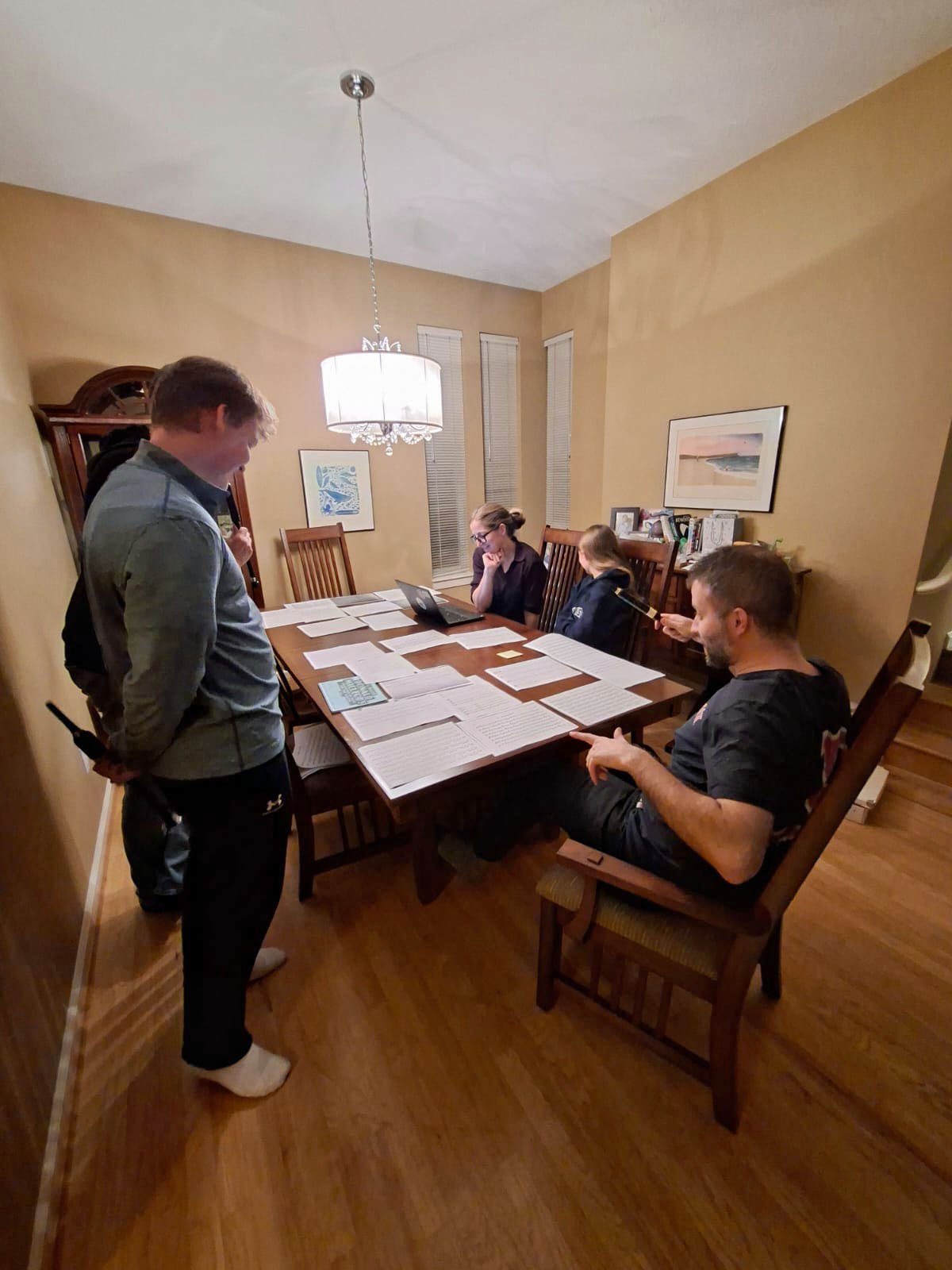
So, we kicked that around for a while with a smaller group, and when we presented it to the wider group everyone really liked it and could immediately see the potential. I think it was also immediately obvious, from Reid’s perspective, that there was going to be a great score to accompany it. Originally it was a reel; now it’s a hornpipe. It has great swing and great energy. Why a pointed hornpipe? Well, the band has always done very well when we’ve played pointed hornpipes. They’re not very common these days, so it’s exciting to be one of the few bands still playing one. We think it helps us stand out. And, as you mentioned, Robbie MacNeil has been a huge part of the SFU organization. It’s a privilege to have someone like Robbie supporting us while also writing great music we can play competitively.
pipes|drums: Rob certainly has a knack for writing a strong melody. I think that’s one of the hallmarks of his compositions. Alan, at the end of the hornpipe you introduce one of those patented SFU bridges into the strathspey, complemented by the harmony entering underneath it. Talk a little bit about setting that up.
Alan Bevan: It’s a little bit of a different approach than we often take to the front half of a medley, or to the strathspey section in particular. As Reid said, we’re both big fans of the Seaforth’s Collection, and over the years we’ve probably pulled just about every strathspey out of that book that we could. That’s usually the really traditional component of the medley. This is still a traditional tune, but it’s relatively modern. It’s a Donald MacLeod composition from the second half of the twentieth century.
It’s also unusual for us to have a four-part tune, and in this medley, we’ve actually got three four-part tunes in the first half. In some ways that’s a little bit of a risk because it could become a little boring. One of the reasons we picked “Glentruim” is that it’s a departure in the third part. It’s all over the place, in a good way. It keeps things interesting.
We knew we had to make the transitions really interesting so everything would gel together and not simply sound like we’d bolted four big tunes together. As we move through the medley, it gradually goes from large ideas to smaller ones. We start with these big musical ideas that people can really latch onto and understand, giving them time to digest what’s happening. Then, as the medley progresses, it distills down into shorter tunes before we hit the finale.
pipes|drums: Let’s continue listening. Keep an ear out for “Glentruim” and the transition into the jig version of “Lt.-Col. D.J.S. Murray.”
pipes|drums: That’s “Lt.-Col. D.J.S. Murray.” It’s interesting because that tune started life as a 4/4 march by Pipe-Major Angus MacDonald before becoming much better known as a reel. Now you’ve converted it into a jig. There’s an old saying in songwriting that a good song is always a good song, no matter how it’s arranged, and SFU seems to do this exceptionally well, taking familiar tunes and reimagining them in different time signatures. There are so many questions running through my mind, but let’s start with the transition from strathspey time into jig time. What’s the thinking there? Is it partly about having an identifiable melody that people can immediately latch onto?
“We can’t assume the judging panel has subscribed to our YouTube channel and listened to the medley five times before the contest. So there has to be enough in it that people understand the first time they hear it. We never want anyone asking, ‘Why did they do that?’ because that instantly breaks the effect you’re trying to create. We want people to stay with us for the whole journey without making the music predictable. That balancing act is always at the front of our minds while we’re putting these medleys together.” – Pipe-Major Alan Bevan
Alan Bevan: That’s a challenge all bands face when constructing a medley. It’s easy to become too clever and too avant-garde and lose people because you don’t have the luxury of half an hour to draw them in. We’ve got seven minutes at the most and a lot of musical ideas to fit into that space. Our band, perhaps more than some others, faces the challenge that our target audience hears the medley only once.
Sure, we put things on YouTube and there are Facebook posts with the medley, but when we go to Glasgow Green we’re playing for people who may never have heard it before. We can’t assume the judging panel has subscribed to our YouTube channel and listened to the medley five times before the contest. So there has to be enough in it that people understand the first time they hear it. We never want anyone asking, “Why did they do that?” because that instantly breaks the effect you’re trying to create. We want people to stay with us for the whole journey without making the music predictable. That balancing act is always at the front of our minds while we’re putting these medleys together.
pipes|drums: That’s interesting. Maybe after we’ve listened to the whole performance we can talk about the challenge of being relatively isolated geographically, yet coming to the World Championships after and, for more than forty s now, consistently finishing in the prizes. Let’s keep listening. We’re going now into “Loch Erinn Shore.”
Let’s pause there. Coming out of “Loch Erinn Shore,” the harmonies almost sound like a church organ. It’s a really compelling sound. Then you move into “The Warthog Waltz,” before making another clever transition into reel time with “In and Out of the Harbour.” Craig, I’m suspecting you had something to do with quite a bit of that.
Craig Sutherland: Yeah. We arrive at “Loch Erinn Shore,” which has a fantastic melody. It’s actually something the band has been kicking around for quite a while, waiting for the right opportunity to use alongside an Alistair Lee arrangement. I think it works really well. Again, full credit goes to the harmony writers in the band; there are several of them, and they’ve done a stellar job pulling that harmony together.
Then we move into the waltz, which is in D-major, and that gives us a really nice contrast. It changes the mood and starts taking the medley where we want it to go toward the end. There’s a lot more energy from that point onward. The band has historically played waltzes very well. From there we move into the two reels we mentioned earlier. The first is “In and Out the Harbour.” Again, there are some interesting key changes happening there, but it’s a tune with a tremendous amount of energy.
At that point, as Alan mentioned earlier, you start to see the medley shift away from those longer, more expansive tunes, where you’re spending more time exploring each key, and into something that’s much faster-paced. We’re really beginning to build momentum as we head toward the finish.
pipes|drums: Speaking of momentum, Reid, you’ve almost written the book on playing on the front edge of the beat, creating that sense of excitement and forward motion in pipe band performance. I really sense that style coming through here. Is that intentional, or is it just part of your natural approach?
Reid Maxwell: You can blame Bob Shepherd for that! He was always talking about seeing the next downbeat before you got there, and that idea has stayed with me forever. Then, of course, when I played with Bill Livingstone and the 78th Fraser Highlanders, Bill was another guy who lived right on the front edge.
I suppose it became part of my own musical thinking. Just to add to what Craig said, playing waltzes with the band is one of my favourite time signatures. I’m actually surprised they aren’t used more often today because they’re such a natural and effortless feel to play. One of the challenges is that almost every Grade 1 medley eventually ends up with eight or 10 parts of reels and hornpipes leading to the finish. When you’re writing that after, it’s mentally draining, trying to come up with fresh ideas without sounding as though you’re recycling yourself.
“A waltz immediately changes the atmosphere. It makes it much easier to set up what’s coming next because you’re suddenly working in a completely different musical language. Then, when you introduce just a little bit of the reel at the end of the waltz, it’s almost like everyone joins hands and says, ‘Right, now let’s get this moving.'” – Leading-Drummer Reid Maxwell
A waltz immediately changes the atmosphere. It makes it much easier to set up what’s coming next because you’re suddenly working in a completely different musical language. Then, when you introduce just a little bit of the reel at the end of the waltz, it’s almost like everyone joins hands and says, “Right, now let’s get this moving.” There are lots of ways you could do that. I probably wouldn’t want to do exactly the same thing next because I’d be the first one saying, “We already did that.”
But that’s simply part of trying to stay fresh, interesting and different. At the same time, you don’t want to become too clever. Sometimes people try to do so many clever things that they go over everybody’s head, including their own. Sometimes the old saying really is true: Keep it simple.
pipes|drums: “The Warthog Waltz” introduces reel time beautifully with “In and Out the Harbour.” The band’s now in full flight. Let’s carry on and take it through to the end.
pipes|drums: Excellent. There’s a lot going on there. You’ve got the reprise coming back, which is extremely effective, bringing “Loch Erinn Shore” back into the medley. Alan, maybe tell us what’s happening there.
Alan Bevan: Craig mentioned earlier that the “Loch Erinn Shore” concept was something Alistair Lee brought to the table a couple of seasons ago. The reprise was already there, and we all thought it was incredibly catchy. The syncopated treatment of that beautiful melody was something we really wanted to make work. The problem was that, in that earlier version of the medley, it just didn’t quite do the idea justice. So, we left it on the back burner. Then Zach Reid brought “Lumsden’s Rant” into the discussion. It was an immediate hit. Straight away it felt as though it worked perfectly with the reprise. Once we’d decided on that, we knew we needed a key change. Craig really took the lead on arranging that section.
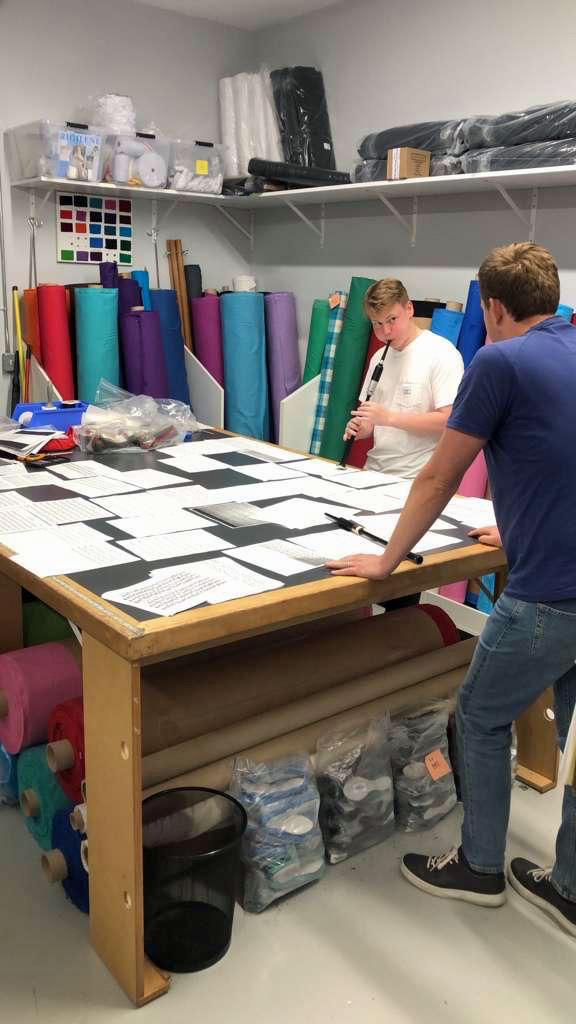
I remember several late nights at Tartantown with Craig and Alistair working through different possibilities. There were also plenty of video calls between Craig and me where we’d literally sing ideas back and forth until we found something we liked. That’s really how the process works. You come up with something you think is great, take it to band practice, and immediately get everyone’s reaction. We’re fortunate to have a band full of strong personalities and a culture that encourages people to be honest. You find out very quickly whether something is going to fly. The band has to believe in what we’re playing if we’re going to perform it convincingly.
So don’t come to me in the middle of July and say, “I hate the opener.” Tell me in November or December instead. There was a huge amount of work that went into those last couple of sections, especially the fourth part. We tried countless arrangements before we found one that wasn’t too long, wasn’t too short, wasn’t too harmonically adventurous, yet remained interesting and had enough drive to carry us to the end of the medley.
pipes|drums: Reid, maybe say a little bit about the bass section. My impression is that it’s sitting a little farther back in the texture, a sort of “less is more” approach. Would that be a fair observation?
Reid Maxwell: Yes, there are a couple of places, particularly when we arrive at “Lumsden’s Rant” and then move into the reprise, where we deliberately bring the bass section forward a little more. Then, when we move from the reprise back into “Lumsden’s Rant,” the key changes. You don’t really appreciate that effect unless you’re standing behind the corps. What we’re actually doing is layering the sound. The young lady playing tenor on the right side of the corps starts that figure on her own. Then another player joins her. Then another. As the texture becomes fuller, we gradually bring in the rest of the tenor section.
What we wanted at that moment was for the tenors to become the dominant sound while the snare line stays in the background. Then, just before we go into the final part, we switch back to a much more traditional bass-and-snare texture. There’s actually quite a lot happening there. We don’t want people saying there’s too much tenor. We don’t want them saying there isn’t enough tenor. We’re always trying to find that balance. Of course, it’s all subjective.
“When we’re making that break, I always tell the younger members of the corps to think about one thing and one thing only: Phil Collins. They used to look at me, like, Hello?! Phil Collins. You know that great, Ba-bom-bom-bom . . . ‘No, this is your Phil Collins moment. Grab it.’ That’s the sound we’re looking for. When it works, it allows the percussion to build naturally. – Leading-Drummer Reid Maxwell
I also like trying to use the full range of percussion effects whenever the opportunity presents itself. When we’re making that break, I always tell the younger members of the corps to think about one thing and one thing only: Phil Collins. They used to look at me, like, Hello?!
Phil Collins. You know that great, Ba-bom-bom-bom . . . “No, this is your Phil Collins moment. Grab it.” That’s the sound we’re looking for. When it works, it allows the percussion to build naturally. As we move toward that third part of “Lumsden’s Rant,” where the key changes, everything keeps growing and growing until it finally arrives. That’s the effect we’re hoping people feel. I never put something into a score simply for the sake of putting it there. But when an opportunity like that presents itself, it’s a great place to let the percussion contribute to the overall musical story.
pipes|drums: That’s really interesting. One of the strengths of the medley is that it allows the music to breathe. There are those longer four-part tunes that you talked about earlier, but at the same time there’s a tremendous amount happening musically. It’s a full plate of ideas for the listener to absorb in one performance. Really impressive.
Alan, something we’ve asked the other bands: Inveraray & District’s “Dream Valley” medley generated a tremendous amount of discussion. How do you think that affected SFU? And how do you think it affected the pipe band world more generally? Not that SFU hasn’t always been creative, as have all the other bands, but was it something of a turning point?
Alan Bevan: First of all, I loved the “Dream Valley” medley. I’m a fan of a lot of Inveraray medleys. It certainly generated a huge amount of discussion. I think it probably opened a few doors creatively. That said, I wouldn’t say it really changed what we’re doing. We certainly haven’t tried to emulate it, and I think that would have been a mistake. You can rarely improve on an original concept like that. If you simply try to copy it, you’re probably going to finish second-best. Having said that, I do think it encouraged people to think a little more creatively, and that’s probably been a positive thing for the pipe band world.
pipes|drums: It’s worth pointing out that both Stuart Liddell and Steven McWhirter were long-time members of SFU. That’s an interesting connection. I’d also like to talk about how SFU has managed to remain so competitive while based on the West Coast of North America. You’re twice as far from Scotland as bands in Toronto. Yet, after you arrive at the World Championships, you’re competing for prizes with very few exceptions. How do you do it? Continuing with the final section of the interview. This portion is one of the cleanest in the transcript, though there are still several places where the automatic transcription has clearly broken down. I’ve restored those while remaining faithful to what the speakers were almost certainly saying.
Reid Maxwell: Can I jump in on that? It’s interesting because this very topic came up after we played on the weekend. We were really pleased with our performances, but afterwards the conversation wasn’t about what had gone well. It was about the things we thought we could still improve. That’s always been part of the culture here. We compare ourselves against our own standard, not against anybody else’s. That means we almost always come off the field thinking about what we can make better. As one week becomes the next, and then the next after that, we’re continually refining things.
Sometimes I joke that it might actually be better if we didn’t have another contest the following weekend, because we’d probably appreciate how well we’d actually played instead of immediately becoming grumpy about the things we want to fix. But I think that’s one of the reasons we’ve stayed competitive. We’re always chasing perfection. We debuted this medley outdoors rather than at the Indoor contest because we wanted to hear it in a more natural environment. We played it in Victoria, and since then we’ve worked extremely hard on the areas we already thought were good. We’ve made small adjustments, polished things, and improved details. Even after listening to recordings from this past weekend, there’s still one tiny thing we’d like to add. It’s incredibly minor.
But that’s because we aren’t comparing ourselves to other bands. We’re comparing ourselves to our own idea of perfection. You can have a successful performance and still know it wasn’t perfect.
pipes|drums: That’s a fascinating perspective. Craig, you’ve experienced both worlds, many s competing in Scotland and now several s with SFU in British Columbia. What’s your perspective?
Craig Sutherland: Having spent a long time competing in Grade 1 in Scotland and now being with SFU here in Vancouver, I think Reid is absolutely right. We’re always competing against ourselves. Whether it’s the music, the preparation, the tuning, or how we approach contest day, our goal is simply to deliver the best performance we’re capable of delivering. As Reid said, we always come off the field thinking about what could have been better. Something went well. Something else could be improved. The goal is always to become the best version of ourselves.
“We keep an eye, and an ear, on our competitors. We’re all enthusiasts at the end of the day. We’re well aware of what’s happening across the pond. But the battles we’re really fighting are here in Vancouver, trying to become the best band we can possibly be before we take that performance back across the Atlantic to Scotland.” – Pipe-Sergeant Craig Sutherland
Of course we keep an eye, and an ear, on our competitors. We’re all enthusiasts at the end of the day. We’re well aware of what’s happening across the pond. But the battles we’re really fighting are here in Vancouver, trying to become the best band we can possibly be before we take that performance back across the Atlantic to Scotland.
pipes|drums: Full credit to you all. You’ve remained one of the most competitive bands in the world, and you’ve won the World Championship six times. Congratulations on continuing that tradition. We’ll leave everyone now with the complete performance of your 2026 medley. We’ll let it run straight through so viewers and listeners can enjoy it. Thanks very much, gentlemen. I really appreciate you taking the time. Some terrific insights. All the very best to the Simon Fraser University Pipe Band for this year’s World Championships and beyond.
All: Thank you.
pipes|drums: That’s the Simon Fraser University Pipe Band and their new medley for 2026, which you’ll certainly hear at the World Pipe Band Championships this August.
Our thanks to Alan Bevan, Reid Maxwell and Craig Sutherland for sharing their insights and time with pipes|drums readers and viewers.
Stay tuned for more editions of the Medley Playbook coming soon.
A correction was made on July 3, 2026: An earlier version of this article incorrectly stated that Craig Sutherland is from Perth, Scotland. He is, in fact, from Crieff, Scotland, and the article was amended.







NO COMMENTS YET