

What are we actually judging? A proposal for clearer solo bass and tenor drumming standards – Part 2
We continue with the second and final part of Eric Légère’s proposal to standardize judging of solo tenor and bass drumming competitions. Be sure to read Part 1.
He examines the lack of clear musical, technical, tonal, and visual expectations in solo bass and tenor competitions.
Légère proposes using the progressive Piping and Drumming Qualifications Board (PDQB) Levels 2-6 framework as a possible foundation for clearer standards, while recognizing that associations employ different grading systems, ranging from Grade 5 to Open/Professional.
A central argument is that solo bass and tenor events are musical competitions, and that musical performance must take precedence over flourishing.
Readers are reminded that, as with all pipes|drums articles, they are encouraged to express their fair and respectful thoughts, either attributed or anonymously, via our moderated Comments tool.
Part 2
Minimum standards should not limit creativity
Any proposal involving prescribed technical elements raises an understandable concern: would standardization make solo performances predictable? That is not the intent.
 PDQB competencies should serve as a developmental foundation, not as the ceiling of the discipline. Bass and tenor drummers should remain free to introduce original scores, rhythmic interpretations, technical combinations, transitions and – in flourishing tenor – creative visual movements appropriate to their level. At Intermediate and Open grades in particular, encourage creativity.
The essential question is not merely whether a competitor demonstrates a recognized technique, but whether it is executed cleanly, confidently and musically.
“For tenor drummers, difficulty and variety should receive credit only when supported by control and musical purpose.”
For tenor drummers, difficulty and variety should receive credit only when supported by control and musical purpose. A relatively simple flourish performed precisely and placed effectively within the phrase may contribute more to the overall performance than a difficult movement executed poorly or without musical relevance.
The same principle applies to bass drumming. Technical complexity should not be rewarded simply for being complex. The selected rhythms, dynamics and embellishments must serve the melody and strengthen the overall musical performance.

Recognizing different approaches to tenor drumming
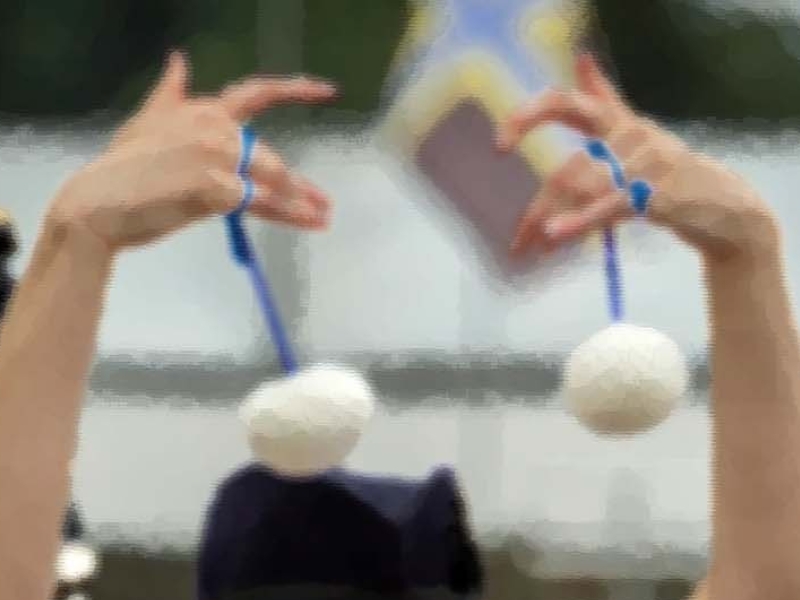
A clearer standard must avoid creating the impression that all tenor drummers are required to flourish.
Rhythm tenor drumming is a legitimate and musically valuable discipline. Within a pipe band, a rhythm tenor player may provide essential inner voices, harmonic texture, counter-rhythms, dynamic support and connections between the snare and bass sections. Solo competition rules should recognize this contribution.
“If a competition includes visual presentation as a separate category, associations must determine how rhythm tenor performances will be assessed fairly.”
If a competition includes visual presentation as a separate category, associations must determine how rhythm tenor performances will be assessed fairly. A competitor who does not flourish should not automatically lose a predetermined portion of the available assessment simply because the performance follows a different but legitimate musical approach.
Possible solutions could include:
- treating visual presentation as an enhancement rather than a mandatory component;
- allowing rhythm tenor and flourishing tenor approaches within the same event while keeping music as the dominant consideration;
- creating an alternative technical-presentation category for non-flourishing performances; or
- offering separate rhythm tenor and flourishing tenor events where participation levels make that practical.
Each option presents advantages and challenges. The important point is that the issue should be addressed openly rather than left to individual interpretation on the day of a contest. My result at the 2026 Winter Storm Intermediate North American Tenor Drumming Championship demonstrates that a rhythm-only approach can produce a competitive tenor solo. A formal standard should preserve that possibility.
Injury, accessibility and continued participation
Another important reason flourishing should not be mandatory: not every tenor drummer is physically able to flourish.
Some competitors live with previous injuries, chronic pain, restricted movement, disabilities or other physical limitations affecting the wrists, forearms, elbows or shoulders. Others may be capable rhythm tenor drummers but unable to perform repetitive flourishing movements safely.
 Flourishing involves repeated movements of the hands, wrists, forearms and shoulders, sometimes at speed and for extended periods. Drumming research suggests that repetitive movement and non-neutral posture can contribute to tendinitis and other playing-related musculoskeletal conditions.
The broader drumming literature identifies tendinitis, carpal-tunnel symptoms and repetitive-strain injuries among the conditions affecting drummers. However, more research is required to determine their prevalence specifically among flourishing pipe band tenor drummers.
A competition system that effectively requires flourishing could therefore exclude or disadvantage tenor drummers who remain musically and technically accomplished but cannot flourish safely. Competitors should not have to aggravate an injury – or risk developing one – simply to access the full range of marks available in a solo competition.
This reinforces the need to recognize rhythm tenor drumming as a complete and legitimate competitive approach. A drummer who demonstrates excellent rhythm, tempo, tone, phrasing, dynamics, expression and integration with the piping should be evaluated on those musical merits.
“The objective is not to diminish the role of established drumming adjudicators. It is to give them clear criteria and appropriate resources for assessing specialized disciplines.”
Associations should also consider whether their educational programs provide appropriate instruction in physical technique, posture, progressive conditioning, warm-up practices, workload management and injury prevention. Introduce flourishing requirements gradually and teach them with attention to safe movement rather than technical advancement alone.
The objective is not to discourage flourishing. Flourishing remains an expressive and highly skilled element of tenor drumming. The objective is to ensure it remains optional, is taught responsibly, and does not become a barrier that prevents injured or physically limited musicians from participating meaningfully in solo tenor competitions.
An inclusive standard should allow every tenor drummer to demonstrate excellence through musicianship, regardless of whether flourishing forms part of the performance.
The need for bass and tenor informed adjudication
Clearer written standards would help, but rules alone cannot resolve every issue. Associations must also consider how solo bass and tenor competitions are adjudicated.
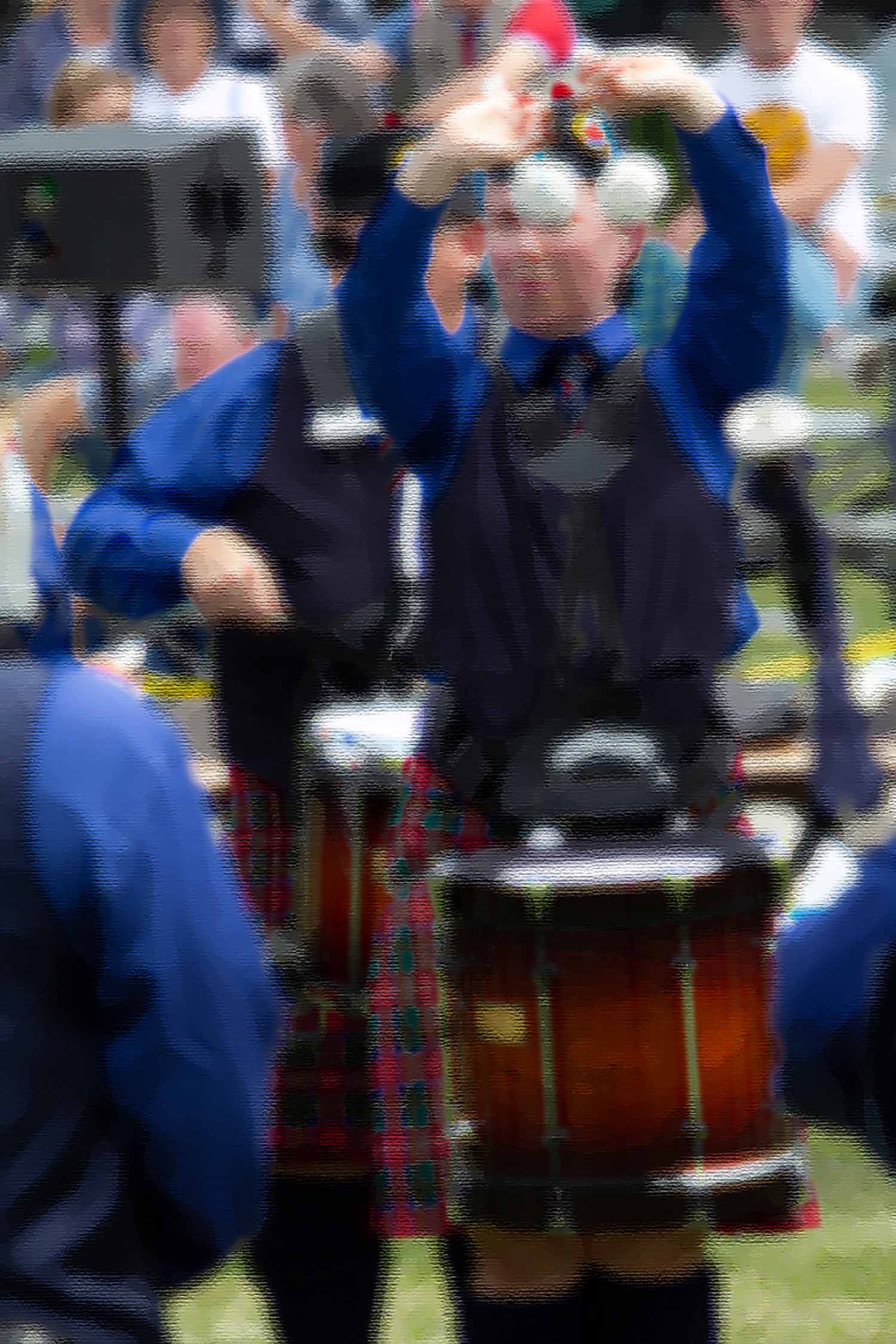 Should every drumming adjudicator automatically be authorized to assess solo bass and tenor events? Should associations provide bass- and tenor-specific professional development? Should higher-level competitions include an adjudicator with demonstrated bass or tenor expertise? Could accomplished bass and tenor drummers help develop educational and adjudication materials?
These questions deserve serious discussion. The objective is not to diminish the role of established drumming adjudicators. It is to give them clear criteria and appropriate resources for assessing specialized disciplines.
Competitors should be able to enter an event knowing that their musical, technical, tonal and – where applicable – visual performance will be assessed according to transparent expectations appropriate to their grade.
An opportunity for every association
Aligning solo competition standards with the PDQB progression could give associations a clearer pathway connecting education, certification, competition, and advancement.
A new bass or tenor drummer could begin with defined introductory objectives, progress through increasingly demanding musical requirements and eventually prepare for Open competition with a clear understanding of what is expected.
That would be preferable to advancing competitors through the grades primarily according to results while providing only limited explanation of how the musical and technical expectations change at each level.
A defined progression could also:
- help instructors determine when students are ready to advance;
- help competitors identify specific areas for development;
- support more focused and constructive adjudication comments;
- encourage associations to reinvigorate bass and tenor education;
- improve consistency between regions and contest venues; and
- better prepare competitors to participate nationally and internationally.
No association would be required to abandon its existing grading system. The framework could adapt to local needs while retaining the central principles of progressive education, transparent expectations, musical priority, and informed adjudication.
Starting an international conversation
This proposal is not presented as the final answer. It is intended to begin a broader discussion about how the international pipe band community teaches, develops and evaluates solo bass and tenor drummers.
Several questions warrant consideration:
- Should associations publish minimum musical and technical expectations for each solo bass and tenor grade?
- Could the PDQB syllabus provide a common educational foundation?
- How should associations adapt that foundation to systems ranging from Grade 5 to Open?
- How should “Visual Effect” or “Visual Presentation” be defined?
- Should musical performance be formally identified as taking precedence over flourishing?
- How should rhythm tenor performances be assessed when no flourishing is presented?
- How can associations accommodate competitors who cannot flourish safely because of injury, disability or physical limitation without placing them at a competitive disadvantage?
- Should visual difficulty receive credit when it is not fully integrated with the music?
- How can associations encourage creativity without sacrificing consistent standards?
- What bass- and tenor-specific preparation should adjudicators receive?
- Should competitors and adjudicators have access to dedicated bass and tenor assessment guides?
We always welcome your ideas for original, exclusive feature articles and opinion pieces, authored by you.
Solo bass and tenor drumming have developed into sophisticated musical disciplines. Their competitors deserve standards that recognize that sophistication.
If associations expect bass and tenor drummers to demonstrate musical, technical, tonal and visual excellence, they should clearly explain what those expectations mean.
Aligning competition grades with an established educational pathway would not resolve every issue, but it would provide a transparent and credible starting point.
Most importantly, it would acknowledge that solo bass and tenor drumming are distinct disciplines that require clearly articulated standards, informed adjudication, and meaningful pathways for development.
For tenor drumming, it would also reaffirm a principle that must remain at the centre of any future standard:
Flourishing should enhance the musical performance. It should never replace it.
The question is not whether solo bass and tenor drumming will continue to evolve. They already have.
The question is whether our competition rules, educational programs and adjudication systems are prepared to evolve with them.
Eric Légère is a competitive WUSPBA and BCPA solo snare, bass and tenor drummer and a Piping and Drumming Qualifications Board Snare Drumming Assessor for Levels 2-6. He has competed in pipe bands and solo events in Canada, the United States and Scotland. In 2026, he placed third at the Winter Storm Intermediate North American Tenor Drumming Championship while performing entirely as a rhythm tenor drummer.
What do you think? As with all pipes|drums articles, they are encouraged to express their fair and cordial thoughts, either attributed or anonymously, via our moderated Comments tool.

NO COMMENTS YET