

NPC celebrates 30th birthday today with social push (#PipingCentre30), many events TBA
It’s the week before the 1995 World Championships.
You arrived in Glasgow on Monday, and it’s now Friday.
Apart from one or two daily band practices, pretty much all you’ve done every day is scrounge up meals (usually questionable fried things), gone to the pub too many times, and essentially hung around bored to death, with few distractions, allowing your mind to fester into a ball of sweaty anxiety by Friday.
If you’re younger than 40, chances are you’ve never experienced such an utterly weird time.
Why? The answer is pretty much because the then-named Piping Centre officially opened on May 24, 1996, ushering in a new era of education, entertainment and fun ever since.

In addition to providing top-flight instruction, an excellent Scottish-cuisine restaurant, a top-rated hotel, and a brilliant Museum of Piping curated by Hugh Cheape, the renamed National Piping Centre has:
- Partnered with the then Royal Scottish Academy of Music & Drama (now the Royal Conservatoire of Scotland) to create the UK’s first BA (Scottish Music-Piping) degree program (1996)
- Founded Piping Live! in 2004 (originally named Piping Hot!)
- Launched the National Youth Pipe Band of Scotland (2003)
- Created CLASP (Competition League for Adult Solo Pipers) (2005)
- Acquired and amalgamated with the 50-year-old College of Piping (2018)
- Launched the Maket Collective with an objective of empowering women in piping and drumming (2024)
- Created the NPC Community Piping Clubs program (2025)
- Hosted (and occasionally rescued) many dozens of piping and drumming competitions and performances
- Employed dozens, if not hundreds, of pipers, drummers and piping and drumming enthusiasts as teachers, administrators, and all manner of roles, including some of the most accomplished and famous names in Highland piping
- Facilitated the addition of hundreds of millions of pounds, dollars and euros from visitors into the Scottish economy
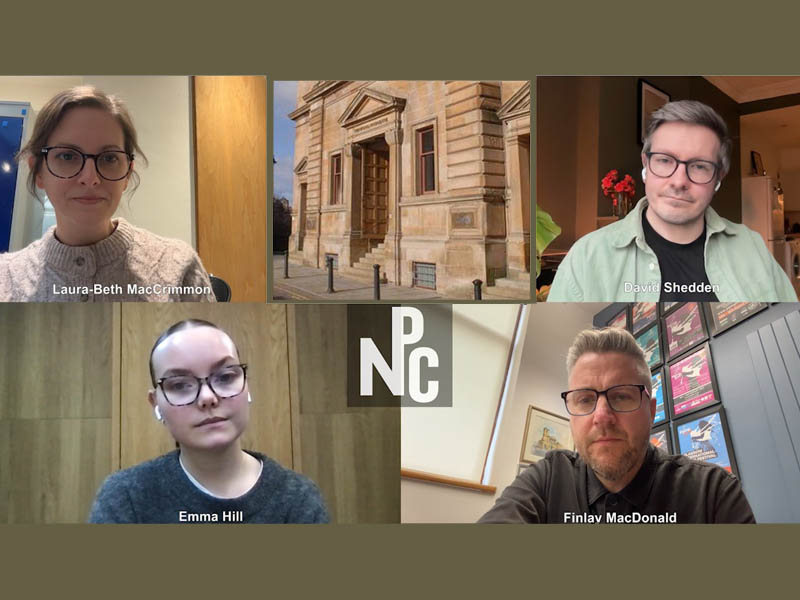
“I fondly remember getting one of the first lessons in the National Piping Centre from Pipe-Major Angus MacDonald, before the doors were officially opened,” said Finlay MacDonald, Director of Piping at the National Piping Centre. “It makes me immensely proud to still be involved and help this amazing community celebrate and enjoy piping of all forms.”
The organization is inviting the world piping community, former NPC employees and volunteers, and essentially anyone to “share their memories, photos, and messages of support on social media using the hashtag #PipingCentre30, creating a digital celebration of the people who make the institution what it is.”
The National Piping Centre plans to announce a series of themed events throughout 2026.
In many ways, there are two distinct eras in the history of Highland piping: BNPC and ANPC.
pipes|drums has also been around for a long time and, chances are, you’ve been following pipes|drums for a long time. Thanks for that. But if you’re not yet a subscriber, please consider taking out an incredibly inexpensive subscription so we can keep bringing you all the news, reviews, interviews, features and more that keep you coming back from the world’s only independent publication for pipers and drummers!
pipes|drums was there in the beginning, and here’s our May 1996 feature 9complete about the brand new Piping Centre:
The Piping Centre
The world of piping is set to open a new centre, of which all Highland pipers can be proud
After five years of planning, fundraising, construction, and not a small amount of feuding, the piping world has a new headquarters in the heart of piping, Glasgow, Scotland. The Piping Centre will finally be open for business in May, and the building is, quite simply, remarkable.
When talking about places where pipers meet, one tends to think automatically of stopgap premises that need work. It’s rare indeed when pipers, whether in a band or with an association, have a place they can call their own, let alone a custom-made place. The Piping Centre, like the cairn at Borreraig, the Eden Court Theatre in Inverness, and the pipe band competition arena at Maxville, is a true landmark on the piping landscape.
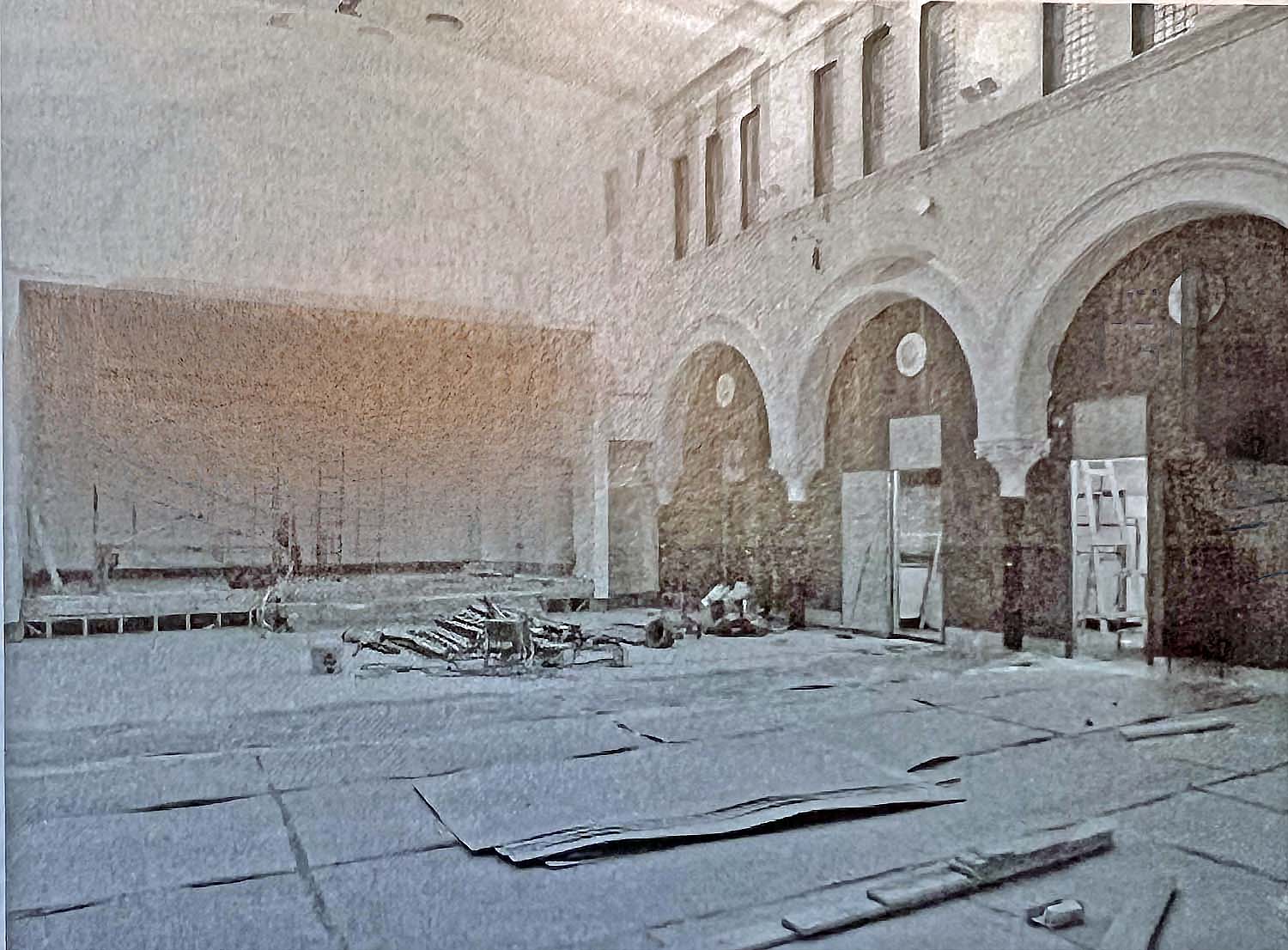
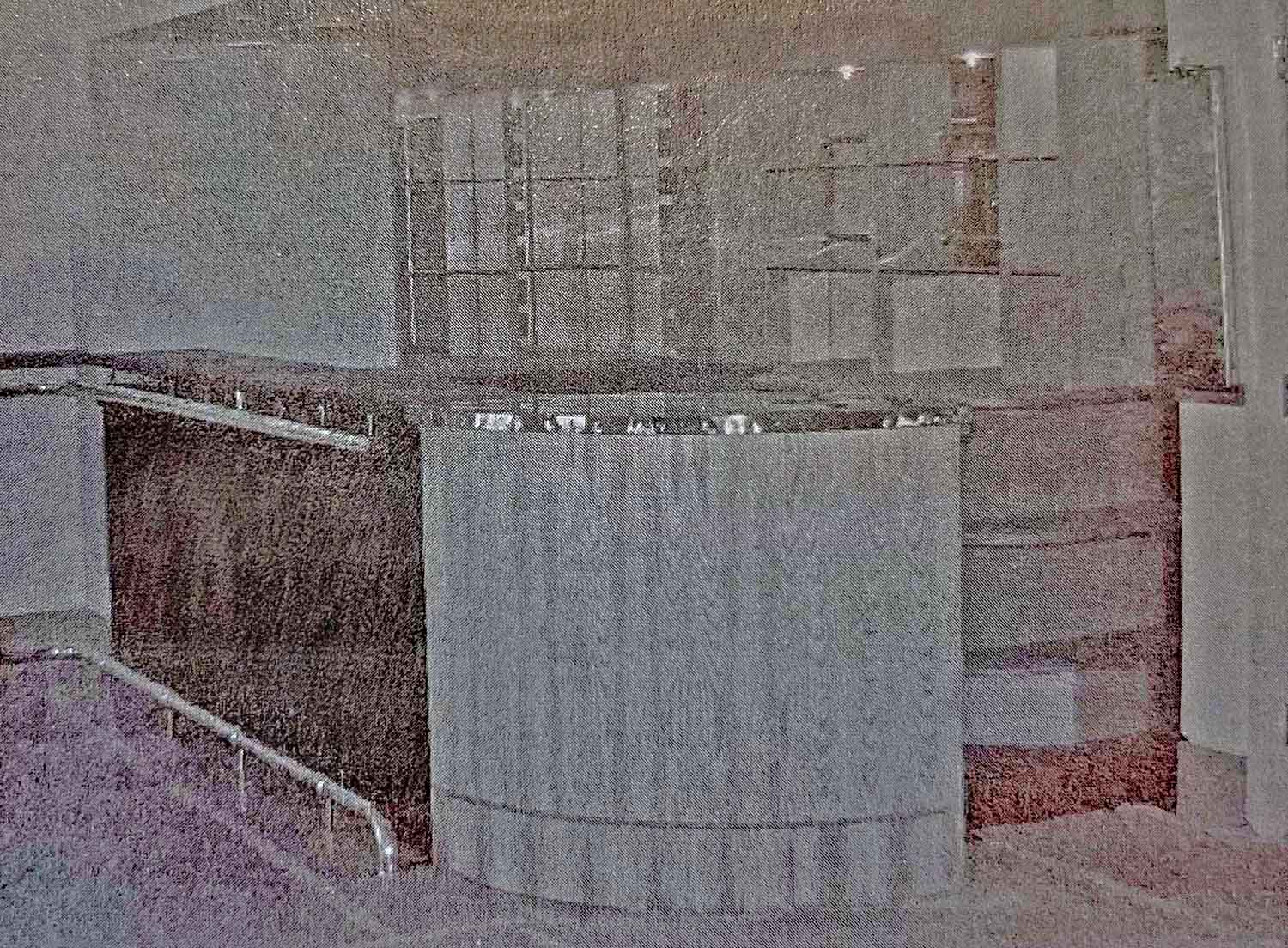
Located in a fine, early Victorian church at 3034 McPhater Street in the theatre district of Glasgow, the Centre is a stone’s throw to Charles Rennie MacIntosh’s Glasgow School of Art and within smelling distance of freshly brewed Airtight Seasoning from R.G. Hardie & Co. Construction work began more than two years ago, and the premises have been completely gutted and redesigned to incorporate everything needed and more: soundproof practice rooms with doors that seal magnetically, a 200 seat hall suitable for formal concerts and competitions, a museum and interpretation centre, a reference library, libraries for archives, photographs and audio recordings, conference facilities, and even eight twin ensuite bedrooms for overnight bed and breakfast accommodation. The Pipers’ Tryst is a bar/restaurant serving Scottish cuisine and whiskies from across the country.
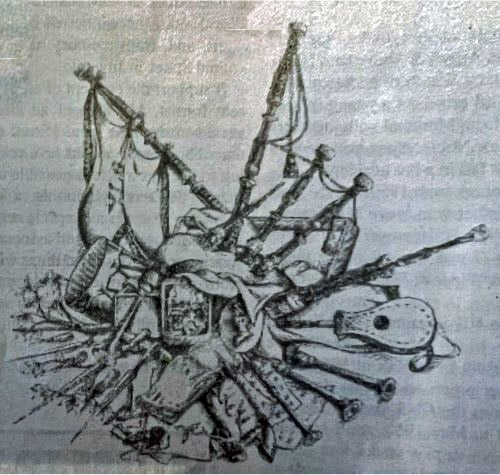
Upon entering the Centre, the visitor will see an impressive commissioned bas-relief sculpture, designed and created by the Scottish artist Tim Chalk. The work is intended, according to Piping Trust literature, to “capture the tradition of the instrument,” and features a parcel of drones, bellows, swords, and, in apparent homage to the pipe band, a side drum.
The Centre will house the new National Museum of Piping, displaying piping artifacts and treasures on loan from the National Museums of Scotland. The museum is designed to introduce visitors to piping, its history and origins, with the aim of situating piping in cultural and historical contexts.
Piping artifacts from the Scottish National Museums collection have started to be moved into the Centre, with Hugh Cheape, curator of the Scottish Collection (and son of Brigadier Ronald Cheape of Tirroran), taking charge of the project.
MacLeod’s Salute
In March, the Piping Trust announced the appointment of Roddy MacLeod, Gold Medallist and Pipe-Major of the ScottishPower Pipe Band, as its director. MacLeod started officially in early April, and he has been busy finding and hiring staff, developing a marketing campaign, organizing events, and recruiting pupils.
Roddy MacLeod is part of the “duopoly” management of the Centre, with John Drysdale, a former senior man at the Royal Air Force, coming on board almost a year ago as Director of Administration.
“It’s difficult to predict what the level of interest will be in the Centre at the beginning,” he said. “But we’re quite comfortable starting small, and we hope to build a substantial client list very quickly.” – Roddy MacLeod
A former school teacher, MacLeod will, at least in the early days, take on the brunt of tuition: “It’s difficult to predict what the level of interest will be in the Centre at the beginning,” he said. “But we’re quite comfortable starting small, and we hope to build a substantial client list very quickly.”
One of MacLeod’s first actions was to hire Pipe-Major Angus MacDonald as a full-time instructor. MacLeod says the business plan estimates a need for two full-time and six part-time piping instructors, in addition to himself. ”But we’re completely flexible,” he added. “The most important thing is to provide the highest quality of instruction possible for all students, with staff having exceptional knowledge and solid experience in teaching.”
The Centre will be linked to the Scottish universities’ wide-area network, which will allow for online lessons with students anywhere in Great Britain in the future.
There will be a total of 26 full-time employees at the Centre. Already in place is most of an administrative and catering staff, and Jeannie Campbell, a 10-year veteran of the College of Piping, “defected” to the Centre in midwinter last year.
The Piping Trust
The vision of a Piping Centre became a reality through a group formed in 1992, called The Piping Trust. The Trust was organized with the mandate to secure the million-odd pounds necessary to make the project fly, from acquiring and redeveloping the building to paying for staff and publicity.
Oona Ivory, Chairman of the Scottish Ballet, Director of the Scottish Opera House, Governor of the Scottish Conservatory of Music, and a professional violinist and gold medallist for fiddling at the Mod at the age of 12, is on the Board of Directors of the Piping Trust. Ivory was visiting Andrew MacNeill, the famous piper and student of Robert Reid, in 1990 on the Isle of Colonsay, when MacNeill suggested that more be done in Scotland to help piping. This came at a time when the College of Piping was being set up in Summerside, Prince Edward Island, and it seemed that every place but Scotland was backing Scotland’s national music.
“There has always been a bit of a tussle between Scottish traditional music and classical music,” Oona Ivory said. “I’ve always been aware of the importance of Scottish music, and I wanted to do something about it.”
Oona Ivory took it upon herself to set up the Piping Trust, with an eye to obtaining funding for a piping centre. She assembled like-minded representatives from business and piping, all committed to “encouraging and promoting the study of the Highland Bagpipe and its music” and to making the Piping Centre a reality. There are five directors of the Trust: Oona Ivory, her husband Brian Ivory, Managing Director of Highland Distillers; Sandy Grant Gordon, Managing Director of Wm. Grant & Sons Distillers; Alan Forbes, Assistant General Manager of Standard Life Assurance and member of the Royal Scottish Pipers Society; and Malcolm MacRae, President of the Piobaireachd Society. The late Seumas MacNeill, Principal of the College of Piping in Glasgow, was also on the Board until his death in early April.
Their efforts have been admirable. A total operating budget of £ 3.8 million has been raised for the project. Most of the money has not been donated to further piping, however. The majority of funds have come from the City of Glasgow and Historic Scotland for urban renewal, job regeneration, and tourism development. Through the substantial connections of Brian Ivory and Sandy Grant Gordon, whisky companies have contributed well over £500,000.
MacLeod’s Controversy
Few major piping initiatives go off without some controversy, and the Piping Centre is no exception. There has been a rather confusing and perhaps one-sided dispute between the Piping Trust and the College of Piping that appears to concern a small group of pipers, mostly directly connected to the College.
The argument revolves around Seumas MacNeill’s role with the Centre. MacNeill, the co-founder and principal of the College of Piping since 1947, contended right up to his death that he had been promised the posts of Principal and Director of Piping with the Centre, and rejected the Piping Trust’s offer of a post as Honorary Life President and the naming of the auditorium after him.
It’s unlikely that any dispute will continue now that MacNeill has passed on.
For his part, Roddy MacLeod has little to say about the kafuffle with the College. “We’re focusing on the positive aspects, and try not to get involved in whatever controversy takes place,” said MacLeod. “I believe that once people see how impressive the Centre is, they’ll see what a positive thing it is and will be for piping as a whole.”
With its solid funding, its young and energetic leadership, and its magnificent facilities, the Piping Centre will undoubtedly be a major force in the piping world for a very long time to come.
For further information on the Piping Centre, readers can contact them in writing at the Piping Centre, 3034 McPhater Street, Glasgow, Scotland G4 0HW, or by telephone or fax at 0141 353 0220.

NO COMMENTS YET