

“Building Leaders” – James Laughlin’s exclusive pipes|drums series on leadership and management
“Leadership is often chaos. It’s often outside their comfort zone. And there’s generally a lot of collateral damage. It’s no different in pipe bands.” – James Laughlin
 Since being the leading-drummer of New Zealand’s Grade 1 Canterbury Caledonian Society from 2009 to 2016, and working as the full-time drumming instructor at St. Andrew’s College in Christchurch, James Laughlin’s burgeoning career as a high-performance leadership trainer, consultant and keynote speaker has taken him around the world to work with all manner of organizations and individuals.
His clients include elite athletes, billion-dollar CEOs and multinational corporations as he works to equip them with “the clarity, conviction, and tools to achieve extraordinary results.”
A native of Northern Ireland, where he first learned pipe band drumming, he’s lived in Christchurch, New Zealand, since 2009 and previously resided in Canada, where he played with the Grade 1 Simon Fraser University band from 2004 to 2009. He’s won the Juvenile World Solo Pipe Band Drumming Championship and been a finalist in the adult World Solo Championships.
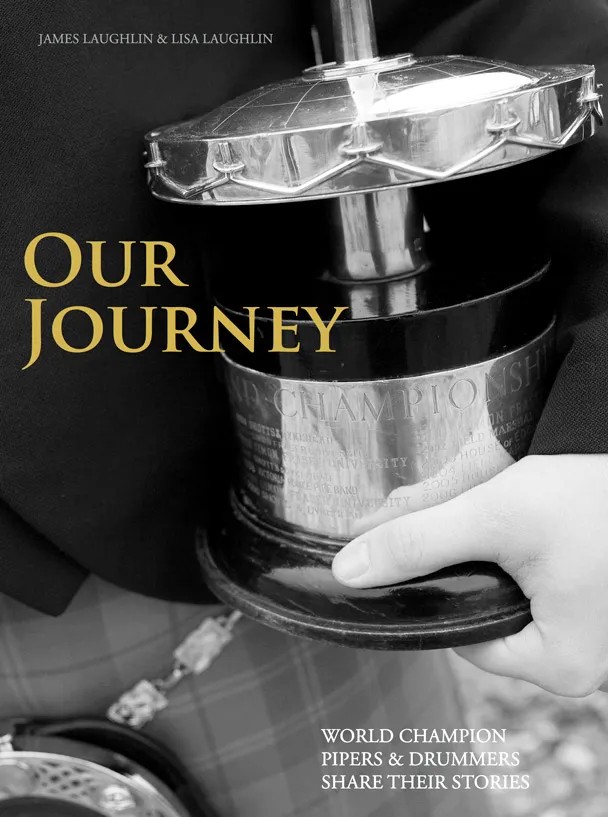 In 2013, he published Our Journey: World Champion Pipers & Drummers Share Their Stories, an expansive, hard-bound collection of stories of 42 World Champion-winning pipers and drummers. The unique book was perhaps a portent of where his life and career were heading, as he realized that he was not only surrounded by impressively dedicated pipers and drummers but was one himself.
The real-world, lived experience of being a pipe band leader could carry over to the “real” world.
Late in 2025, Habits of High Performers was released. Described as “a clear, actionable guide to doing less, but ac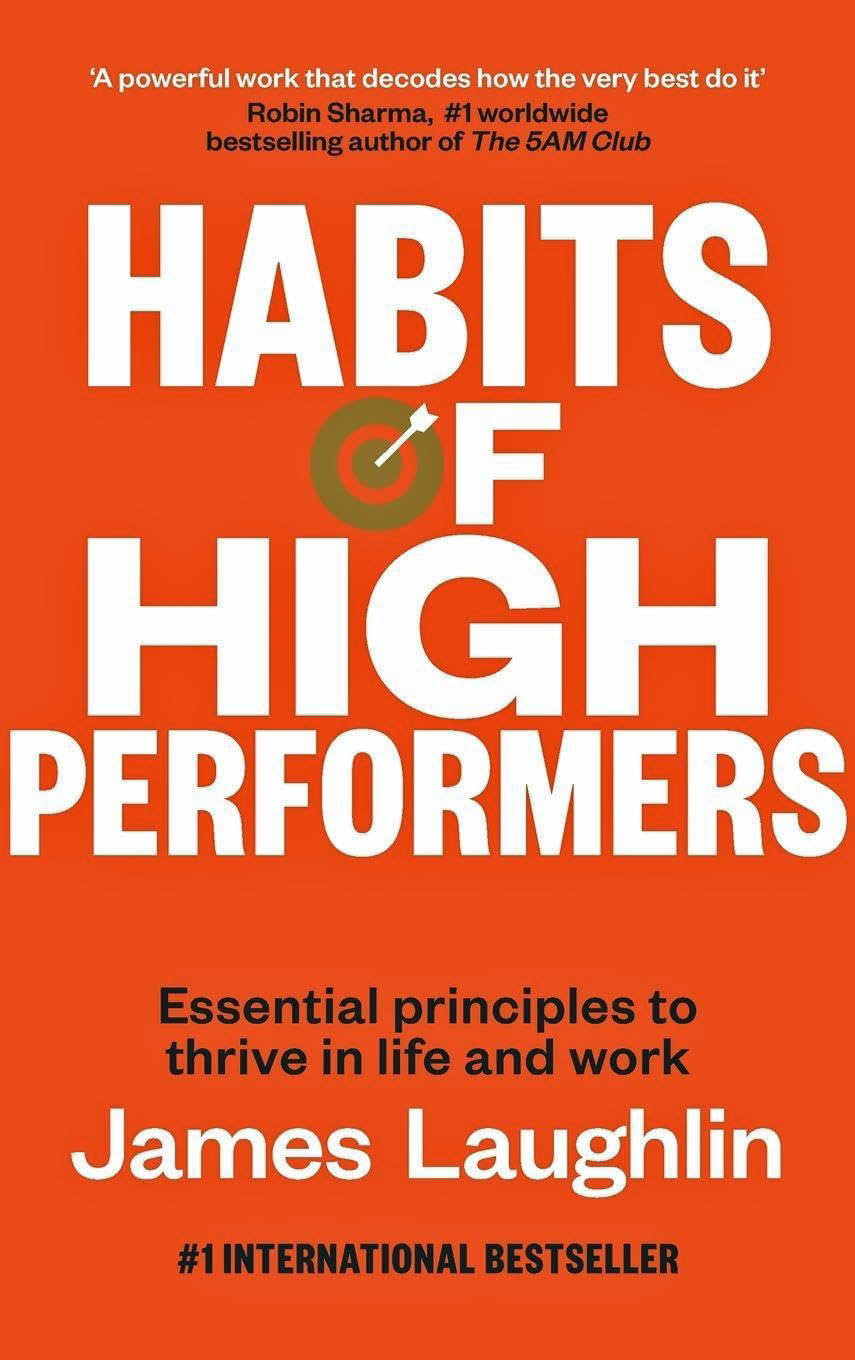 hieving more, rooted in neuroscience and real-world coaching.” As with his management training and motivational speaking, the book strives to help readers to “build unstoppable momentum, and finally feel in control of their direction and results.”
James Laughlin is a force of nature. He’s indefatigably enthusiastic, optimistic and motivational, and that his fascination with management and leadership started with pipe band drumming is a credit to the culture that’s possible in the piping and drumming world.
Given pipes|drums’ recent interest in the struggle or inability of pipe bands and associations to attract, prepare, and nurture, and retain good leaders, we naturally took an interest in Laughlin’s work.
Together, we came up with the idea of applying his knowledge of management and leadership best practices to the piping and drumming world, and that evolved into a new pipes|drums series: “Building Leaders.”
Before we publish the first subscribers-only “Building Leaders” piece, we agreed that an introduction to James Laughlin and his “Building Leaders” series was in order:
Here’s the text of our conversation, edited slightly for written clarity.
pipes|drums: You’ve shifted your career to management consulting and motivational speaking, travelling the world these days. We’ll talk about your new book, Habits of High Performers, but before we go any further, thank you very much for taking the time. We know you’re busy.
James Laughlin: It’s been a wee while since we’ve connected. I’m really looking forward to having this conversation.
pipes|drums: Yeah, that’s good stuff. Same here. You were a pipe band snare drummer at the highest level, but haven’t been around for several years. Tell us a little bit about what you’ve been up to since your pipe band days.
James Laughlin: Essentially, I look at pipe band drumming as being the grounding of what I do now in my life. I travel the world talking to teams across tech, agribusiness, politics, and sport, all about the habits of high performers, high-performing leaders, high-performing individuals, and what great culture looks like. And it all started by lifting a set of drumsticks in Northern Ireland all those years ago.
“I didn’t come through the Boston Consulting Group and have an MBA; it’s very unusual. But the one thing about pipe bands, it’s almost a human behaviour experiment on steroids.”
pipes|drums: A highly successful career, travelling all over the place and high demand as a management consultant, motivational speaker. How did that pipe band experience translate and prepare you for that kind of career?
James Laughlin: It’s interesting because most would look at it and think it’s quite unorthodox. I didn’t come through the Boston Consulting Group and have an MBA; it’s very unusual. But the one thing about pipe bands, it’s almost a human behaviour experiment on steroids. You get to see the greatest of leadership, and sometimes you get to see it under pressure, sometimes the opposite. And I was always very curious as to what the greatest leaders were doing. And growing up in Northern Ireland, there was no shortage of great leaders in this pipe band world – Richard Parkes, Keith Orr, Bobby Rea, all these guys, I looked up to them and thought, I want to be more like them.
From a young age, I was studying what successful people did. I believe success leaves clues. It set me up to lean in with curiosity. And then, when some lucky opportunities came along outside the pipe and the world, I was able to lean into them and bring my learnings with me, which was pretty helpful.
“If I had known some of that when I was in a pipe band or leading the band, it would have helped immensely.”
pipes|drums: That would be an hour-long discussion about how pipe bands motivated you to become a motivational speaker and consultant! When we connected, we came up with the idea of an exclusive series for pipes|drums, which you’re now putting together, bringing some of your knowledge and experience to the pipe band world. Can you give us a little sneak peek at what we can expect?
James Laughlin: Absolutely. I have to say first that I will be forever indebted to the pipe band world. It gave me much. It gave me hope and purpose in Northern Ireland as a youngster with a great upbringing, but the region presented its own challenges. I look at pipe bands now and think, I owe you a lot. It brought me to New Zealand, to Canada and beyond. I look at what I do now and, whether that’s with armies, people in Antarctica, or top sports teams, and I think, Whoa, if I had known some of that when I was in a pipe band or leading the band, it would have helped immensely.
In this series, I want to talk about some of the habits of the highest performing teams and leaders and say, Hey, as pipe banders or a solo piper, whether you’re running a band or whether you’re a corps member, there are certain things we can do, simple habits that will allow us to outperform our peers. And over the course of several articles, I want to share that.
“When I became a leading-drummer, I was highly ill-equipped to lead people. It’s almost like in the business world, where you get an engineer who’s good at what they do, who’s technically skilled, and they work their way up the ranks of a company, and all of a sudden, they’re leading people. They’re not a people leader, not an engineer anymore. It’s often chaos. It’s often outside their comfort zone. And there’s generally a lot of collateral damage.”
pipes|drums: It’s good timing, since pipes|drums has published opinion pieces and ideas on management and preparing leaders for their roles. Pipe-majors, leading-drummers, pipe-sergeants are often thrown into these situations where they either sink or swim. Do you think there’s room for pipers and drummers to learn from “real-world” experiences and bring them to pipe bands?
James Laughlin: It’s no different at all. I look at people who are running countries, running teams or sports businesses, and they’re no different than a pipe band. We sometimes sell ourselves short as pipers, drummers, and bands. And we don’t take ourselves as seriously as we could. And I think that there are simple things that we could transfer some of those skills across to doing what we’re doing.
When I became a leading-drummer, I was highly ill-equipped to lead people. It’s almost like in the business world, where you get an engineer who’s good at what they do, who’s technically skilled, and they work their way up the ranks of a company, and all of a sudden, they’re leading people. They’re not a people leader, not an engineer anymore. It’s often chaos. It’s often outside their comfort zone, and there’s generally a lot of collateral damage. It’s no different in pipe bands.
Let’s say you’re an amazing soloist – drummer or piper – and you work your way up the ranks of your band. And eventually at 18, 19, 30 or whenever, you become the pipe-major or the leading-drummer. You’re a technical specialist. You can drum and pipe better than anyone on the planet. However, do you have the skills to lead people? They’re two vastly different things. There’s a lot we could do in the pipe band world to make that job easier.
“The word ‘politics’ should not exist in the pipe band world, but sadly, it does. But there are things that we can do to lead and create harmony and high performance without all the drama.”
pipes|drums: Often, the gauge of a “leader” in the pipe band world is Who’s the best player? Who can blow the best tone? Who can pick out reeds? But not, Who’s the best manager of people? Why is it now the right time to come out with this series?
James Laughlin: It’s interesting. I still keep in touch with a lot of people in bands and running bands. And I still hear similar issues. “James, we’re struggling with finance,” with bands that are not in the epicentres. “We’re struggling to get the band to the big competitions, or getting to the Worlds, or Maxville, or whatever it might be. Or, “James, we’re struggling with numbers.” “We’re struggling to get drumming numbers and retain people.” Or “We have massive conflict within the band, and there’s politics.”
The word “politics” should not exist in the pipe band world, but sadly, it does. But there are things that we can do to lead and create harmony and high performance without all the drama.
pipes|drums: Anything you want to add before we wrap up?
James Laughlin: “High performance” often has connotations associated with sport. But we can all be high performers, and we can define it. High performing is consistently exceeding norms whilst maintaining healthy relationships and wellbeing.
I go back to my years in pipe bands as an adult, and I realize I was drinking a lot of booze quite often, and that was quite normal in the circles that we were in. It didn’t help my well-being. I was bringing stress home because the drum corps wasn’t doing what was needed, or I was having communication issues with my pipe-major, whatever it might have been. With a different definition of what “good” looks like, it would have been a lot more harmonious. And I could see a lot of friction across many bands. High-performance is all about removing friction.
pipes|drums: That’s really well. Thank you very much for taking the time. Good luck with your new book, Habits of High Performers. And we really look forward to your series on pipes|drums.
James Laughlin: Thanks a million. I can’t wait. It’s a pleasure.
Stay tuned for the first part of James Laughlin’s “Building Leaders” series, exclusively for subscribers to pipes|drums.





NO COMMENTS YET