

James “Jamie” W. Troy, 1942-2025

James “Jamie” W. Troy died on December 9, 2025, in Victoria, British Columbia, at the age of 83. As pipe-major of the Grade 1 City of Victoria in the 1970s, he played a crucial role in establishing Canada as a serious home to world-class competitive pipe bands.
Jamie Troy was born in Moose Jaw, Saskatchewan, in 1942, and his family moved to Victoria when he was two. He took up the pipes at the age of seven after showing an innate attraction to the instrument’s sound.
His piping career didn’t get serious until 1960, when he joined the Royal Canadian Air Force, ostensibly to learn electronics. It was in the Air Force where he continued his piping with the renowned RCAF Rockcliffe Pipe Band, a group that featured in its ranks the likes of John Kerr and Sandy Keith.
But Troy’s stint in the military lasted only a year and a half, and in 1961, he purchased his release and settled back on the West Coast, where Archie Cairns would play an essential role in Troy’s understanding of piobaireachd. Troy credited Cairns, who was stationed in the Vancouver area for several years, with opening his eyes to the beauty of ceol mor.
In 1972, Jamie Troy formed the City of Victoria Pipe Band, which emerged largely from members of the Canadian Scottish Pipes & Drums. From its beginning, City of Victoria competed in Grade 1, and an influx of members from the Prairie provinces of Canada, namely Lead-Drummer John Fisher, would help prepare the band for two very serious visits to the World Pipe Band Championships, the first in 1979 at Nottingham, England.
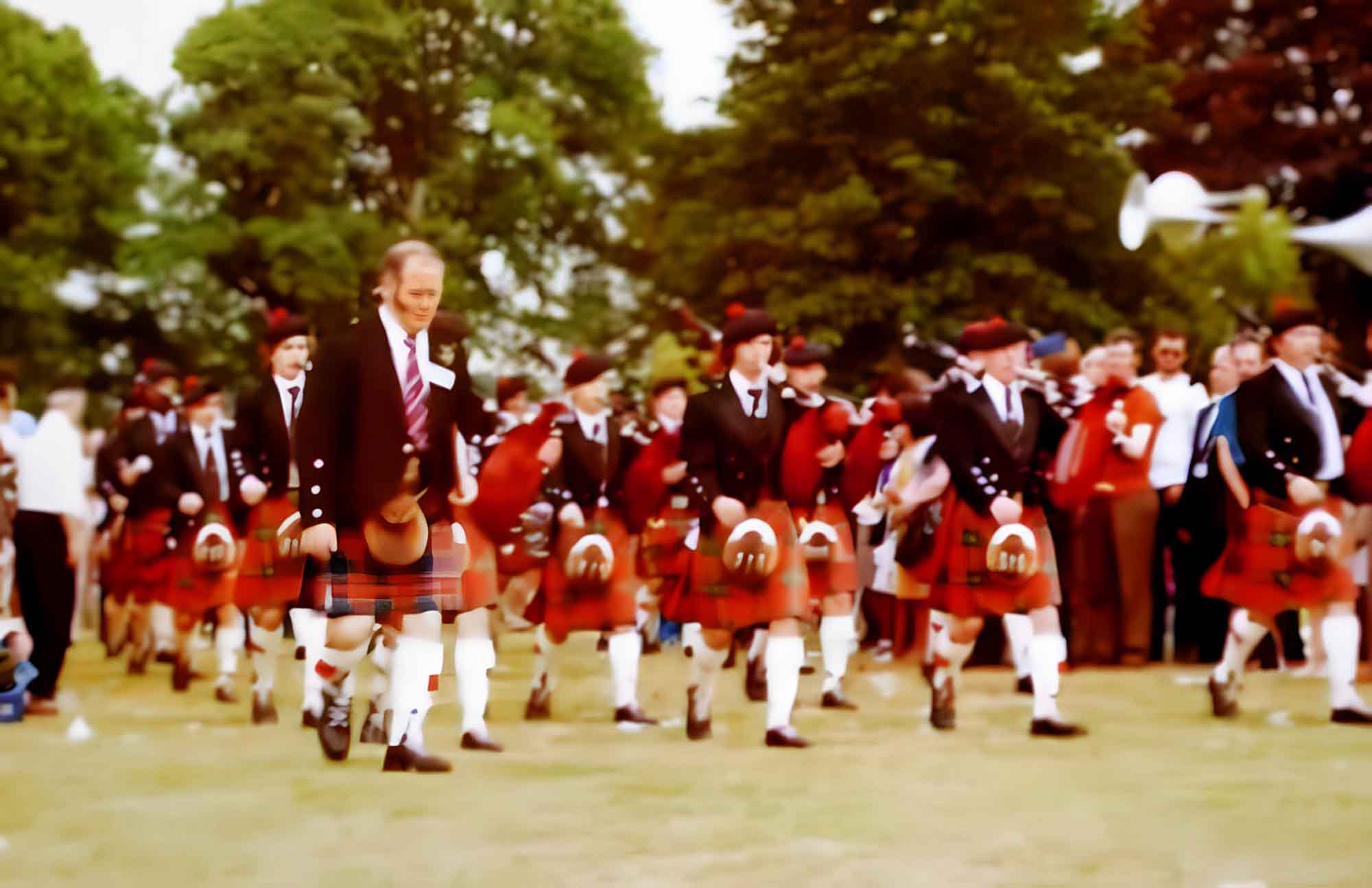
At that World’s, by all accounts, City of Victoria had one of the most memorable performances in pipe band history, not for the sixth prize that it won, but for the World Championship title that it didn’t get, which many thought was deserved.
Here was the first foreign band that made those present sit up and pay attention – except for the judges. Perhaps it was the alarming quality of the band’s drones that swayed the judges’ opinions. However, for decades and perhaps still, when mutual competitors, judges, and pundits were asked, “What was the best band never to win the Worlds?” the answer was most often “City of Victoria in 1979.”
Perhaps Scotland and the pipe band world at large weren’t ready for a non-Scottish band to win the contest. In 1981, when Victoria returned for another go at the title, they again placed sixth, tying their own record for highest ranking of a Canadian band at the World Championships.
“It was 1979. They weren’t ready for us. It would have torn apart the local scene completely if we had won the World Championship. Listen to the drones. Nobody puts out a drone sound today like we had then.” – Jamie Troy, 1995.
Whether the City of Victoria deserved to win or not, Troy’s band, without question, paved the way for other foreign bands to have a better chance of achieving the result they deserved.
Indeed, these two unvictorious Victoria performances influenced the Scottish psyche to think that, Yes, there are world-class pipe bands outside of Scotland.
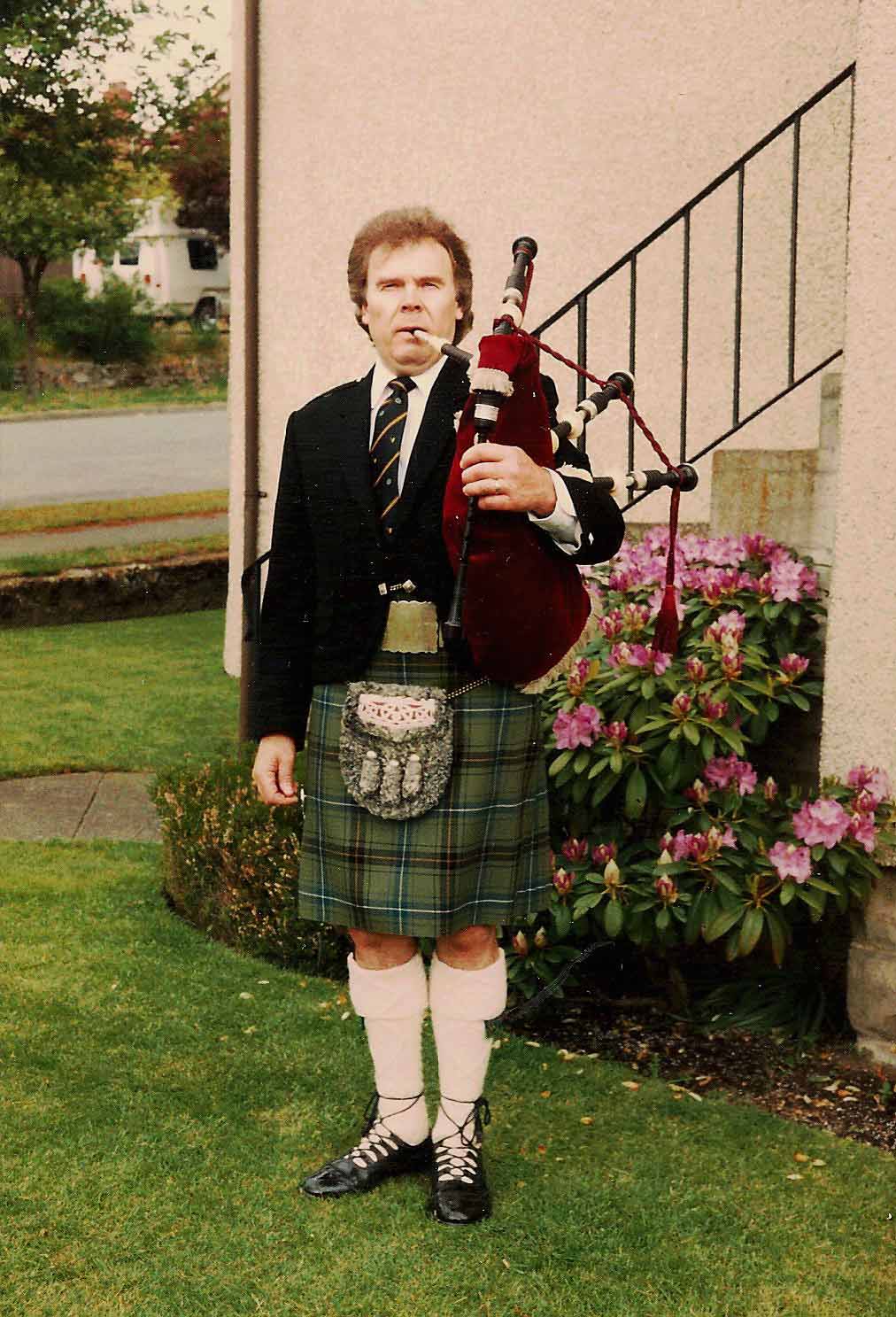
In addition to Fisher, City of Victoria featured in its ranks many players who would go on to become leaders in the art, including Terry Lee and Jack Lee, both influenced greatly by their pipe-major, and the very young Peter Aumonier, Bruce Gandy, and David Hilder, all of whom were taught by Troy from an early age.
Though identified most for his pipe band work, Troy was an avid piobaireachd student and competitor. He had a voracious appetite for ceol mor, and was a regular teacher and student at the Coeur d’Alene Summer School in Idaho. He had the distinction of winning the banner for piobaireachd at that school’s prestigious competition, first in 1972 and again in 1993, 21 years later.
After retiring from competition, Troy acquired the assets of McAllister Reedmakers from John and Tom McAllister of Shotts and made it into a thriving family business. He continued to teach and was a sought-after judge around the world.
Jamie Troy’s son, James P. Troy, is a piper and pipe band snare drummer of the highest rank, and his daughter, Jacquie Troy Carter, is an Open/Professional grade pipe band snare drummer and president of the Alberta Pipe Band Association.
Jamie Troy’s contributions to piping are profound, and his name is guaranteed musical immortality in Colin Magee’s wonderfully creative and melodic jig, “Troy’s Wedding,” which has become a standard in the Highland piping repertory.
Our sympathies go to the family, his many friends and all who Jamie Troy influenced at this sad time.
Readers are invited to share their memories and thoughts of Jamie Troy in our Comments section below.
We interviewed Jamie Troy in the spring of 1995. We will publish the full-length pipes|drums Interview in due course.



NO COMMENTS YET